
Posts Tagged ‘women’
We Need a Million for a Billion

Today’s guest post comes to us from The Population Institute. I highlight it because the 100th anniversary of International Women’s Day is being celebrated at events around the world today. The best way I can think of to celebrate IWD is to petition the U.S. Congress and other world leaders to make good on their commitments to fund international family planning. In No Excuses, I show why reproductive self-determination is essential for women to have any other kind of power. But the Republicans are trying to eliminate or drastically cut family planning funds in the U.S. and globally. Even if you don’t have time to read the whole post, please click here to sign the petition now. You’ll be saving women’s lives.
It’s time to hold world leaders accountable for their promises. Seventeen years ago world leaders gathered in Cairo, Egypt, and declared access to reproductive health care to be a universal right, but for many that right has not been realized. An estimated 215 million married women in the developed world want to avoid a pregnancy, but are not using a modern method of birth control. Tens of millions of young men and women are at risk of acquiring HIV/AIDS and other sexually transmitted diseases.
It’s time to make access to contraceptives and reproductive health care a reality, not just a right. Need another reason? By giving women the power to prevent unwanted and unintended pregnancies we save lives. Every year 365,000 women, many of them too young to bear children, die as a result of pregnancy-related causes.
“It’s Her Choice” – Really?
Thanks to Ann Crittenden for submitting this guest post, which was originally published at Moms Rising Ann shows that the politics and personal aspects of motherhood are very intertwined. Be sure to check out Ann’s book The Price of Motherhood for a more in depth look.
 I was struck recently by the persistence of an old argument used to kill the Fair Pay Act – and every other measure that would make life easier for mothers. You know it by heart: many women “choose” to earn less than men, and if they choose to earn less, then what’s the big deal about a little wage inequality?
This so-called “choice” argument can be superficially persuasive. Most women probably do prefer cleaner, relatively lower-paying jobs. Most women would rather be beauticians than coal miners, art teachers than mechanics. (Although this begs the question why teachers and beauticians earn so much less than mechanics and miners). Women working full-time often work fewer hours (for pay) than full-time working men. And in recent surveys, far more working women than men say they would prefer to work part-time.
Women, in short, are different from men. They’re just not as into dirt, long hours and making money. Maybe they are just …. more French!
But before you buy into this one, remember that those who benefit from the status quo always attribute inequities to the choices of the underdog. And women are still underdogs in the job market. Women working 40 hours a week still earn 86 cents for every dollar a man earns, a bigger gap than in many developed countries with more family-friendly policies. But if American women accept this willingly, then there’s nothing to worry about. It’s their choice. No one “made them do it.” So no one has to do anything about it.
Read MoreWomen's History Month Open Thread: Family Ties
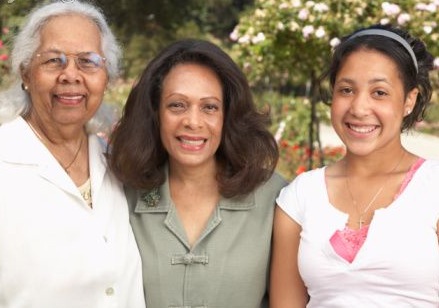 Many of us look to women in our family as our sheroes. Who are the women in your family who have helped shape you and how did they do it?
Women's History Friday Roundup: The Rally Edition
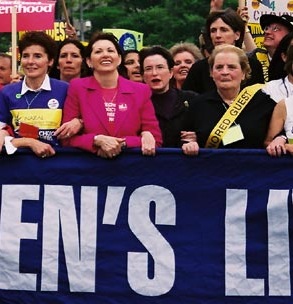 In 2004, women made history by descending on Washington in droves to March for Women’s Lives. Estimates vary about how many people attended the march, but it’s safe to say that there were over 1 million pro-choice activists in D.C. in 2004, myself included.
Last weekend a Walk for Choice was held in cities across the globe. Here is a roundup of photos from rallies across the country–the decentralized nature of the walk made it impossible to get exact numbers, but the geographic dispersion was impressive.
This Is a Sampling of What a Pro-Choice Rally Looks Like:
NYC – Feministing
Boston Walk for Choice
Walk for Choice Chicago – Feministing
Tucson Walks for Choice – Feminists for Choice
But we should not have to fight these battles over and over…
If you’ve got photos that you would like to add to our historical record (however “unofficial” it might be), please leave a link in the comments section. And by all means, take a moment to share your most proactive and innovative thoughts about what history you want to write for the future of reproductive rights, health, and justice.
Read MoreWhat Do Academy Awards Have to Do With Women's History Month?
 No, I’m not talking about Melissa Leo’s use of that other-than-feminism “f-bomb” last night. I want to compare two of this year’s Oscar winners and how they illustrate the way women’s history is told—or not.
I’m thrilled that “The King’s Speech” won best picture. I loved this beautifully rendered piece of history. And Colin Firth’s best actor Oscar was supremely deserved for his brilliant and touching portrayal of the shy man with a stutter, the man who not be king had he had his druthers.
But when the historical fluke of his brother’s abdication from the throne propelled him onto the British throne on the eve of world War II, King George VI rose not only to fulfill the ceremonial monarchy, but more importantly, to become a great moral leader in a time of crisis.
He realized that a leader’s first task is to define the terms and then deliver the message effectively. He feared his speech impediment would prevent him doing so. We follow him through the excruciating process of learning to control his stutter in order to fulfill the obligation his office required.
This man, for all his challenges was clearly the protagonist of his story. And his story was one of leadership, courage, and triumph over adversity.
Read MoreDueling Reviews of No Excuses: Which Do You Think Has It Right?
 Within hours of one another, two Google alerts bearing reviews of No Excuses hit my inbox. One reviewer lauded it, and the other skewered it.
“That’s what makes horse races,” I shrugged, recalling my father’s way of telling me differences of opinion are to be expected.
Then I reread both articles. And I realized that their diametrically different worldviews of women’s relationship with power reflect precisely the historic crossroads moment that had inspired me to write the book in the first place.
I was excited when asked to be interviewed for the Feminist Review, now known as Elevate Difference, by lawyer and global crusader to eliminate violence against women. Dianne Post and I originally met decades ago, because of our respective Arizona residency and involvement in women’s social justice issues. I recalled her as a bit of a contrarian but a passionate advocate for women. I was delighted to reconnect with her–so much so that after we spoke, I invited her to address my Arizona State University class on “Women, Power, and Leadership.”
During the interview, Post challenged my thesis that while some external structural barriers remain, women in the U. S. are at a moment in history where doors are open and it’s up to us to walk ourselves through them; that to embrace our power to do so, we must—and are able to–consciously overcome the remaining barriers, many of which are culturally learned, internalized ones.
So I wasn’t surprised when her acknowledged bias turned up in the review—understandably, seeing women as victims is an occupational hazard. And it’s a perspective that was accurate during the heady days of second wave feminist revolution, in which we both participated. Forty years ago, there were so many unjust laws to change and policy barriers to break.
Read MoreLeadership Development Power Tool Breakout Sessions
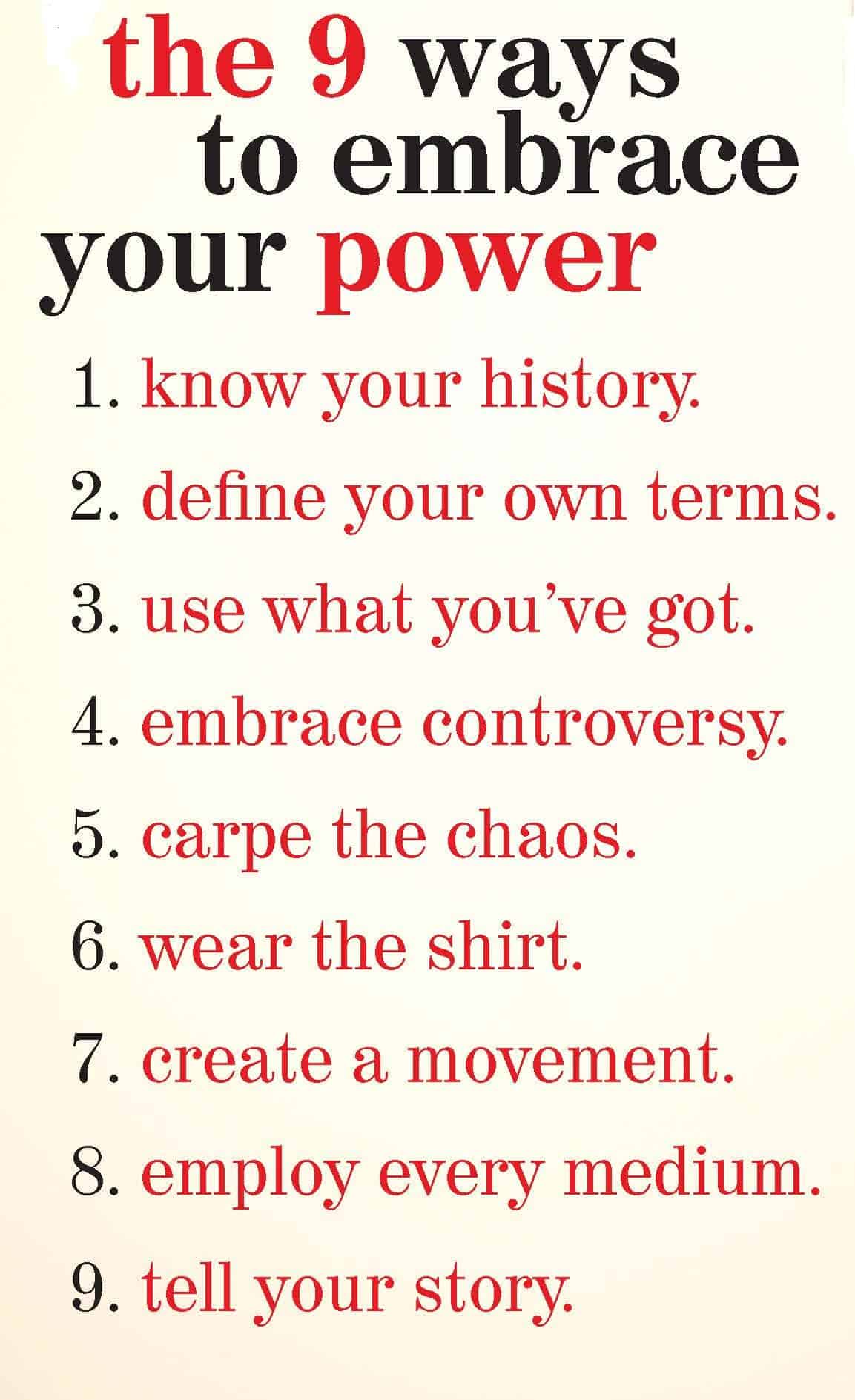 No Excuses is now a workshop too!
I had the pleasure of keynoting the Leadership and Business Development Workshop sponsored by Valley Leadership and the ASU Alumni Association in Scottsdale, February 9, 2011.
After the keynote, I moderated a panel of local leaders, Luz Sarmina, Carol Poore, and Jessica Pacheco for the enthusiastic, sold-out audience that packed the room. Then participants broke into smaller groups where they talked the nitty gritty–specific and practical ways to apply the 9 Ways power tools in their own work and lives–and received peer coaching. It made my heart sing that two women announced their intent to run for office, while many others talked about how the power tools would help them expand their businesses or careers within their organizations, write books, or start nonprofits.
This post’s comments below are facilitator notes from a breakout session.
I was very excited to apply No Excuses ideas in a workshop format and thank the conference committee, Rebecca Kennell, Jan Miller, and Tammy Bosse, for organizing an amazing, inspiring event.
If you’d like to create a No Excuses workshop for your professional or community group, contact me here. I am fired up to share the 9 Ways power tools with you!
PS. Here’s what people said about the workshop: “It was truly inspiring to see that all the answers were really in the room. By you opening the dialogue and spurring the conversation important topics came forward and great resources were given to them. I heard from both facilitators and participants that during the breakout session they were able to see their challenges more clearly and a road forward.”
Read MoreVideo: Women, Power, Media, Politics Panel Leaves Questions Unanswered
Yesterday the New York Times reported that women constitute a mere 13% of Wikipedia editors. This is a completely self-selected effort. No closed doors, no glass ceilings.
What’s the problem? There are no excuses, though many reasons remain for this disparity–not unlike the behaviors of women in politics (or not), in business, and women in top media positions.
I had the opportunity to moderate (if one can call it that) a panel of fabulous women at the 92Y Sunday 1/23. It was icy outside but The Nation columnist Katha Pollitt, Congresswoman Nita Lowey (D-NY 18), and Rebecca Traister, author of the Big Girls Don’t Cry, warmed things up quickly inside.
Read MoreWomen, Power & Politics at 92nd Street Y
On January 23, 2011, I moderated a panel discussion about “Women, Power and Politics” at the 92nd Street Y in New York City. The panelists included Katha Pollitt, Nita Lowey and Rebecca Traister.
For more audience reactions to the event, check out these stories from Huffington Post, Jezebel, and Feministing.
Read MoreHow Can Women Reach Political Parity in a Chaotic Time?

You know I believe chaos is opportunity. But are women carpe-ing the chaos? With all those groups helping women run for office, why aren’t we moving the dial toward political parity faster? At the rate we’re going, it’ll take us 70 years to get there. And even if we do, will it be a plus or a cruel joke if, say, Michelle Bachmann becomes the first woman president? Isn’t it time for progressive women to come out of the closet and acknowledge that a women’s agenda is more important than her gender?
I’m excited to have a chance to ask questions like these about women, power, media, and politics of three of the most politically savvy women I know at the 92Y in New York this coming Sunday night 1/23, at 7:30 pm. You are most cordially invited.
Read More