
Posts Tagged ‘women’
Friday Round Up : As Pink Headlines Declare End of Feminism (Again), World’s Women Leaders Keep Moving Forward
Want to have a little cognitive dissonance?
First watch this video of U.S. Secretary of State Hillary Clinton delivered a keynote address at the first-ever Asia Pacific Economic Cooperation (APEC) Women and the Economy Summit 9/16/11 in San Francisco CA, essentially saying that women are the key to the world’s economic future.
[youtube]http://www.youtube.com/watch?v=0jbLUHIveIQ[/youtube]
And for good measure, take a gander at the latest
Read MoreMaker Hero
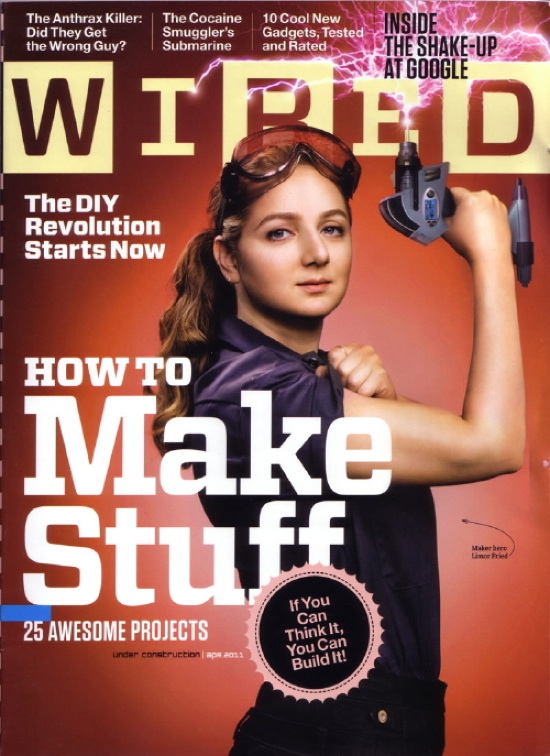
Congratulations to our friend Limor Fried of Adafruit Industries for being featured as a “Maker Hero” on the cover of the April 2011 issue of Wired Magazine. According to Evil Mad Scientist Laboratories this is the first time a female engineer has been featured on the cover.
Read MoreIndira Gandhi: World Leader or Witch?
The late Bella Abzug used to say that we would know women have made it when a mediocre woman was as likely to be promoted as a mediocre man. Similarly, we know women have made great strides as leaders when we have to acknowledge imperfections at the same time that we celebrate elevations to power. Thanks to The Daily Femme writer Sara Messelaar, whose thoughtful piece asks important questions about how women leaders–or any historical figures–should be judged. Be sure to read to the end of it and then share your thoughts!
 Just around the corner from my home here in Berlin, the tram stops at the intersection of Berliner Alley and Indira-Gandhi Street. For a long time, whenever the voice in the tram announced “Indira Gandhi Straße,” I thought: “she must have been a really great politician.” That feeling of her “greatness” quietly settled into my subconscious–the very reaction public memorials are supposed to foster in the first place. Mission Public Remembrance Accomplished. Woman’s History Month finally got me to take a real look at Gandhi’s story. I’m really glad I did, because Gandhi’s story is a complicated, unsettling, shocking chapter in women’s history.
Gandhi (who is not related in any way shape or form to Mahatma, by the way) served as the Prime Minister of India for four terms—longer than any other female Prime Minister in the world. Her position as the leader of the world’s largest democracy was especially impressive, since even today women in India struggle for equal treatment. As Cristen wrote, women are so disregarded in India that they don’t even have adequate public bathrooms for them. Gandhi, however, never let any of that get in her way.
Read MoreWomen's History Roundup: Create a Movement
Throughout history, men with leadership proclivities have tended to start businesses to create wealth or/and to go into politics. They take the direct path to power for its own sake. Women, on the other hand, tend to start social movements. Susan B. Anthony and women’s rights, Jane Addams and the Settlement House movement, Margaret Sanger and birth control, Candy Lightner and Mothers Against Drunk Driving, and today’s Emily May and Hollaback just to name a few.
The 9 Ways Women’s History Month posts this week are all examples of women starting social movements large and small:
Burning Women: Triangle Fire 100th Anniversary Illuminates Wisconsin Union-Busting
Alice Paul’s Equal Right Amendment Back at the Plow
Violence Against Women: Not in My Backyard – Er, Subway Car
Inspiration from Sin City
What are some other examples of woman-initiated social movements that inspire you?
What new social movement would you start if you could?
Burning Women: Triangle Fire 100th Anniversary Illuminates Wisconsin Union-Busting
Watch the full episode. See more American Experience.
The Triangle Waist Company, site of the fire that fanned the U.S. union movement into full flame, was housed, ironically, in the Asch Building.
On Saturday, March 25, 1911, it became an inferno, snuffing out the lives of 146 employees, mostly women, primarily immigrants, about two-thirds Jewish and one-third Italians, over one-half of them teenagers. Many were girls as young as twelve or thirteen years old. Child labor was routine at the time, as was weekend work.
Triangle’s owners, Isaac Harris and Max Blanck, placed immense pressure on he women to force their treadle sewing machines, like racehorses in their final lap, to produce women’s shirtwaist garments ever-faster. Their goal, not surprisingly, was to raise the factory’s profitability in an increasingly competitive field.
The Asch Building stood in the heart of New York’s Greenwich Village. Triangle Waist Company, a million dollar a year business, was one of the best-equipped factories of its day. Still, it was a horrible sweatshop with few safety provisions and almost no protections for workers against unfairly low pay, discrimination, sexual harassment, and certainly no paid sick leave, health insurance, or vacation.
Precautions against fire consisted of twelve red buckets of water.
Read MoreInspiration from Sin City
This guest post comes to us from Emmily Bristol, the creator of The Sin City Siren and The Tired Feminist. She is an award-winning writer, a community organizer and a new mom in Las Vegas.
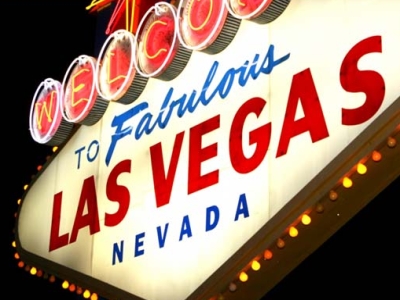 For Women’s History Month, I knew just who I wanted to talk about: The Westside Mothers of Las Vegas. To me, they embody the power of women and grassroots organizing.
Even as Rat Pack names twinkled in the lights of the 1960s Las Vegas Strip, blacks were segregated into a section of town called the Westside and times were desperate. Among those struggling were single mothers Ruby Duncan, Rosie Lee Seals and many others. They were uneducated, poor and black. They didn’t have any experience as community organizers, but they were motivated to help their hungry children.
In just a few years, they would create an organization — Operation Life — that would grow far beyond their initial neighborhood meetings in living rooms and laundromats. Operation Life opened a community center providing healthcare, poverty programs and home-grown economic development to West Las Vegas for the first time. And they managed to bring the glittering Strip to a stand-still in one of the largest protest marches in Las Vegas Boulevard’s history.
Read MoreWomen's History Open Thread: Honoring Our Mentors
 Mentors are particularly important for helping us develop a leadership style, and to shape our professional development. Who have been your mentors? What role have they played in your life? A new study released by Catalyst suggests that women need more than mentors, they need people who will sponsor them proactively into top leadership roles.
Do you agree? Have you had a sponsor? Have you been a sponsor?
Read MoreLois Rabinowitz: Now You Can Wear Slacks
Today’s guest post is from women’s success coach Bonnie Marcus. Bonnie takes a candid look at how attitudes towards women’s attire have often had serious consequences. Shining the light on lesser known women is what Women’s History Month is all about in my opinion. Enjoy!
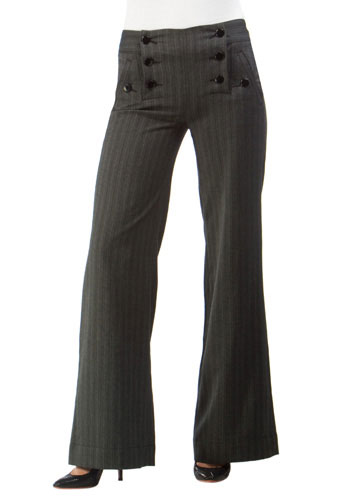 It’s hard to imagine the days when women were frowned upon for wearing slacks in public. In the 1960’s, however, this was the case. Women were expected to wear a hat, gloves, high heels, nylons and a girdle. It was commonly accepted behavior for women to dress up every day before they left the house.
In the summer of 1960, Lois Rabinowitz went to traffic court in New York City to pay a speeding ticket for her boss. Lois was a 28-year-old secretary for an oil company executive. She was a newlywed and her husband of just two weeks drove her to the courthouse that morning. Lois was neatly dressed in slacks and a blouse.
Upon seeing Lois in slacks, the Magistrate of the court was outraged and sent her home.
Read MoreWomen's History Open Thread: Fictional Role Models
 I’m thinking a lot about literature this weekend because I’m presenting on “Women in Leadership” on a panel with former White House doctor, Connie Mariano at the Tucson Festival of Books. Fictional characters can play a big part in our lives. Are there fictional women who have been fantasy role models for you?
The Value of Women's Work
There has been a marked change in the estimate of [women’s] position as wealth producers. We have never been “supported” by men; for if all men labored hard every hour of the twenty-four, they could not do all the work of the world. A few worthless women there are, but even they are not so much supported by the men of their family as by the overwork of the “sweated” women at the other end of the social ladder. From creation’s dawn. our sex has done its full share of the world’s work; sometimes we have been paid for it, but oftener not.
Any idea when this statement was made? OK, a clue: I recently ran across it in a speech given by Harriot Stanton Blatch at a suffragist convention–in 1898.
 Isn’t it amazing that Blatch made this argument 113 years ago? Her point still resonates today. A study released by the Center for American Progress shows that in the down economy, women increasingly became the sole breadwinners, despite the persistent wage gap, since men were being laid off at higher rates to trim companies’ bottom line. More and more men became “stay-at-home fathers.” And yet we aren’t seeing a change in workplace culture as a result.