
Posts Tagged ‘power’
How Can Women Reach Parity in Elected Office?
I just finished recording this Blogtalk Radio program “Feisty Side of Fifty” hosted by the wonderful Eileen Williams. The other guest was Terry Nagel, currently mayor of Burlingame CA, now running for San Mateo County Supervisor–a woman who walks her talk.
Feisty Side of Fifty Blogtalk Radio 3/15/11
Give it a listen and let me know your thoughts on Eileen’s main question: How can the U.S. get more women in elected office?
Read MoreDueling Reviews of No Excuses: Which Do You Think Has It Right?
 Within hours of one another, two Google alerts bearing reviews of No Excuses hit my inbox. One reviewer lauded it, and the other skewered it.
“That’s what makes horse races,” I shrugged, recalling my father’s way of telling me differences of opinion are to be expected.
Then I reread both articles. And I realized that their diametrically different worldviews of women’s relationship with power reflect precisely the historic crossroads moment that had inspired me to write the book in the first place.
I was excited when asked to be interviewed for the Feminist Review, now known as Elevate Difference, by lawyer and global crusader to eliminate violence against women. Dianne Post and I originally met decades ago, because of our respective Arizona residency and involvement in women’s social justice issues. I recalled her as a bit of a contrarian but a passionate advocate for women. I was delighted to reconnect with her–so much so that after we spoke, I invited her to address my Arizona State University class on “Women, Power, and Leadership.”
During the interview, Post challenged my thesis that while some external structural barriers remain, women in the U. S. are at a moment in history where doors are open and it’s up to us to walk ourselves through them; that to embrace our power to do so, we must—and are able to–consciously overcome the remaining barriers, many of which are culturally learned, internalized ones.
So I wasn’t surprised when her acknowledged bias turned up in the review—understandably, seeing women as victims is an occupational hazard. And it’s a perspective that was accurate during the heady days of second wave feminist revolution, in which we both participated. Forty years ago, there were so many unjust laws to change and policy barriers to break.
Read MoreLeadership Development Power Tool Breakout Sessions
 No Excuses is now a workshop too!
I had the pleasure of keynoting the Leadership and Business Development Workshop sponsored by Valley Leadership and the ASU Alumni Association in Scottsdale, February 9, 2011.
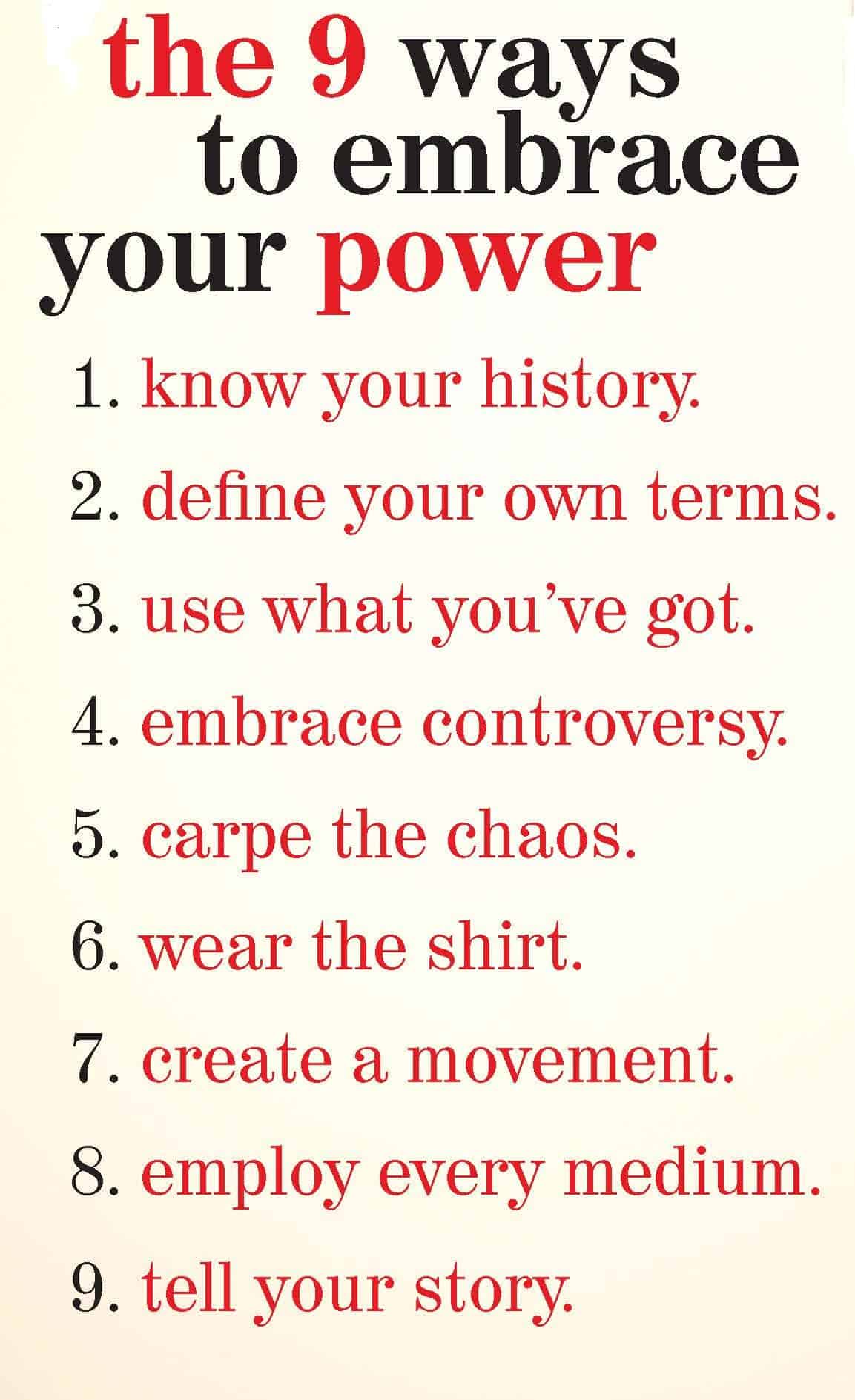
After the keynote, I moderated a panel of local leaders, Luz Sarmina, Carol Poore, and Jessica Pacheco for the enthusiastic, sold-out audience that packed the room. Then participants broke into smaller groups where they talked the nitty gritty–specific and practical ways to apply the 9 Ways power tools in their own work and lives–and received peer coaching. It made my heart sing that two women announced their intent to run for office, while many others talked about how the power tools would help them expand their businesses or careers within their organizations, write books, or start nonprofits.
This post’s comments below are facilitator notes from a breakout session.
I was very excited to apply No Excuses ideas in a workshop format and thank the conference committee, Rebecca Kennell, Jan Miller, and Tammy Bosse, for organizing an amazing, inspiring event.
If you’d like to create a No Excuses workshop for your professional or community group, contact me here. I am fired up to share the 9 Ways power tools with you!
PS. Here’s what people said about the workshop: “It was truly inspiring to see that all the answers were really in the room. By you opening the dialogue and spurring the conversation important topics came forward and great resources were given to them. I heard from both facilitators and participants that during the breakout session they were able to see their challenges more clearly and a road forward.”
Read MoreVideo: Women, Power, Media, Politics Panel Leaves Questions Unanswered
Yesterday the New York Times reported that women constitute a mere 13% of Wikipedia editors. This is a completely self-selected effort. No closed doors, no glass ceilings.
What’s the problem? There are no excuses, though many reasons remain for this disparity–not unlike the behaviors of women in politics (or not), in business, and women in top media positions.
I had the opportunity to moderate (if one can call it that) a panel of fabulous women at the 92Y Sunday 1/23. It was icy outside but The Nation columnist Katha Pollitt, Congresswoman Nita Lowey (D-NY 18), and Rebecca Traister, author of the Big Girls Don’t Cry, warmed things up quickly inside.
Read MoreWomen, Power & Politics at 92nd Street Y
On January 23, 2011, I moderated a panel discussion about “Women, Power and Politics” at the 92nd Street Y in New York City. The panelists included Katha Pollitt, Nita Lowey and Rebecca Traister.
For more audience reactions to the event, check out these stories from Huffington Post, Jezebel, and Feministing.
Read MoreMLK Inspires Our Power-To
 Inspiration is balm for the soul and a powerful kick in the resolve to take action.
Last year, to honor Dr. Martin Luther King, Jr on his birthday, I posted this call to share his quotes that have most inspired you. I hope you’ll go read them, for I know you’ll be inspired to use your “power to” to take action.
Upon rereading the quotes, I was struck by what King said about power: “I am not interested in power for power’s sake, but I’m interested in power that is moral, that is right and that is good.” In words far more eloquent than mine, King tells us to define power on our terms. To reject the oppressive power-over model; to use the power to, in order to do good.
Read MoreMLK Inspires Our Power-to
Inspiration is balm for the soul and a powerful kick in the resolve to take action.
Last year, to honor Dr. Martin Luther King, Jr on his birthday, I posted this call to share his quotes that have most inspired you. I hope you’ll go read them, for I know you’ll be inspired to use your “power to” to take action.
Upon rereading the quotes, I was struck by what King said
Read MoreWomen, Power, Media and Political Leadership at American University

My speaking engagement at American University on January 13, 2011 featured a powerhouse panel of women: Journalist, Amanda Hess; Political Strategist, Karen Finney; Women & Politics Institute Director, Jennifer L. Lawless; and Congresswoman Terri Sewell joined me in a discussion about women, power, the media, and political leadership. A full transcript of the event, including the question and answer session, is available at Sociable Susan Magazine. Photo credits: Susan Majek.
 |
 |
| Introducing the panel and providing a context for our discussion. | Congresswoman Terri Sewell as Jennifer Lawless tells her story. |
“Real” TED and TEDWomen: What’s Next?
I’ve been meaning to cross post CV Harquail’s excellent wrap up of the TEDWomen conference and the panel held in New York to discuss ways of fostering greater inclusion for women, people of color, and ideas that have not traditionally been chosen by the TED curators. Here is it is, full force and unedited.
My only additional comment is to suggest that the value of the controversy that emerged from TEDWomen has been significant. I hope that by raising consciousness we have opened up a path for gender parity in all such conferences and other “thought leader” events. Because after all, women do have at least half of the big ideas!
I’d love to know your thoughts now that the conference is over and we’ve all had some time to process it.
“Building on TED and the TEDWomen Conference: How Can We Make Conferences More Inclusive?”
We made a big start towards answering this question at our roundtable conversation after the TEDx636 NYC/ TEDWomen simulcast event. Our panel, organized by Natalia Oberti Noguera and sponsored by NYWSE, included Brittany McCandless (moderator), Adaora Udoji, Liza Sabater, Ritu Yadav, and me.
 This post offers my personal, subjective summary of the conversation and the actions steps that were recommended. As my fellow participants, organizers, and allies share their perceptions of the event and ‘next steps’, I’ll share these ideas and resources too.
Although our panel was diverse in terms of age, expertise, professional domain, culture, and racioethnicity, we shared the same over-arching goal: inclusivity and diversity not only at conferences, but also in the larger ‘world of ideas’.
Read MorePower Tool #9: Tell Your Story
“Stories are medicine for our false isolation. A way to forge connection and community and help shift our course . . . the seed forms of culture we carry around within us.” ~Nina Simons, founder of Bioneers
Your story is your power and your truth.
My friend, the master storyteller and storytelling teacher Laura Simms, sees stories as a path to healing oneself and the world. Harriet Beecher Stowe’s 1852 novel, Uncle Tom’s Cabin, told a story that changed how Americans thought about slavery and intensified support for abolition. It became the second best-selling book of the Nineteenth Century, behind only the Bible, itself a collection of stories.
In fact, throughout the writing of No Excuses and on the 9 Ways Blog, I’ve been most inspired by the stories of women, and men. They have moved me, mentored me, and taught me. I hopes their stories do the same for you when you read them.
Read More