
Heartfeldt Leadership: Announcing My NEW BlogHer Column and Soliciting Your Questions
 My 30-something niece called to ask my advice last night. Her boss, she said, kept sending notes suggesting she attend skill-building workshops. She worried that these suggestions obliquely signaled criticism of her performance. Yet her reviews had been stellar and the department she manages exceeded its goals for the year.
My response? Say “thank you,” go to the workshops, and then set up a meeting with your boss to discuss ways to implement what you’ve learned. She’ll be blown away. And you’ll have educational experience to add to your resume.
How would you have answered? I’d love to know-and so would she!
I based my response on an adult lifetime of executive experience during which I learned that:
1. My staff interpreted and reinterpreted my words and actions in an effort to please me because they attributed more power to me than to themselves—often more than I attributed to myself.
2. The people who were most successful in their careers were those with the courage to speak authentically to everyone regardless of role and title.
3. Leaders, in my low-tech definition, are simply people who get something done, whatever the situation, and wherever they fit within an org chart.
4. Leaders find a way to assess events honestly, frame an agenda, and then marshal the human and material resources to move forward.INTENTIONING
Sex, Power, Pandemics, and How Women
Will Take The Lead for (Everyone’s) GoodThe new book from Gloria Feldt about the future, taking the leadership lessons learned from this disruption and creating a better world for all through the power of intention.

I was a CEO for 30 years. No, make that 36 because I continue to be an entrepreneurial company of one, writing books and blogs and making speeches about women, power, and leadership.
The secret no one tells you is that the puzzle pieces are the same no matter the size of the enterprise, no matter whether you’re running a home, a small business, or a large organization. And that power and leadership present issues all women contend with, whether they’re negotiating salaries or creating start-ups or organizing child care.
When I was either brazen or foolish enough to accept the position of Executive Director of a Planned Parenthood affiliate in West Texas, at age 32, I knew beans about management or leadership. I broke out in hives every day for the first couple of months on the job from the stress of knowing how much I didn’t know.
I was fortunate to have an assistant who’d been there for a couple of years, a woman with big hair and a sign on her desk that read “Sexretary.” And there were talented nurse practitioners delivering the medical care, thank goodness, under the supervision of the kindly ob/gyn who had delivered my children. Still, my predecessor was so delighted to depart that windswept Texas expanse for a job back east that she left behind very little guidance. My stern grey metal desk was bare except for a note card in the inbox with these four questions:
What’s happening?
Why is it happening?
What do you want to have happen?
How are you going to make it happen?
I glommed onto that bit of wisdom like the Holy Grail, beginning a roller coaster ride that while challenging was never boring.
Roller coaster rides have brief moments on a crest where you might think you’ve got everything under control. Then comes the plunge into uncharted territory that flips your stomach. Because you live to tell the tale, you feel exhilarated and brave. And if you’re bold, you keep saying “yes” to ever-bigger challenges.
That’s what this column is all about – how to keep saying “yes” to new challenges, how to keep your head when the ground suddenly drops out under your feet, what to do when you want to scream in joy or from exasperation, and when to grab the metal bar and just hang on until you can grab the brass ring.
I’m honored that BlogHer has asked me to create a space where readers can share leadership issues of concern to them. I’ll get to offer what I’ve learned on the frontlines of leadership and from the research I did to write No Excuses: 9 Ways Women Can Change How We Think About Power. I’ll also explain the practical tips and “power tools”
I created to help other women embrace their power and lead effectively.
From time to time, I’ll enlist experts to help us out. But usually I find the wisdom is already in the room, especially a giant virtual room like BlogHer. I intend to learn from your experiences and provide a platform for us to share both successes and—shall we say, temporary setbacks–from which we always learn the most.
So, when you ask the pesky or profound leadership questions that worry you, here’s what you can expect from me:
I promise I’ll be honest.
I promise to read every question and respond thoughtfully to as many of you as possible in this column..
I promise to summarize and address in depth those leadership issues that arise repeatedly.
I promise to value your opinions and experiences; I don’t expect we’ll agree on every approach and that’s ok; in fact, it’s what makes leadership interesting. There is never one right answer.
I promise we’ll have fun.
When I told my niece that I was excited to start this column for BlogHer Careers to answer women’s questions about leadership and power, she shot back, “Oh my goodness, you’re going to get so many you won’t know what to do!”
I hope she’s right. Shall we begin?
This column was originally posted here on BlogHer Career, where you can find a lively discussion going on. Please check it out and add your 2 cents!
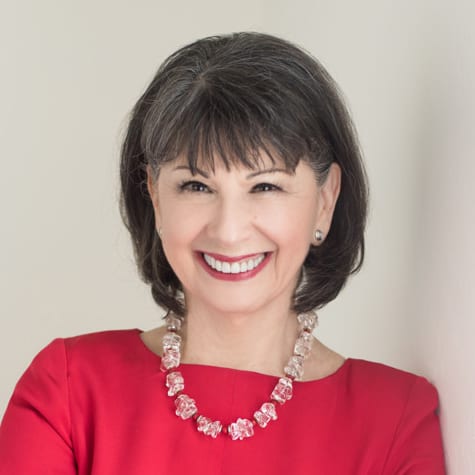
GLORIA FELDT is the New York Times bestselling author of several books including No Excuses: 9 Ways Women Can Change How We Think About Power, a sought-after speaker and frequent contributor to major news outlets, and the Co-Founder and President of Take The Lead. People has called her “the voice of experience,” and among the many honors she has been given, Vanity Fair called her one of America’s “Top 200 Women Legends, Leaders, and Trailblazers,” and Glamour chose her as a “Woman of the Year.”
As co-founder and president of Take The Lead, a leading women’s leadership nonprofit, her mission is to achieve gender parity by 2025 through innovative training programs, workshops, a groundbreaking 50 Women Can Change The World immersive, online courses, a free weekly newsletter, and events including a monthly Virtual Happy Hour program and a Take The Lead Day symposium that reached over 400,000 women globally in 2017.
No Comments
Leave a Comment
You must be logged in to post a comment.
Rob Moir I do not like your #3 definition of leadershp for reason #4 and because of the false hope that a person can be found with enough expertise to solve the problem, as if an external factor could.
Rob Moir ”Leaders find a way to assess events honestly, frame an agenda, and then marshal the human and material resources to move forward.” This I like! I educate US Senators and Congressman and other big decision-makers. My success lies in starting off as an elementary school teacher and knowing to first check the students for untied shoes and generally where they at before commencing the lesson. And second is giving people the same respect a teacher gives students on topic, no baggage, sequentially moving through agenda step by step.
Gloria Feldt Thanks for the feedback, Rob. I had to laugh when you said your success comes from having been an elementary teacher. That was my first career too! That and being a mom I have always credited with enabling me to calmly figure out the “what’s happening” part and then figure out the rest. I developed my definition of leadership from a sense that there is a lot more talking than doing in this world, and the people who are real leaders actually do #4, which is figure it out and take action,
Rob Moir elementary teachers make good parents. The other way around not so much.
Rob Moir When the horse and buggy don’t go across the bridge you don’t get a new driver or send the driver to Westfield for new buggy whip or buggy whip handling skills. No the driver must get off his duff and do the talking with the horse, the buggy, and the bridge. Success will come when the thing holding back horse and buggy is addressed, not by addressing the driver.
Rob Moir Leadership is in the horse buggy bridge relationship not in some getting it doneness criteria. If you want doneness get a general or an autocrat. If you want to find out why it is not getting done get a leader who will relate with everyone else. There might be very good reason why the group is not getting to your definition of done.
Rob Moir Just as a good teacher is known to be good by the students and their successes. With a good leader credit goes to the group not the individual. This is why leadership books by CEOs and how they saved the day are useless for learning leadership, but perhaps good biographies. Pile drivers when given a big enough hammer will drive piles.