
Posts Tagged ‘No Excuses’
Friday Round Up: Women in Sports Gain Power and Prominence
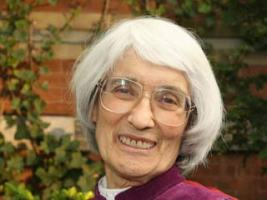
It’s not your mom’s Title IX any more.
Even I, who used every excuse to avoid the miserable girls’ gym classes in my pre-Title IX high school days, and rarely read the sports page now, couldn’t avoid noticing this past week how in the world of sports & gender equity, women athletes are visibly ramping up the action and reaping the results of almost four decades of access to competitive sports and many thanks go to crusader Bernice Sandler.
Read MoreHere's Your "Taking AAUW Home" Personal Reflections and Action Guide

Read MoreIt’s been great to be in Washington DC and an honor to give the closing keynote at the American Association of University Women (AAUW) National Convention. AAUW features in an important part of women’s history I share in No Excuses (page 175 if you have the book). That makes it extra special to be here.
Women's History Open Thread: Infamous Women
In No Excuses, not all of the women I talk about have had a positive impact on women’s lives. In fact, I share a quote from Madeleine Albright that says “There’s a special place in hell for women who don’t help other women.” But should women support women like Michelle Bachmann and Sarah Palin, who oppose policies that help women, such as reproductive rights, fair pay legislation, and social programs that are most likely to help women and children who constitute the majority of those living in poverty?
Read MoreHow Can Women Reach Parity in Elected Office?
I just finished recording this Blogtalk Radio program “Feisty Side of Fifty” hosted by the wonderful Eileen Williams. The other guest was Terry Nagel, currently mayor of Burlingame CA, now running for San Mateo County Supervisor–a woman who walks her talk.
Feisty Side of Fifty Blogtalk Radio 3/15/11
Give it a listen and let me know your thoughts on Eileen’s main question: How can the U.S. get more women in elected office?
Read MoreBest of International Women's Day: Be a Front Porch Lady
How did you recognize the 100th anniversary of International Women’s Day March 8? If you haven’t yet signed the “Million for a Billion” petition to tell Congress you want them to fund international family planning and save the lives of so many women and children around the world, please do so here. This is one meaningful way to honor the women who founded IWD to promote equality for women, including the right to vote and hold public office. Another is to reach out to help another woman. Today’s guest post from Kathy Korman Frey, entrepreneur in residence at George Washington University School of Business and founder of The Hot Mommas Project tells just such a story. Read on, and keep reading for a roundup of some of the best of IWD posts:
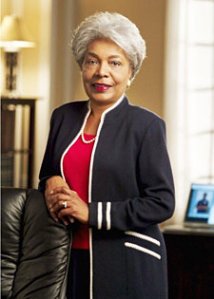 A dignified, beautiful, African-American woman stood at the podium during the Wake Forest Women’s Weekend. All eyes were on Esther Silver-Parker, one of the most senior former executives at Wal-Mart and now president of the Silver-Parker Group. Would she talk about women’s advancement to the C-suite? Would she share her secrets to success? That, she did. And one of them was not at all what we expected.
Silver-Parker grew up in rural North Carolina, in a two-bedroom house, with her parents and many siblings. She recounted a screenplay-like story about a group of women she called: The Front Porch Ladies. “The Front Porch Ladies were the women who sat on their front porches as we came home from school,” Silver-Parker said. “They would treat our business like it was their business.”
When Silver-Parker was accepted to college, imagine her surprise when the Front Porch Ladies showed up on her front porch. There they all stood, having brought with them a full set of blue luggage for her to take off to school. “From time to time at college, I would get letters from the Front Porch Ladies,” Silver-Parker told the audience. “They would write words of encouragement, and sometimes include a dollar or two.”
Read MoreKnow Your History–Create the Future of Your Choice

“If women want any rights more than they got, why don’t they just take them, and not be talking about it.” –-Sojourner Truth, 1797-1883, former slave, abolitionist
During the last 50 years, thanks to feminism and other civil rights movements, reliable birth control, and an economy that requires more brain than brawn, women have broken many barriers that historically prevented us from partaking as equals at life’s table. I feel privileged to be part of this amazing trajectory. All of my Women’s History Month posts come from a place of profound appreciation for the shoulders I stand on. Women like Sojourner Truth who had so much courage, clarity of vision, and leadership savvy.
I found feminism when I was a desperate housewife in Odessa, Texas in the 1960’s. After volunteering for civil rights organizations, I had the epiphany that women should have civil rights too. I “discovered” the new Ms Magazine. Then, I joined the National Organization for Women a few years after its 1966 founding, as an at-large member. Soon, I’d find the half-dozen other at-large members in West Texas’ expanse. It was a heady time of firsts for women; still, few of us could have predicted either the stunning advances or the discouraging setbacks ahead.
Fast forward to Hillary Clinton’s groundbreaking presidential campaign that didn’t take women into the presidency, but came close enough that no one will ever again ask whether women are smart enough or tough enough to do the job. Today even right-wing Republicans realize putting a woman on the ticket symbolizes electrifying change. Women earn 60% of college degrees, reproductive technologies have changed the power balance in personal relationships and we’re closer to parity in earnings than any time in history.
To be sure, women still don’t have full equality in any sphere of political or economic endeavor. Women hold just 17% of seats in Congress–the 2010 elections resulted in the first decline in over a decade–and under 25% of state legislative offices; 3% of top clout positions in mainstream media corporations and 15% of corporate board positions. We’re still waging a battle for reproductive rights, both at the state and federal levels. And despite gender equity laws, women earn 3/4ths of what men do while shouldering the lion’s share of responsibility for child rearing.
Still, the most confounding problem facing women today isn’t that doors aren’t open, but that women aren’t walking through the doors in numbers and with intention sufficient to transform society’s major institutions once and for all. Probing history, there seems to be a recurrent approach-avoidance pattern.
Read MoreDueling Reviews of No Excuses: Which Do You Think Has It Right?
 Within hours of one another, two Google alerts bearing reviews of No Excuses hit my inbox. One reviewer lauded it, and the other skewered it.
“That’s what makes horse races,” I shrugged, recalling my father’s way of telling me differences of opinion are to be expected.
Then I reread both articles. And I realized that their diametrically different worldviews of women’s relationship with power reflect precisely the historic crossroads moment that had inspired me to write the book in the first place.
I was excited when asked to be interviewed for the Feminist Review, now known as Elevate Difference, by lawyer and global crusader to eliminate violence against women. Dianne Post and I originally met decades ago, because of our respective Arizona residency and involvement in women’s social justice issues. I recalled her as a bit of a contrarian but a passionate advocate for women. I was delighted to reconnect with her–so much so that after we spoke, I invited her to address my Arizona State University class on “Women, Power, and Leadership.”
During the interview, Post challenged my thesis that while some external structural barriers remain, women in the U. S. are at a moment in history where doors are open and it’s up to us to walk ourselves through them; that to embrace our power to do so, we must—and are able to–consciously overcome the remaining barriers, many of which are culturally learned, internalized ones.
So I wasn’t surprised when her acknowledged bias turned up in the review—understandably, seeing women as victims is an occupational hazard. And it’s a perspective that was accurate during the heady days of second wave feminist revolution, in which we both participated. Forty years ago, there were so many unjust laws to change and policy barriers to break.
Read MoreNo Excuses in Cleveland (but Gloria Will Be There)

“Women Empowering Women” Series of Dialogue
When: Friday March 18, 2011 from 9:00 AM to 1:30 PM EDT
Add to my calendar
Leadership Development Power Tool Breakout Sessions
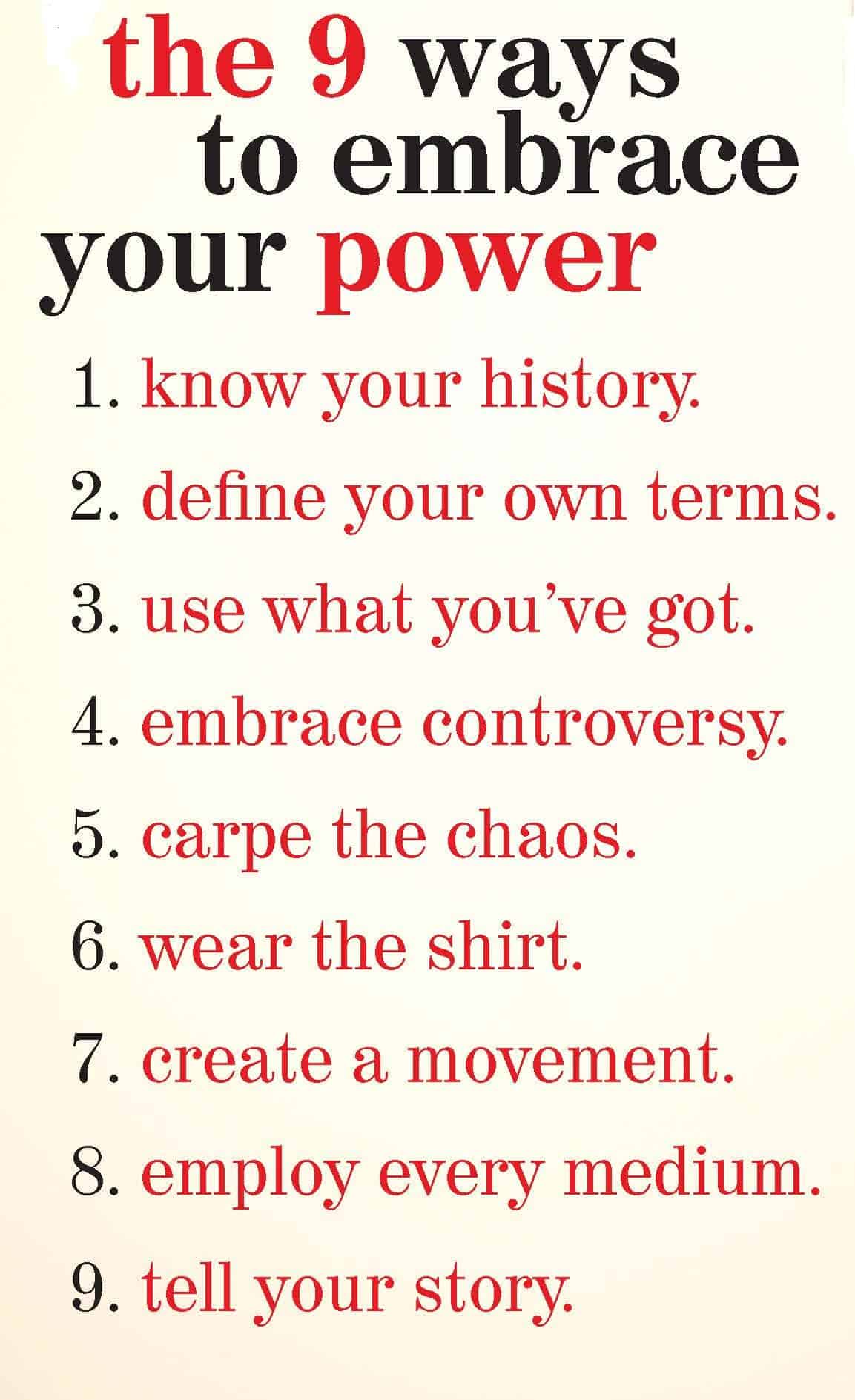 No Excuses is now a workshop too!
I had the pleasure of keynoting the Leadership and Business Development Workshop sponsored by Valley Leadership and the ASU Alumni Association in Scottsdale, February 9, 2011.
After the keynote, I moderated a panel of local leaders, Luz Sarmina, Carol Poore, and Jessica Pacheco for the enthusiastic, sold-out audience that packed the room. Then participants broke into smaller groups where they talked the nitty gritty–specific and practical ways to apply the 9 Ways power tools in their own work and lives–and received peer coaching. It made my heart sing that two women announced their intent to run for office, while many others talked about how the power tools would help them expand their businesses or careers within their organizations, write books, or start nonprofits.
This post’s comments below are facilitator notes from a breakout session.
I was very excited to apply No Excuses ideas in a workshop format and thank the conference committee, Rebecca Kennell, Jan Miller, and Tammy Bosse, for organizing an amazing, inspiring event.
If you’d like to create a No Excuses workshop for your professional or community group, contact me here. I am fired up to share the 9 Ways power tools with you!
PS. Here’s what people said about the workshop: “It was truly inspiring to see that all the answers were really in the room. By you opening the dialogue and spurring the conversation important topics came forward and great resources were given to them. I heard from both facilitators and participants that during the breakout session they were able to see their challenges more clearly and a road forward.”
Read MoreVideo: Women, Power, Media, Politics Panel Leaves Questions Unanswered
Yesterday the New York Times reported that women constitute a mere 13% of Wikipedia editors. This is a completely self-selected effort. No closed doors, no glass ceilings.
What’s the problem? There are no excuses, though many reasons remain for this disparity–not unlike the behaviors of women in politics (or not), in business, and women in top media positions.
I had the opportunity to moderate (if one can call it that) a panel of fabulous women at the 92Y Sunday 1/23. It was icy outside but The Nation columnist Katha Pollitt, Congresswoman Nita Lowey (D-NY 18), and Rebecca Traister, author of the Big Girls Don’t Cry, warmed things up quickly inside.
Read More