
Indira Gandhi: World Leader or Witch?
The late Bella Abzug used to say that we would know women have made it when a mediocre woman was as likely to be promoted as a mediocre man. Similarly, we know women have made great strides as leaders when we have to acknowledge imperfections at the same time that we celebrate elevations to power. Thanks to The Daily Femme writer Sara Messelaar, whose thoughtful piece asks important questions about how women leaders–or any historical figures–should be judged. Be sure to read to the end of it and then share your thoughts!
 Just around the corner from my home here in Berlin, the tram stops at the intersection of Berliner Alley and Indira-Gandhi Street. For a long time, whenever the voice in the tram announced “Indira Gandhi Straße,” I thought: “she must have been a really great politician.” That feeling of her “greatness” quietly settled into my subconscious–the very reaction public memorials are supposed to foster in the first place. Mission Public Remembrance Accomplished. Woman’s History Month finally got me to take a real look at Gandhi’s story. I’m really glad I did, because Gandhi’s story is a complicated, unsettling, shocking chapter in women’s history.
Gandhi (who is not related in any way shape or form to Mahatma, by the way) served as the Prime Minister of India for four terms—longer than any other female Prime Minister in the world. Her position as the leader of the world’s largest democracy was especially impressive, since even today women in India struggle for equal treatment. As Cristen wrote, women are so disregarded in India that they don’t even have adequate public bathrooms for them. Gandhi, however, never let any of that get in her way.
Read MoreWould you expect a circus elephant to work this hard?
England’s reigning Queen Elizabeth holds a place in my history. My family bought our first television set and allowed me to stay home from school to watch her coronation. We cheered the new queen from Temple TX. For years after that, I had a recurring dream that Queen Elizabeth was coming to dinner and I had nothing prepared. I would awaken in a cold sweat after trying unsuccessfully to cobble together a dinner from leftovers I found refrigerated in my grandmother’s multicolored Pyrex dishes.
After reading this lovely piece by Suzan St. Maur, I think I would not stress so much over an unexpected visit from the queen, but rather would order in Chinese and look forward to a chance to chat with a hardworking woman who prepares her own breakfast cereal. Of course, I’d want to ask her about the upcoming royal wedding and what advice she’d give to the soon-to-be princess Kate. What would you ask the queen if she came to have dinner with you?
She’s been doing it since 1952. And she has to travel thousands of miles every year to gigs in far-flung places where she’s expected to be charming, and perform.
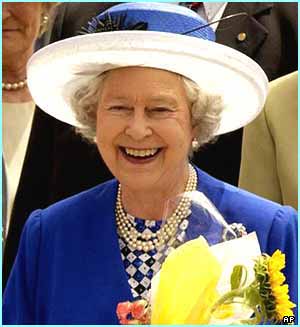 An inhumanely overworked elderly circus elephant, perhaps? Nope. She’s the Queen of England.
Or to be more correct, she is Her Majesty Queen Elizabeth II, (titular only) Head of State of the United Kingdom of Great Britain and Northern Ireland plus 15 other Commonwealth realms. Those realms include Canada and various Caribbean nations plus Australia, New Zealand and some further nations in the south-west Pacific.
Of course the British Republicans sneer and snort, waving anti-monarchy banners and saying how dare a woman like Queen Elizabeth complain about her workload when she lives in several different palaces and doesn’t have to worry about paying bills or maxing out her credit card.
Well, I don’t care what the Republicans say: this woman, Elizabeth Alexandra Mary Windsor, to my mind is a huge inspiration to all of us who value the work ethic.
Read MoreThank you, Geraldine Ferraro (1935—2011), First Female Major Party VP Candidate
“If we can do this, we can do anything.” –Geraldine Ferraro, accepting the Democratic Party nomination for vice president in 1984
Geraldine Ferraro’s place in history is assured. The smart mouthed tough talking Queens Congresswoman tapped to be Walter Mondale’s vice presidential running mate shattered a particularly stubborn glass ceiling. As I mourned her passing following a valiant 12-year battle with multiple myeloma, I found myself watching her acceptance speech again, not with nostalgia but with celebration, appreciation—and a sense of urgency for the next generation of progressive women political leaders to step forward and continue her legacy.
Read MoreWomen's History Open Thread: Infamous Women
In No Excuses, not all of the women I talk about have had a positive impact on women’s lives. In fact, I share a quote from Madeleine Albright that says “There’s a special place in hell for women who don’t help other women.” But should women support women like Michelle Bachmann and Sarah Palin, who oppose policies that help women, such as reproductive rights, fair pay legislation, and social programs that are most likely to help women and children who constitute the majority of those living in poverty?
Read MoreWomen's History Roundup: Create a Movement
Throughout history, men with leadership proclivities have tended to start businesses to create wealth or/and to go into politics. They take the direct path to power for its own sake. Women, on the other hand, tend to start social movements. Susan B. Anthony and women’s rights, Jane Addams and the Settlement House movement, Margaret Sanger and birth control, Candy Lightner and Mothers Against Drunk Driving, and today’s Emily May and Hollaback just to name a few.
The 9 Ways Women’s History Month posts this week are all examples of women starting social movements large and small:
Burning Women: Triangle Fire 100th Anniversary Illuminates Wisconsin Union-Busting
Alice Paul’s Equal Right Amendment Back at the Plow
Violence Against Women: Not in My Backyard – Er, Subway Car
Inspiration from Sin City
What are some other examples of woman-initiated social movements that inspire you?
What new social movement would you start if you could?
Burning Women: Triangle Fire 100th Anniversary Illuminates Wisconsin Union-Busting
Watch the full episode. See more American Experience.
The Triangle Waist Company, site of the fire that fanned the U.S. union movement into full flame, was housed, ironically, in the Asch Building.
On Saturday, March 25, 1911, it became an inferno, snuffing out the lives of 146 employees, mostly women, primarily immigrants, about two-thirds Jewish and one-third Italians, over one-half of them teenagers. Many were girls as young as twelve or thirteen years old. Child labor was routine at the time, as was weekend work.
Triangle’s owners, Isaac Harris and Max Blanck, placed immense pressure on he women to force their treadle sewing machines, like racehorses in their final lap, to produce women’s shirtwaist garments ever-faster. Their goal, not surprisingly, was to raise the factory’s profitability in an increasingly competitive field.
The Asch Building stood in the heart of New York’s Greenwich Village. Triangle Waist Company, a million dollar a year business, was one of the best-equipped factories of its day. Still, it was a horrible sweatshop with few safety provisions and almost no protections for workers against unfairly low pay, discrimination, sexual harassment, and certainly no paid sick leave, health insurance, or vacation.
Precautions against fire consisted of twelve red buckets of water.
Read MoreAlice Paul's Equal Rights Amendment Back at the Plow
“I never doubted that equal rights was the right direction. Most reforms, most problems are complicated. But to me there is nothing complicated about ordinary equality.” – Alice Paul, suffragist and author of the still-not-ratified Equal Rights Amendment
Yesterday, March 22, was World Water Day. That got a modicum of press. But did you 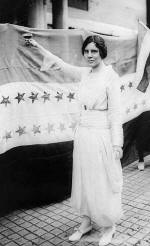 know it was also the 39th anniversary of the date on which Equal Rights Amendment (ERA) passed out of the U. S. Congress and was sent to the states to be ratified? Probably not. And yet, if there is a resource women need as much as clean water, it must be the guarantee of equality under the law.
The original ERA, introduced in Congress in 1923, was written by Alice Paul, a women’s rights activist instrumental in the 1920 ratification of the 19th amendment, which guaranteed women’s right to vote. Paul also started the National Women’s Party, believing that without a political organization’s clout, women’s concerns would never be taken seriously by politicians. Paul was also one of the few women’s suffrage leaders who realized that getting the right to vote was necessary but not sufficient to enable women to be equal partners in society. She argued that those who had fought for suffrage should then shift their work to getting laws passed that would continue to expand women’s rights.
“When you put your hand to the plow,” Paul said, “you can’t put it down until you get to the end of the row.”
How right she was! And we aren’t there yet.
Read MoreViolence Against Women: Not in MY Backyard—Er, Subway Car?
There are many ways of turning the wheels of history. Sometimes an act that seems small and obvious at the time changes the course of a group’s actions. Like the butterfly wings flutter that changes the climate halfway around the world, I believe every one on the subway car described by author and co-founder of SheWrites.com, Deborah Siegel, will forever think twice before looking away from a violent act.
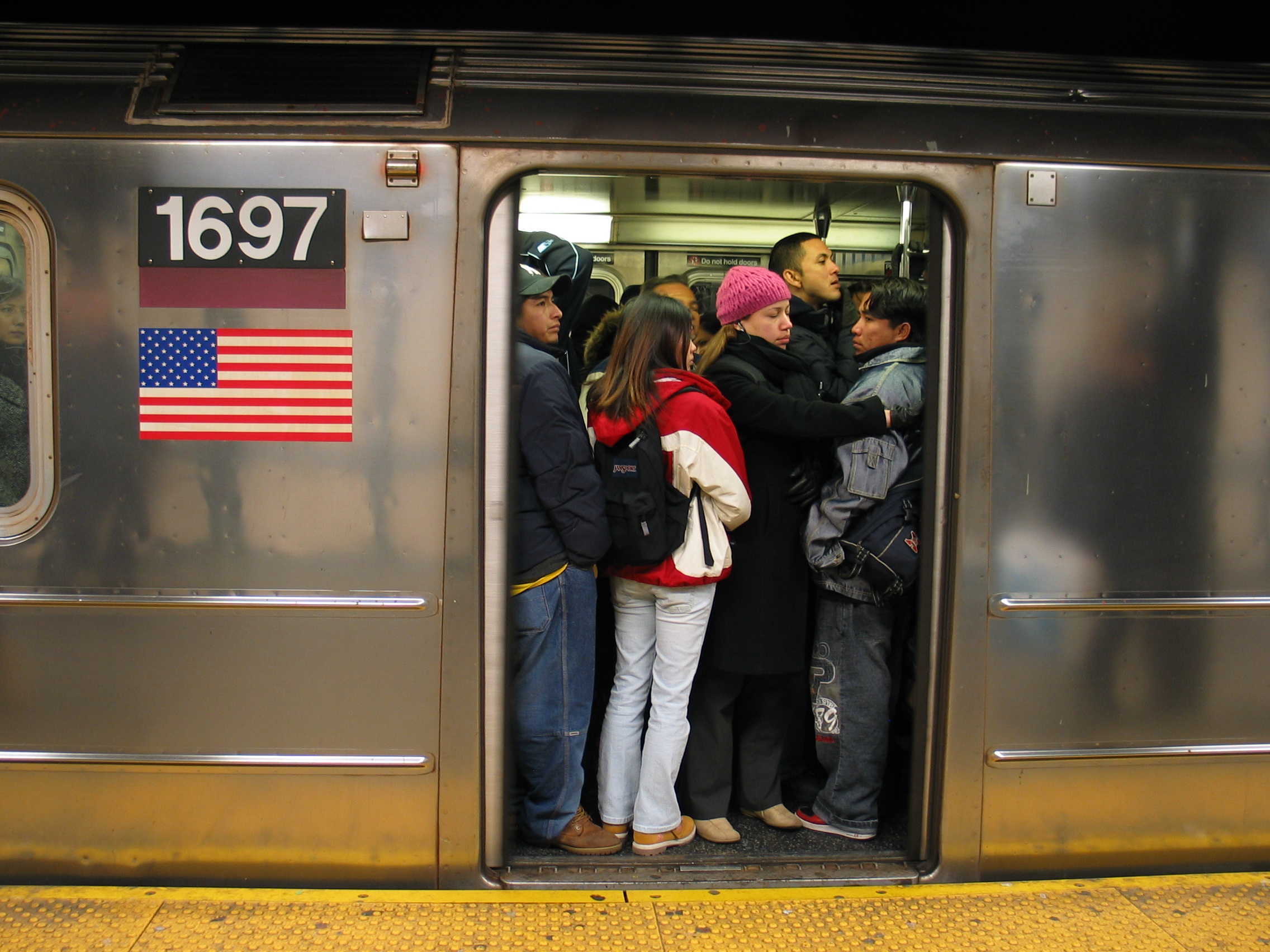 The other day I was riding the number 2 train home from the city, thinking about what I might write here in honor of Women’s History Month and feeling overpowered by current affairs. The tsunami, earthquake, nuclear disaster. Senseless murders in Libya. The gang rape of an 11-year-old girl. This month, I sense such widening circles of sorrow swirling, it’s easier, I confess, to shut off and just hold close those I love. If I pause long enough to truly let the world in, I fear I’ll be carried out on a wave, swallowed up by a sea of emotion from which there is no return. And then, there’s the tragedy going on right in our own backyards—that which lifts us out of our chairs and just kind of compels us, without thinking, to act.
Here is what I mean:
On the subway seat across from me, a woman sits with a large-sized purse taking up half the seat next to her. A hulking man enters the car and sits down—partly on the seat with the bag, and partly on the woman who owns the bag. The woman gets up in a huff.
“You don’t sit on women,” she says.
“Your bag was taking up half the seat,” he says.
“You don’t sit on women!”
“Your bag was taking up half the seat!”
This seems like it’s going to go on for a while. People nearby are getting edgy. I try to catch the woman’s eye, shoot her a glance of solidarity.
An older woman sitting closest to her catches her eye instead and says, “Let it go. You’re the bigger person.”
The two women chat. I can’t hear what they’re saying, but the man is listening all the while. The first woman gets off at the next stop. The man, it seems, is not through.
“She’s the bigger person huh?” he says to the older woman.
“Oh you’ve got the wrong one. The wrong one. Don’t you start with me now,” she says.
As the subway doors close, the dozens ensue. I try not to listen but, like a rubbernecked driver who can’t look away from a car wreck, I’m compelled. The words “Your mama…” “Your wife…” “Your mama…” “You’ve got the wrong one…” pour from the pair repetitively, and in escalating tones. There’s a feeling of gas rising to the point of combustion.
And then: THUNK. Sound of woman’s head being slammed against subway wall. Next, a piercing wail.
Read MoreInspiration from Sin City
This guest post comes to us from Emmily Bristol, the creator of The Sin City Siren and The Tired Feminist. She is an award-winning writer, a community organizer and a new mom in Las Vegas.
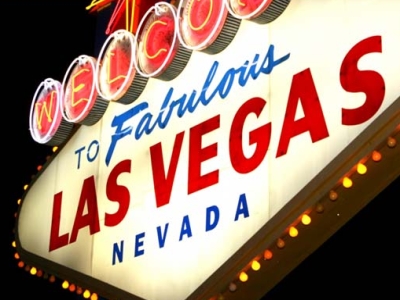 For Women’s History Month, I knew just who I wanted to talk about: The Westside Mothers of Las Vegas. To me, they embody the power of women and grassroots organizing.
Even as Rat Pack names twinkled in the lights of the 1960s Las Vegas Strip, blacks were segregated into a section of town called the Westside and times were desperate. Among those struggling were single mothers Ruby Duncan, Rosie Lee Seals and many others. They were uneducated, poor and black. They didn’t have any experience as community organizers, but they were motivated to help their hungry children.
In just a few years, they would create an organization — Operation Life — that would grow far beyond their initial neighborhood meetings in living rooms and laundromats. Operation Life opened a community center providing healthcare, poverty programs and home-grown economic development to West Las Vegas for the first time. And they managed to bring the glittering Strip to a stand-still in one of the largest protest marches in Las Vegas Boulevard’s history.
Read More[Video] Wonder Woman Again Puts Political Into Personal Media Images
Wonder Woman: who she is has morphed many times during her seven decades of existence. Depending on who was in control of her image, and what role the prevailing culture wanted women to play in society, she has been a superhero and a boutique owner, her muscles and attire symbolic of strength and courage and of bombshell sexiness. This latest documentary being developed by filmmakers Kristy Guevara-Flanagan & Kelcey Edwards, is called The History of the Universe as Told by Wonder Woman. It’s a project worth supporting–which you can do here.
Read More