
Equal Pay Day 2011: Are Republicans in Congress Trying to Make Women “Barefoot and Pregnant” Again?
Check out the fair pay flash mob on the steps of the Lincoln Memorial:
Arkansas State Senator Paul Van Dalsem got a roaring laugh in 1963 at the then all-male Optimist Club when he railed at women from the American Association of University Women (AAUW) who were lobbying to improve educational opportunities. He said his home county’s solution would be to get an uppity woman an extra milk cow. “And if that’s not enough, we get her pregnant and keep her barefoot.”
Sounds quaint, doesn’t it? Not so much, though.
Fast forward please to April 11, 2011—the day designated as Equal Pay Day by the National committee on Pay Equity to call attention to the pay gap between men and women. Women currently make about 20% less than men even when the numbers are controlled for education and experience. In other words, the pay disparity does not stem from childbearing as is often assumed, but rather from deeper systemic biases that are reflected in women’s own lack of skills and confidence in negotiating for their pay and promotions.
Read MoreTale of Two Elizabeths: Bringing Hope to New Hope
By Tamara Fagin, Guest Blogger
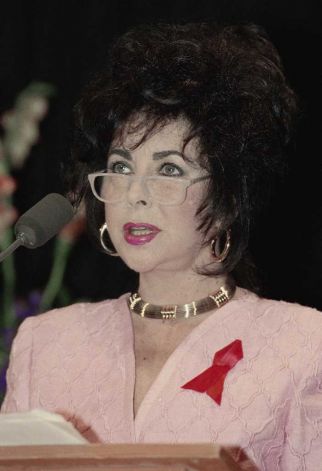
I did not grow up watching Elizabeth Taylor on the silver screen. If I did, I’m sure that like many young people who did come of age with her (like my parents), I would have been utterly distracted by her dark-haired beauty, her striking violet blue eyes and all of those marriages. She was a superstar.
I, on the other hand, came of age during the 1980’s. During a period of tumultuous change – somewhat like now come to think of it. I witnessed (on television) the fall of the Berlin Wall, the fallout of Chernobyl and individuals, families and institutions grappling with the HIV/AIDS epidemic. The Elizabeth Taylor that I grew up with was the most famous AIDS activist in the world.
Read MoreGoing National: Health and Sexuality
 New York, NY Sun. 4/10 @ 3:40 pm
Women’s Liberation & Jewish Identity: Uncovering a Legacy of Innovation, Activism, and Social Change
Panel Discussion on Going National: Health and Sexuality, with Paula Doress, Susan Brownmiller, and Ros Baxandall
The Goren-Goldstein Center for American Jewish History, New York University
Women Moving Millions Global Conference
 Brooklyn, NY Sat. 4/9 @ 10:15 am Social Media Panel at the Women Moving Millions Global Conference, Marriott Brooklyn Bridge.
March Women’s History Madness: Thanks for a Month of Inspiring Guest Posts
I’ve been delighting as I’ve reviewed the rich and inspiring Women’s History Month guest posts here on 9 Ways and invite all 9 Ways readers to read or reread them to get the full spectrum.
Thank you Beverly Wettenstein, Kathy Groob, The Population Institute, Kathy Korman Frey, Anna North, Emily Jasper, Bonnie Marcus, Emmily Bristol, Deborah Siegel, Suzan St. Maur, Sara Messelaar, Liz O’Donnell, Linda Brodsky!
Read on and enjoy each tasty morsel…
A huge “thank you” shout out to each generous contributor–you know who you are, so please take a virtual bow.
Some of the guest posts give new insights about women you’ve heard of, while others tell stories of women neither famous nor infamous, but whose lives touched the writers in profound ways. Enjoy each tasty morsel of women’s history! And as always, please share your thoughts in the comments section below. Or just check in to say “thanks” for a story that moved, inspired, or surprised you.
Read MoreMaker Hero
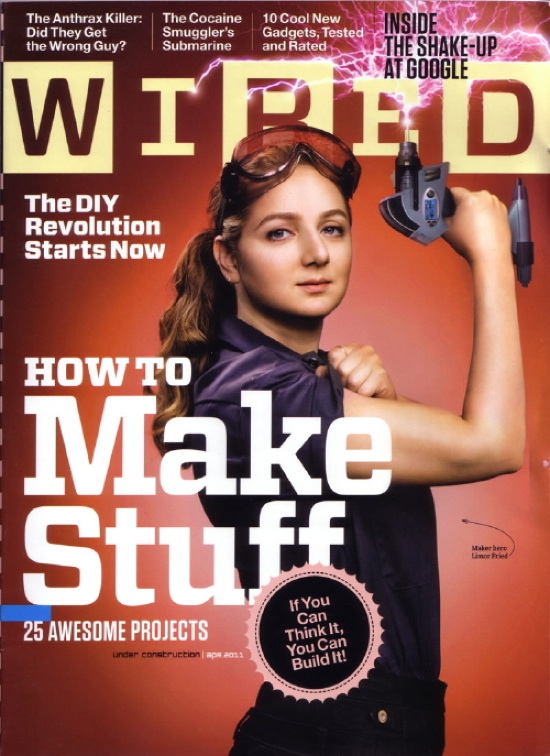
Congratulations to our friend Limor Fried of Adafruit Industries for being featured as a “Maker Hero” on the cover of the April 2011 issue of Wired Magazine. According to Evil Mad Scientist Laboratories this is the first time a female engineer has been featured on the cover.
Read MorePopulation Connection’s Capitol Hill Days
 Washington, D.C. Sat. 4/2 @ 1:15 pm
Keynote Address at Population Connection’s Capitol Hill Days
There is No Future in History
No this is not an April Fool’s Joke, give that 9 Ways has just
spent a month talking about the importance of knowing our history. Rather, it is an intriguing contrary point of view about the less than salutary effects of history from Linda Brodsky M.D. Read it and let me know what you think.
During a Brit family sitcom on NPR last week, a great line popped out of the addled grandfather’s mouth when his grandson told him he was studying history at university: “There is no future in history.”
Read MoreBella Abzug and Florence Feldt: Contrasts in Women's History
Since we’re wrapping up Women’s History Month, this tribute to my mother, Florence Feldt, and feminist icon Bella Abzug–two very different women from the same generation who died on this day in 1998–seems a fitting close.
I hope that you’ve been inspired by this month’s posts, and that they help you create the future of your choice!
My mother Florence Feldt died March 31, 1998.
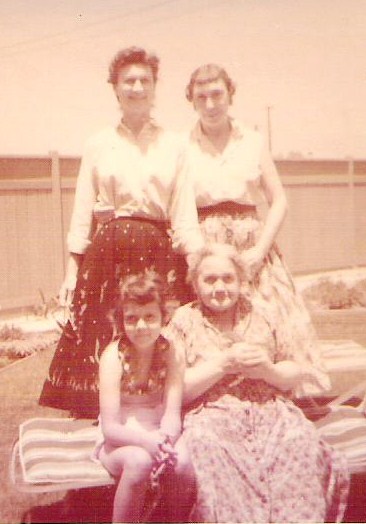
[caption id="attachment_4037" align="alignright" width="300" caption="Me, my cutie pie sister Candy, and our mother, Florence"][/caption] Read More

Ma McDonough Was No Ordinary Woman
Another great guest post. All of them have made this my best WHM series ever. Today’s post is from Liz O’Donnell from Hello Ladies. I hope you enjoy reading about her great-grandmother as much as I do.
 I live in the house where I was raised. Some may think of me as a “townie,” one of those New England creatures who never leaves home. And when they look at my house, I’m sure they see a place that needs lots of work. The yard needs landscaping, the upstairs bathroom needs plumbing, and the kitchen has a gaping hole in the ceiling over the sink (see upstairs bathroom). But what they can’t see is the foundation. Not the cement that supports the frame of the house, but the history that holds me up.
This Women’s History Month. While I honor the women who have, should or will make the history books – Rosa Parks, Lilly Ledbetter, Hillary Clinton and so many others, I find myself thinking about my personal history and one of the women who shaped my life. The National Women’s History Project writes, “Learning about women’s tenacity, courage, and creativity throughout the centuries is a tremendous source of strength.” I know this is true.
Eighty years ago, my great-grandmother Ma McDonough bought the house where I live. At that time, women didn’t purchase property, but Ma McDonough was no ordinary woman.
My great-grandmother came from a well-to-do family in Ireland. As was the tradition then, her older brother was set to inherit the family farm and she would inherit nothing. So Ma McDonough left for Boston, rather than be dependent on someone else. She married, raised four children and somehow managed to save money. When her husband died, she moved out of the city and bought herself and three of her then adult children a new house in the suburbs. It was the Great Depression and the builder had run out of money. Ma McDonough had cash and moved in.
Read More