
She's Doing It: Rabbi Holly Cohn
When I was told by my good Midland TX friend Dr. Norman Gould that the congregation I belonged to when I lived in West Texas had hired a woman, Rabbi Holly Cohn, as its first fulltime spiritual leader, I knew instantly that I wanted to write about her for this “She’s Doing It” column. I found her optimism and devotion to her calling inspiring. And I was also struck by how women are playing an ever-larger role in religion and religious observance.
This piece was originally published on the Sisterhood Blog of the Jewish Daily Forward. “Rabbi Holly in Mojoland” was my original title. I’d love to know your reactions. And whatever your religious persuasion, what have been your own experiences as women have been taking on increasingly significant roles as members of the clergy?
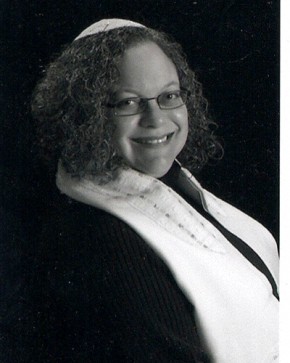
On the day I was to interview Rabbi Holly Cohn, the new spiritual leader at the lone congregation serving a 100-mile radius of West Texas, at Odessa’s tiny Temple Beth El, the television series “Friday Night Lights” was trending on Twitter. The story of the fictional town of Dillon, Tex., where high school football is a central cultural focus, was about to end its final season.
INTENTIONING
Sex, Power, Pandemics, and How Women
Will Take The Lead for (Everyone’s) Good
The new book from Gloria Feldt about the future, taking the leadership lessons learned from this disruption and creating a better world for all through the power of intention.

I could only hope that Rabbi Holly, as she calls herself, would not see this as a negative sign. As the show’s fans know, “Dillon” is actually Odessa, a town where I lived for 20 years and the football team is based on Odessa’s Permian High School Panthers.
Temple Beth El, which self-identifies as Conservo-Ortho-Reform since it must appeal to all denominational tastes, has just brought in its first full-time rabbi. Cohn, a 42-year-old, yarmulke-and-tallit-wearing female Reform rabbi, has been hired as its quarterback. The congregation hopes she will revitalize its shrinking community and attract the unaffiliated Jews scattered around the windswept area.
In the 1960s and ‘70s, when I was a member, it had 65 affiliated families and a religious school bursting at its seams. Services were lay led and part-time rabbis were brought in for major holidays and bar mitzvahs (no bat mitzvahs back then, and when I co-led the first Sisterhood Sabbath, some congregants viewed women on the bimah as a shande). Membership has now fallen to around 35 families, with just seven children in the religious school.
Football and traditional religion share androcentrism. How delicious that if this congregation is to thrive or even survive, it will be a woman leading these Jews to the promised land. And Cohn might be especially well prepared for the task.
After longing to be a rabbi since a teen trip to Israel, but taking a detour through several years of working in advertising, Cohn was ordained by Hebrew Union College 11 years ago.
She is excited by the challenge her new community presents and says that being in an isolated location like Odessa has advantages. “I especially love direct people work. That’s what appeals about the West Texas position,” says Cohn. “I’m able to drive the 87 miles to where we have an older member who can’t get to services. If I do a hospital visit, I can stay and listen. I can be there for people and be part of the community.”
What’s ahead for Jews in isolated communities like Odessa? Assimilation and intermarriage have taken a toll there perhaps more than in urban areas with large Jewish communities. “Where there isn’t a deli, a Federation, a JCC, the congregation becomes more important,” she says. The congregation has a higher ratio of participants in weekly services than big city synagogues often do, she says.
Using new media is part of her strategy. “I know how to appeal to people, how to be creative about finding solutions.” She plans, for example, to set up Skype sessions with children in the religious school and kids in Israel.
The Torah portion her first week at Temple Beth El was about Miriam’s well bringing forth water for the Israelites wandering in the desert. That evening, rain fell in the parched West Texas expanse. Her son said that must be a positive sign for them in their new home.
Rumor has it that “Friday Night Lights” may next have a movie sequel. Will Cohn create a new future for the Jews of West Texas? She may score a touchdown.
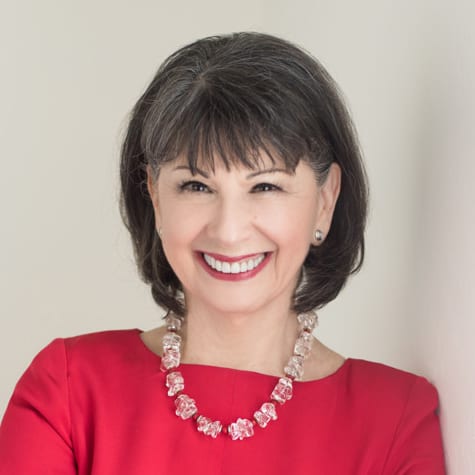
GLORIA FELDT is the New York Times bestselling author of several books including No Excuses: 9 Ways Women Can Change How We Think About Power, a sought-after speaker and frequent contributor to major news outlets, and the Co-Founder and President of Take The Lead. People has called her “the voice of experience,” and among the many honors she has been given, Vanity Fair called her one of America’s “Top 200 Women Legends, Leaders, and Trailblazers,” and Glamour chose her as a “Woman of the Year.”
As co-founder and president of Take The Lead, a leading women’s leadership nonprofit, her mission is to achieve gender parity by 2025 through innovative training programs, workshops, a groundbreaking 50 Women Can Change The World immersive, online courses, a free weekly newsletter, and events including a monthly Virtual Happy Hour program and a Take The Lead Day symposium that reached over 400,000 women globally in 2017.
No Comments
Leave a Comment
You must be logged in to post a comment.
This was an interesting article. My husband and I attended Beth El when Rabbi Zimmerman was the Rabbi, whom we loved. But stopped attending as we are more Orthodox and it didn’t seem to fit. We know keep in our home and have other more Orthodox that attend with us on Friday nights for Shabbat and we are working very hard to build a jewish community here in Midland that follows a stricter observance. We are open to all and now have a couple of young buchum coming and helping us to build the community. We are completely excited and are also very dedicated to finding the jewish souls whom are searching for a more observant shul.
Wanda
Wanda, thanks for this interesting information. Best of luck to you in building your congregation of kindred spirits in Midland.