
IS AMERICA GETTING SWEPT AWAY BY OBAMA-HYPE?
Have you ever been in a meeting where the group was on deadline to make a decision, but had been unable to reach consensus on which direction to go? What happens next? Nine times out of ten, someone comes up with a different idea than the ones you’ve been hashing around for hours. Everybody gloms onto it, and so do you, because you are desperate to place that important phone call, go to lunch, or you’re just plain worn down from arguing.
So whoever picks that perfect moment to throw out his or her idea becomes the hero while everyone else gets swept away in that new new thing, whose dazzle is untarnished by the imperfections of solutions that have been over-analyzed.
Leadership experts say this process usually results in the worst decisions. Doesn’t it seem to you as though many people are swept away by Barack Obama’s enormous charsma and dazzling star power?
A friend forwarded this outstanding commentary on the swept away phenom by Marie Cocco. But she thinks the voters in California and elsewhere on Super Tuesday were smarter than that. Here are pertinent excerpts:
Super Tuesday, muddled as the results seem to be, tells us one thing very clearly. Obama has not expanded his support much beyond African-Americans and upscale, educated whites. In the middle is a hole at least as large as the much-discussed chasm between Republican front-runner John McCain and conservatives who rebel against his candidacy.
INTENTIONING
Sex, Power, Pandemics, and How Women
Will Take The Lead for (Everyone’s) GoodThe new book from Gloria Feldt about the future, taking the leadership lessons learned from this disruption and creating a better world for all through the power of intention.

The great divide in the Democratic contest continues to be between those who earn more than $50,000 annually—mostly Obama supporters—and those who make less and who consistently support Clinton. Exit poll results from across the country confirmed that Clinton continues to attract support from ethnic minorities other than African-Americans. In California, Latinos voted for Clinton 2 to1. Among Asians, her margin over Obama was 3 to 1. This is in a state where Obama’s multicultural appeal was supposed to lift him to victory. It fell flat.
Still, the Obama campaign vows a war of attrition against Clinton, and the Byzantine delegate-selection rules of the Democratic Party allow him to wage it.
But what is Obama’s message to those Democrats—women, working-class voters, Hispanics, the elderly—who find little inspiration in his oratory of hope?
Maxine Waters, an African-American congresswoman who represents South-Central Los Angeles and who endorsed Clinton, put it aptly: People in her district “don’t need more hope. They need help.”
Hillary is long on providing the help and people know that. Barack is long on the kind of hype about hope that sweeps people away.
Sometimes the grist mill of political discourse does get us to a better idea than the ones we started out with. But most of the time it either gets us a tepid compromise like we got in John Kerry in 2004 or a terrible mistake, like Michael Dukakis in 1988 when the Democrats were desperate to regain the White House after 8 Reagan years and were swept away with his rising star and his exciting vice-presidential pick of Gerry Ferarro. They went from a 20-point lead to a stunning loss.
In this election year when we know another Republican administration will complete Bush’s sharp right turning of America into the kind of country my grandparents came here to escape, the stakes are just too high to allow ourselves to be swept away by hype over substance. So what are we going to do about it?
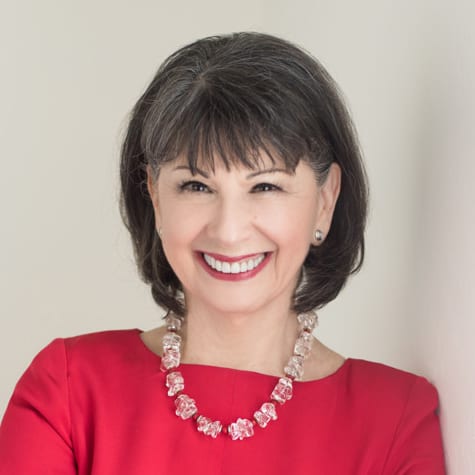
GLORIA FELDT is the New York Times bestselling author of several books including No Excuses: 9 Ways Women Can Change How We Think About Power, a sought-after speaker and frequent contributor to major news outlets, and the Co-Founder and President of Take The Lead. People has called her “the voice of experience,” and among the many honors she has been given, Vanity Fair called her one of America’s “Top 200 Women Legends, Leaders, and Trailblazers,” and Glamour chose her as a “Woman of the Year.”
As co-founder and president of Take The Lead, a leading women’s leadership nonprofit, her mission is to achieve gender parity by 2025 through innovative training programs, workshops, a groundbreaking 50 Women Can Change The World immersive, online courses, a free weekly newsletter, and events including a monthly Virtual Happy Hour program and a Take The Lead Day symposium that reached over 400,000 women globally in 2017.