
She's Done It: Betty Friedan, Sheryl Sandberg, and You
Consider this your Women’s History Month bonus post. In the heated contemporary debate about whether Facebook COO Sheryl Sandberg’s exhortation to women to Lean In will help women in less elevated positions, Ruth Nemzoff, Resident Scholar at Brandeis Women’s Studies Research Center and author of Don’t Roll Your Eyes: Making In-Laws Into Family reminds us that this dispute is hardly new. You could substitute “Sandberg” for “Friedan” in most of Nemzoff’s article. And the takeaway lessons for women remain the same too.
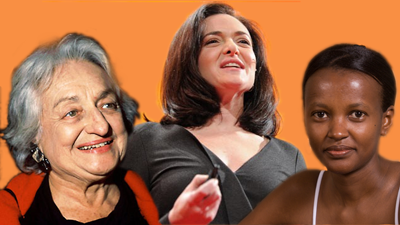
Let’s not waste our time denigrating Betty Friedan’s The Feminine Mystique because it focused only on the problems of affluent women, rather, let us praise her for starting a revolution.
“Makers,” a program on PBS about the effect of her book and the second wave of feminism, demonstrated that these criticisms of Friedan are unwarranted. She started a domino affect. Battered women, blue collar workers, all have benefited from the ideas behind Friedan’s opus. By freeing the wealthy women from hostage in their suburban gilded cages, she ignited the hopes of all women and facilitated many to take action for themselves or on behalf of others.
When I moved to New Hampshire in 1970, I noticed a two-line classified in the local free news sheet. Two factory workers, a mother-in-law and a daughter-in-law, were advertising to begin the first consciousness raising group in Nashua, NH. Soon, a group was formed. The members came from all walks of life—some were well-educated, others were not, some were affluent, and others needed every penny they could earn.
INTENTIONING
Sex, Power, Pandemics, and How Women
Will Take The Lead for (Everyone’s) Good
The new book from Gloria Feldt about the future, taking the leadership lessons learned from this disruption and creating a better world for all through the power of intention.

I am one of the affluent women who benefited from Betty Friedan’s The Feminine Mystique. I ran for the New Hampshire legislature and eventually became its assistant minority leader. I successfully sponsored legislation to give scholarships to displaced homemakers and to open adoption records. Not only can I credit Friedan for inspiring me, but also for giving these women in need the courage to ask me as their legislator to pass laws which would change their circumstances.
Betty Friedan and The Feminine Mystique may have started with women who were well-enough off to remain outside the workplace. But in short order, the ideas had trickled down to those who needed to work to eat. Friedan’s cry for equality was heard beyond the suburbs.
Like so many other revolutions, the initial catalyst started with the more affluent. The Magna Carta granted rights and protections to feudal lords and eventually became, as Lord Denning described it, “the greatest constitutional document of all times – the foundation of the freedom of the individual against the arbitrary authority of the despot.”
Like the Magna Carta, Friedan’s work had limited reach, but set off an upheaval which dramatically changed not only the wealthy but the whole society. Other revolutions are started by the more educated—witness India: both Gandhi and Nehru had British university educations.
Instead of the press spending its time arguing over Freidan’s approach, it would serve us all better by continuing her efforts to promote equality for all. Friedan was not obligated to complete the work, let us be grateful that she started and that each and every one of us can continue her revolution.
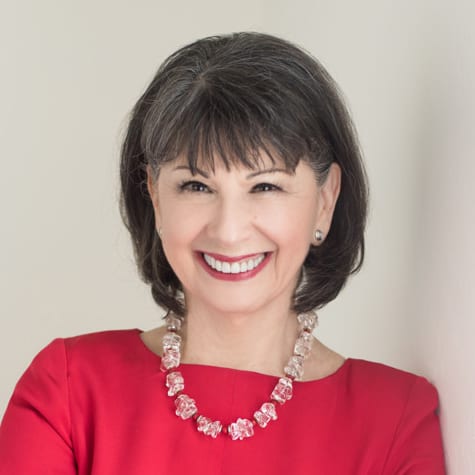
GLORIA FELDT is the New York Times bestselling author of several books including No Excuses: 9 Ways Women Can Change How We Think About Power, a sought-after speaker and frequent contributor to major news outlets, and the Co-Founder and President of Take The Lead. People has called her “the voice of experience,” and among the many honors she has been given, Vanity Fair called her one of America’s “Top 200 Women Legends, Leaders, and Trailblazers,” and Glamour chose her as a “Woman of the Year.”
As co-founder and president of Take The Lead, a leading women’s leadership nonprofit, her mission is to achieve gender parity by 2025 through innovative training programs, workshops, a groundbreaking 50 Women Can Change The World immersive, online courses, a free weekly newsletter, and events including a monthly Virtual Happy Hour program and a Take The Lead Day symposium that reached over 400,000 women globally in 2017.
How lovely that poor Ms. Friedan was able to escape her gilded cage. There were other women of that era who would have loved to been able to choose motherhood in suburban luxury over a first-rate academic career. A little perspective, ladies: http://lucidatrandom.wordpress.com/2013/03/12/pretty-lies/
A cage is a cage is a cage is a cage. I’ve been well-to-do and I’ve been poor – the latter a number of times. I choose poor and free over rich and caged but that’s just me.
Interesting divergent comments, Victoria and Kim. Change is hard, and it’s harder yet to change a culture while you’re living in it.