
Politics
In Which I Answer POLITICO Arena’s Election Day Question: What were the campaigns’ biggest mistakes?
A friend posted a photo on Facebook of a long line at her polling place this morning with the comment that “it’s a good sign when voters are treating an election like Black Friday at Walmart.” Now we have to wait all day to learn which of the candidates brought forth this outpouring of interest: do voters think Obama or Romney is the better bargain?
Both campaigns have made mistakes galore, balancing each other out in about the same horserace numbers as the daily polls have recently shown the race to be. Romney’s worst was hoisting himself on his own petard of Etch-a-Sketch positions, thus eroding voter trust, then nailing his coffin with the deliberately false Jeep ad.
Obama’s worst mistake was four years in the making. He failed to run, as Harry Truman successfully did, against the “do nothing Congress” that is more at fault for the lack of economic progress than the president who at least put forward some ideas. He had to re-energize many discouraged 2008 supporters as a result. But thanks to the Republican War on Women which Romney could not separate himself from, Obama was able to seize a set of issues that resonate with progressive women who make up almost 60% of the Democratic base.
Romney’s mistakes were mistakes of character and likability; Obama’s were mistakes of leadership style.
Read MoreOutsider Fits No Political Box, but Declares Choice Because “I Hope It Gets Better”
This is a powerful personal essay guest post on American culture and politics from my colleague, Tamara Fagin. Her title was “Random Musings From the Frontline” but I don’t think it’s random at all. I believe most Americans feel like outsiders at some time in their lives, and who have had the experience of being bullied or feeling like we have been treated unfairly because of our birth origins.
We are a nation of diverse heritages, a salad bowl of tossed differences rather than a melting pot where we all blend in together.
How does Fagin tie her personal experience as a one-woman salad bowl of cultures who always felt “different” with how she came to choose a candidate for president? Read on…and tell us your experiences.

All or for much of my life I have felt like an outsider. Bullied in a sense for giving a damn. I have early memories of eye-rolling, smirks or quiet taunts. This was not the punching, hair-pulling, tripping garden variety of physical bullying and worse, rather the insidious kind that eats at one’s insides and makes one eat lunch in the high school bathroom (it was clean and a friend joined me).
It was the one-off comment from the popular, All-American high school cheerleader that goes unanswered by one’s peers and one’s teacher. When I answered a question in A.P. U.S. History class, our teacher asked the class, “Why can’t you guys answer that question? Tamara just moved here from Japan.“ The cute blonde cheerleader girl shouted, “She’s an import!” I can’t remember what happened after that.…
I just remember that I wished that we were back in Japan. And, I wished that she knew the deal. But, c’est la vie or shikataganai, as the Japanese say.
Note to Mr. M.: you should have called her on that. You should have never made that comment to the class about me being able to answer the question. I was new to the school. I was miserable. I missed my old school, my old friends, my old beaches, my old Japanese nightclubs, my old routine and I missed Okinawa, Japan.
Note to educators everywhere: you make the bullying problem worse when you do this kind of comparison thing. It doesn’t work for parents when they say to their kids, “Why can’t you be more like your big brother, Johnny?” Why the hell do you think it is going to make your domestic darlings try harder? It just doesn’t. It breeds resentment. It pits us against them. U.S. blonde, blue-eyed and beautiful against different. But, to borrow a phrase from my LGBT brothers and sisters, IT GETS BETTER.
Read MoreThe Young Politica: How to Vote During Hurricane
We Lower-Manhattanites are a scrappy bunch of people. We are starving artists, college students, writers, and Wall Street bankers. This past week, after Hurricane Sandy hit, all of lower Manhattan was out of power for days.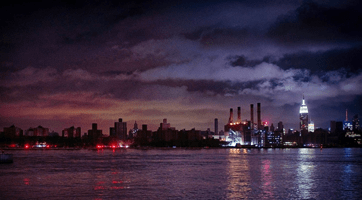
I am writing this after being evacuated from my dorm and living out of NYU’s Kimmel Center for days—a building that offered food, shelter, and power to students. For those not seeking refuge outside of their ‘South of Power’ apartments, I’ve heard stories of raw ramen for dinner and pilgrimages north for cell phone service. Luckily, power resumed for much of my neighborhood recently, so I have a bed to sleep in again.
Rather than thinking about where I would be relocated after the storm on Monday, my concerns shifted to how Sandy would affect the upcoming election. Perhaps my priorities need adjusting.
Read MoreIf Obama Wins Ohio, Fair Voting and Jennifer Brunner Get Credit
My grandparents were all immigrants from tyrant-ruled Eastern Europe during the early decades of the 20th century. They treasured their voting rights as only new citizens can, and they instilled in me their almost sappy love of the American ideals of liberty, justice, and fairness.
Having struggled to get to their promised land, they considered voting their sacred duty. Every election, no matter what. They weren’t naïve about politics, nor did they expect their favored candidates to win every time. They just wanted their votes counted honestly and their voices heard fairly.
They would have loved Jennifer Brunner, Ohio’s first female Secretary of State who served from 2007-2011. She’s a true American hero for cleaning up the state’s election system after its 2004 debacle, one that is remembered as one of the most sordid chapters in our nation’s history.
Read MoreFaith-based Support for Abortion Rights
The Gallup poll is showing abortion as the #1 voting issue for women in key swing states, with the economy second. Though the pollster didn’t indicate whether the female registered voters polled were pro or anti choice, it’s clear there is a heightened awareness of the consequences of a Romney/Ryan presidency as well as the…
Read MoreRomney Skewered by Candidate He Endorsed?
Indiana GOP Senate candidate Richard Mourdock told debate viewers last night that he opposes abortion even in the case of rape, because pregnancy from rape is “something that God intended to happen.” This occurred just as Mourdock’s campaign unveiled a new on-camera endorsement from Mitt Romney.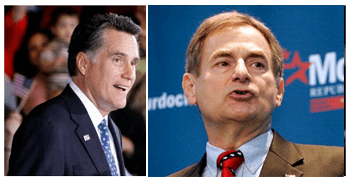
To his credit, Mourdock’s opponent, Democratic Rep. Joe Donnelly, later said that Mourdock’s comments didn’t reflect what “my God or any God” would intend to happen. And it’s no secret that most Americans, including Romney by own official campaign statements, reject such extremist views.
But Mourdock’s comments can’t help but damage Mitt Romney by association. Such a wild-eyed position by a candidate he has endorsed drives one more nail into Romney’s campaign coffin by revealing the stark truth about the extreme anti-woman positions the Romney campaign has been forced to take by the extreme right wing of his party.
Just as Todd Akin did with his misogynistic attempt to parse what kind of rape is “legitimate” and what is not, Mourdock cruelly dismissed women’s moral autonomy and even their right to defend their own bodies against the assaults of their attackers. He even invokes God’s name to justify his position.
Read MoreThe Young Politica: Do the Presidential Candidates ‘Walk the Walk’ on Student Issues?
If you watched the presidential debate this past week, you probably remember Jeremy Epstein, a 20-year-old college student who attends Adelphi University. He opened up the town hall question session by asking:
“Mr. President, Governor Romney, as a 20-year-old college student, all I hear from professors, neighbors and others is that when I graduate, I will have little chance to get employment. Can — what can you say to reassure me, but more importantly my parents, that I will be able to sufficiently support myself after I graduate?”
This question is the basis of concern for many young Americans. And it correlates to other questions we have about student loans and the economy. In 2008, 51% of young voters came out to the polls and helped swing the vote. An overwhelming amount of students—68 %—voted for Barack Obama.
Now that there is some unrest on how he has handled the economy over the past four years, recognizing the student vote on both sides should be key to snagging the presidency. Here are some issues the candidates need to address:
Read MoreDebate #2: Crowley Wins It, Binders of Women New Mitt Meme
Candy Crowley was the biggest winner in last night’s Town Hall for her real time fact checking on Libya. She also asked follow up questions that forced the candidates to clarify their positions.  She is, however, wrong in saying that it doesn’t matter that she’s a woman. It matters a lot that other women see they can aspire to moderate a presidential debate if that is their aspiration. And I suspect having a female role model gave permission, conscious or not, to female questioners who asked about such issues as equal pay.
President Obama snatched victory from the jaws of his first debate defeat, while Mitt Romney snatched defeat from the jaws of his previous winning performance by being, well, Romney.
The optics revealed two alpha males, each determined to prevail. However, Romney’s body language was stiff and menacing, reeking of privilege, whereas Obama seemed comfortable and nonthreatening in his leadership responsibility as president and commander-in-chief. As Keli Goff observed, Romney not only appeared on the brink of losing his cool several times, but the way he brushed off Crowley was a turn off to women whom both candidates acknowledge are key to the election.
Read MoreThe Young Politica: A Sudden Change in Voter’s Rights
Over the past six years, a new string of Voter ID laws has been pushed to legislation in 31 states. These laws require voters to show up with a valid ID at the polls.  Voter ID laws, along with laws that allow those in the military to vote early, have been under the national spotlight in recent months, despite being practically invisible to the media when they were first proposed. These laws are ever-transforming and some are still being amended—less than a month before the presidential election.
There has been a recent push to delay Voter ID laws in many states until after the November election. It has been argued that this is the work of the Democratic Party’s agenda, because delaying these laws makes voting more accessible to the poor and the elderly; two groups which tend to vote Democrat.
Where are these changes happening and how will you be affected?
Read MoreThe Young Politica: Denver Debate Leaves College Students More Confused than Ever
At this point in the presidential race, students like myself do not have time to sift through crooked statistics and tired rhetoric. We have enough of those things on our plate already, considering that we’re reviewing for midterms.
Romney and Obama could have saved us the trouble. Most of the students I spoke with at New York University, which I attend, were already informed about the policy issues addressed during the televised train wreck. And those who were undecided said that they were still thinking through both policies because the debate offered little to them.
“I thought both candidates did an excellent job at talking their way around some key issues,” John Facey, a junior studying creative writing, said.
The candidates were just picking on each other like boys in the school yard. One friend likened Jim Lehrer’s authority to that of a high school substitute teacher: only after the fifth warning did the kids eventually settle down.
And just like almost every American who watched the debate on Wednesday, the student voter population was left scratching their heads once Lehrer finally called it a night.
Read More