
Election Watch
If Obama Wins Ohio, Fair Voting and Jennifer Brunner Get Credit
My grandparents were all immigrants from tyrant-ruled Eastern Europe during the early decades of the 20th century. They treasured their voting rights as only new citizens can, and they instilled in me their almost sappy love of the American ideals of liberty, justice, and fairness.
Having struggled to get to their promised land, they considered voting their sacred duty. Every election, no matter what. They weren’t naïve about politics, nor did they expect their favored candidates to win every time. They just wanted their votes counted honestly and their voices heard fairly.
They would have loved Jennifer Brunner, Ohio’s first female Secretary of State who served from 2007-2011. She’s a true American hero for cleaning up the state’s election system after its 2004 debacle, one that is remembered as one of the most sordid chapters in our nation’s history.
Read MoreRomney Skewered by Candidate He Endorsed?
Indiana GOP Senate candidate Richard Mourdock told debate viewers last night that he opposes abortion even in the case of rape, because pregnancy from rape is “something that God intended to happen.” This occurred just as Mourdock’s campaign unveiled a new on-camera endorsement from Mitt Romney.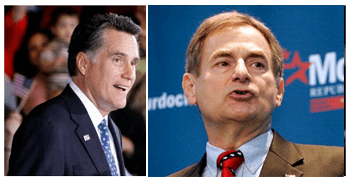
To his credit, Mourdock’s opponent, Democratic Rep. Joe Donnelly, later said that Mourdock’s comments didn’t reflect what “my God or any God” would intend to happen. And it’s no secret that most Americans, including Romney by own official campaign statements, reject such extremist views.
But Mourdock’s comments can’t help but damage Mitt Romney by association. Such a wild-eyed position by a candidate he has endorsed drives one more nail into Romney’s campaign coffin by revealing the stark truth about the extreme anti-woman positions the Romney campaign has been forced to take by the extreme right wing of his party.
Just as Todd Akin did with his misogynistic attempt to parse what kind of rape is “legitimate” and what is not, Mourdock cruelly dismissed women’s moral autonomy and even their right to defend their own bodies against the assaults of their attackers. He even invokes God’s name to justify his position.
Read MoreThe Young Politica: Do the Presidential Candidates ‘Walk the Walk’ on Student Issues?
If you watched the presidential debate this past week, you probably remember Jeremy Epstein, a 20-year-old college student who attends Adelphi University. He opened up the town hall question session by asking:
“Mr. President, Governor Romney, as a 20-year-old college student, all I hear from professors, neighbors and others is that when I graduate, I will have little chance to get employment. Can — what can you say to reassure me, but more importantly my parents, that I will be able to sufficiently support myself after I graduate?”
This question is the basis of concern for many young Americans. And it correlates to other questions we have about student loans and the economy. In 2008, 51% of young voters came out to the polls and helped swing the vote. An overwhelming amount of students—68 %—voted for Barack Obama.
Now that there is some unrest on how he has handled the economy over the past four years, recognizing the student vote on both sides should be key to snagging the presidency. Here are some issues the candidates need to address:
Read MoreDebate #2: Crowley Wins It, Binders of Women New Mitt Meme
Candy Crowley was the biggest winner in last night’s Town Hall for her real time fact checking on Libya. She also asked follow up questions that forced the candidates to clarify their positions.  She is, however, wrong in saying that it doesn’t matter that she’s a woman. It matters a lot that other women see they can aspire to moderate a presidential debate if that is their aspiration. And I suspect having a female role model gave permission, conscious or not, to female questioners who asked about such issues as equal pay.
President Obama snatched victory from the jaws of his first debate defeat, while Mitt Romney snatched defeat from the jaws of his previous winning performance by being, well, Romney.
The optics revealed two alpha males, each determined to prevail. However, Romney’s body language was stiff and menacing, reeking of privilege, whereas Obama seemed comfortable and nonthreatening in his leadership responsibility as president and commander-in-chief. As Keli Goff observed, Romney not only appeared on the brink of losing his cool several times, but the way he brushed off Crowley was a turn off to women whom both candidates acknowledge are key to the election.
Read MoreThe Young Politica: A Sudden Change in Voter’s Rights
Over the past six years, a new string of Voter ID laws has been pushed to legislation in 31 states. These laws require voters to show up with a valid ID at the polls.  Voter ID laws, along with laws that allow those in the military to vote early, have been under the national spotlight in recent months, despite being practically invisible to the media when they were first proposed. These laws are ever-transforming and some are still being amended—less than a month before the presidential election.
There has been a recent push to delay Voter ID laws in many states until after the November election. It has been argued that this is the work of the Democratic Party’s agenda, because delaying these laws makes voting more accessible to the poor and the elderly; two groups which tend to vote Democrat.
Where are these changes happening and how will you be affected?
Read MoreThe 2012 Election: Could our reproductive future be even worse than our past?
Double bonus of Sister Courage today! This is a guest post by a woman leader I admire about a woman leader I admire.
Both have made many contributions to women’s reproductive rights, health, and justice. But neither Carole Joffe—author, researcher, and professor at the UCSF Bixby Center—who wrote this piece, nor its subject, filmmaker extraordinaire Dorothy Fadiman, is about to slow down her quest for women’s full equality. It’s my honor to feature them on Heartfeldt.
They raise profound questions voters must consider when they go to the polls. For those who say so-called ‘women’s issues’ are peripheral to the political debate, I say our daughters’ futures hang in the balance. What could be more important?
Watching the haunting images in Dorothy Fadiman’s new compilation, “Choice at Risk,” drawn from her award-winning PBS abortion rights trilogy, is even more unsettling than it was before.
For years, I have shown Fadiman’s films about abortion to students, finding her work the most effective way to communicate to young people both the horrors of the pre-Roe v Wade era—as shown in her Oscar-nominated film, When Abortion was Illegal—and the continual threats to abortion rights since legalization. The third film in the trilogy, The Fragile Promise of Choice, offers a searing portrayal of the violence and harassment that abortion providers undergo as they struggle to meet the needs of their patients.
But now, writing these words, I feel that this talented filmmaker, by editing her 2 ½ hour body of work into clips and mini-docs, is showing us in chilling detail, not only our past, but our possible future. A future, moreover, that may be even worse, in some respects, than the pre-Roe era she has so ably documented.
How could anything be worse than the era of the back-alley butchers and women attempting to self-abort in dangerous ways?
Read MoreThe Young Politica: Denver Debate Leaves College Students More Confused than Ever
At this point in the presidential race, students like myself do not have time to sift through crooked statistics and tired rhetoric. We have enough of those things on our plate already, considering that we’re reviewing for midterms.
Romney and Obama could have saved us the trouble. Most of the students I spoke with at New York University, which I attend, were already informed about the policy issues addressed during the televised train wreck. And those who were undecided said that they were still thinking through both policies because the debate offered little to them.
“I thought both candidates did an excellent job at talking their way around some key issues,” John Facey, a junior studying creative writing, said.
The candidates were just picking on each other like boys in the school yard. One friend likened Jim Lehrer’s authority to that of a high school substitute teacher: only after the fifth warning did the kids eventually settle down.
And just like almost every American who watched the debate on Wednesday, the student voter population was left scratching their heads once Lehrer finally called it a night.
Read MoreThe Young Politica: Will Young People ‘Rock the Vote’ Like They Did in 2008?
I like to think that voting is a trendy thing for young Americans. We see it as a rite of passage and a chance to impact the world.  I like to think that come November 4th, some of us make it a point to show off our ‘I Voted’ sticker, like it’s the status symbol for the concerned citizen. But in reality, voting isn’t that easy when you’ve never done it before and it takes a lot of responsibility to be informed enough to make an educated voting decision.
Rock the Vote is a nonprofit that focuses on trying to engage young people in the political process. One of their main objectives: getting young people to vote. In 2008, the organization was at a new peak. The advancement of technology which promoted voting, an overall desire for reform in the White House, and an increase in the amount of celebrity candidate endorsements, all of this led to one of the highest youth voter turnouts in American history.
This year is different. After four years of promise, some young people are not seeing change.
Read MoreWhat’s the most important presidential debate question?
Bring on the hot wings and beer. My favorite contact sport event is coming up October 3. I hope it’ll inspire tailgate parties all over the country.
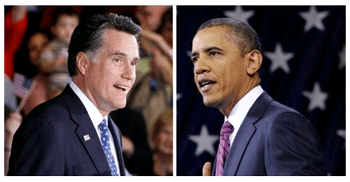 No, I haven’t become a football fan after years of avoiding it. I’m talking about the first presidential debate. It should be required watching for all voters—that would be a far better qualification for voting than requiring picture identification.
What if you were the debate moderator, what do you think would be the most important question you’d ask?
Politico’s Arena, where I post regularly, asked about that yesterday, and also quizzed the panel on whether voters should expect fireworks or calm, polished debate. I wondered, what fun would it be without some fireworks. PBS’s Jim Lehrer will moderate this debate, the first of two debates between the presidential candidates.
I’m sure there will be many questions about their respective economic plans, as there should be. But in my response, I addressed the way questions are asked as well as the content.
Most of the time when I’m cheering and booing from the debate sidelines, I’m annoyed with the moderators’ softball questions that have too little follow up to get the candidates beyond their talking points.
Read MoreThe Young Politica: How Obamacare Affects College-Aged Women
You may have heard the word ‘Obamacare’ spinning around the election coverage, but here’s what it’s all about and how it can affect you.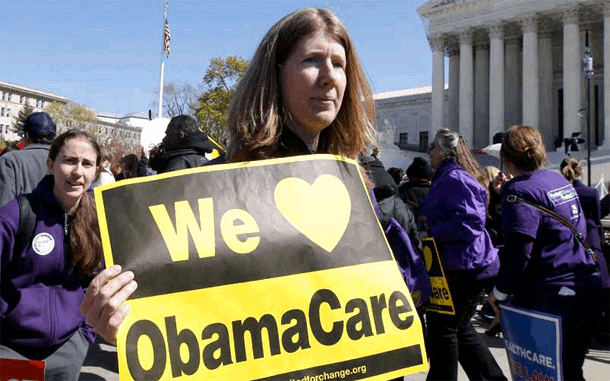
Obamacare (formally known as the Patient Protection and Affordable Care Act) is a set of newly-passed (2010) healthcare reform mandates that ultimately aim to provide insurance to the uninsured by lowering the overall costs of health care. The planned changes, which have already begun and will last until 2020, include:
- offering free preventative counseling and birth control to women (unless you work for certain religious institutions or possibly unless you work for a company that does not support birth control, depending upon how the courts interpret the Constitution on this one),
- guaranteeing that those who apply for insurance with preexisting conditions are not turned away,
- and an annual penalty to those who do not have insurance by the year 2014.
Many of the changes won’t go into effect until 2014 (or unless Mitt Romney wins the election and repeals Obamacare as he has promised, but some have already gone into action.
Here are some changes Young Politicas should expect to affect them immediately and in the future:
Read More