
WHY WOMEN NEED TO LEARN HISTORY’S ELECTION POWER LESSON
Like many women who identify themselves as feminists, Kathleen Turner and I are divided in our presidential candidate pick. We spent 18 months collaborating on her just-released memoir, Send Yourself Roses: Thoughts on My Life, Love, and Leading Roles.
During that time, we talked about politics quite a bit, because she sees herself as an activist as well as an actor. I rolled my eyes last summer when she announced to me that she’d decided to support Barack Obama and was going stumping for him in North Carolina’s August heat.
I thought it a naïve choice, but Obama had the good sense to invite her to a meeting with a few prominent women and had asked directly for her support. She’d been impressed, as I was when I first met him soon after his 2004 election to the U.S. Senate. And like many people, I was thrilled that the Democratic candidate lineup looked more like America, whereas Republicans were still mired in cookie-cutter white male political hegemony. Nevertheless, it seemed at the time that Hillary Clinton was surging to an unassailable lead for her party’s nomination, so I didn’t need to press too hard on Kathleen to join me in supporting her.
REALITY SHIFTS AND “TRUTH” WITH IT
Aldous Huxley said, “That men do not learn very much from the lessons of history is the most important of all the lessons of history.” Apparently that holds true for women too. Because on reflection, the one truth I should know from my four decades in politics from the lowliest local grassroots to the highest halls of power in Washington is that today’s unassailable fact is often tomorrow’s untruth. Things are true until suddenly there is a new Moment and they are not true, whereupon everyone does a quick reality shift.
INTENTIONING
Sex, Power, Pandemics, and How Women
Will Take The Lead for (Everyone’s) Good
The new book from Gloria Feldt about the future, taking the leadership lessons learned from this disruption and creating a better world for all through the power of intention.

The reality shifted when Obama and Clinton became locked in nose-to-nose competition for the nomination after the Super Tuesday primaries. That wasn’t easily predicted last summer, but we should have known something would happen to create a new truth. In addition to the more predictable movement by African-Americans toward Obama, many feminist women have lined up with him, not as a movement or with any particular strategy, but one by one. The “truth” that the women’s vote would surely line up behind the first viable woman candidate for president? Out the window. This is one lesson of history that does appear ready to repeat itself because women have never learned it: power unused is power useless.
POWER UNUSED IS POWER USELESS
Women fought over 70 years to get the right to vote, if you count from the 1848 Seneca Falls convention—or 144 years if you count from the nation’s founding year when Abigail Adams implored her husband John to “remember the ladies”. In 1920, when the women’s right to vote was finally ratified as the 19th amendment to the Constitution, it presented a big historic Moment.
But instead of consolidating its gains into an agenda and strategy and using that newfound political power collectively, the women’s suffrage movement dissipated. What was left morphed into League of Women Voters’ style voter education.
Now I am personally indebted to the League of Women Voters because they taught me much of what I needed to know about how the government works when I was a fledgling activist. But instead of the fiery advancement of women represented by the suffrage movement, the good grey nonpartisan, everyone-should-vote-as-she-wishes approach squandered what could have become mass voting power for change and the elevation of women to our just portion of leadership roles.
Opponents of women’s suffrage won the war even though they lost its defining battle: among other points, anti-suffragists had argued that women didn’t need the vote because they’d just vote like their husbands anyway.
Turns out that’s pretty much what women did.
Power ceded. Battle won; war for full equality and justice lost. No—given away freely. In exchange for—nothing.
LESSONS OF HISTORY’S MOMENTS STILL UNLEARNED
That is, until a gender gap started to appear and get defined as such in the 1980 presidential election. In 1992, the Moment dubbed the Year of the Woman, women voted in record numbers. For one thing, the Webster decision rolling back Roe v Wade awakened them to a threat not previously perceived. They voted for Bill Clinton and a change from the Bush/Reagan past. Women were elected to Congress in record numbers. Politicians started paying attention. Women’s endorsements were courted.
Two years later when the midterm elections came along, those same women stayed home and we got the Gingrich Revolution, the Contract on America, and the crushingly sexist ascendancy of the religious right. Since then, many organizations devoted to recruiting and electing women candidates have arisen. They work hard. They have scored some successes, yet the U. S. remains 67th among nations in women elected to federal and state legislative office. At this rate, it could be another 70 years before we have parity in Congress, and who knows how long before we have a woman president if Hillary loses.
Will women give this Moment away freely once again? Will we sacrifice our potential power as voters to another certainly worthy cause of electing the first African American president? Will African-American women, long the most reliable Democratic voters, choose their racial identity over their gender identity in deciding where to use the power of their votes? Will the majority of all women opt for an amorphous message of hope because it’s the new new thing, rather than dancing with the woman who brung us to this Moment of opportunity to wield the power of women’s votes for an extraordinarily well-qualified woman whose track record indicates she’ll prioritize issues women have complained for years get overlooked by the men, even progressive ones?
RIGHT AND RESPONSIBILITY—NOT ALWAYS THE SAME
I credit feminism and feminists for doing many good things, but one thing we have failed miserably at is teaching each succeeding cohort to embrace the power and the responsibility of joining together as a movement to achieve goals that particularly improve the lot of women, just as every other group does and is expected to do.
We progressive women, we feminists who are activists in a thousand worthy social causes, might decide to squander this Moment and justify in a thousand ways why it’s our right to decide as individuals when we choose our candidate.
Well, yes, it is our right. But is it the sum total of our responsibility? Is it enough to really, really like Obama? Is it enough to flee from Hillary Clinton because of, say, one vote we didn’t like (even though her opponent never had to put his vote where his anti-war voice now is)? Or because her husband lacks impulse control?
In my mind, no. And I believe history will agree with me when feminist activists 70 years from now—yes, friends, at the rate we’re going there will still be a need for feminist activists then—look back at this year. I believe they too will say, “No, it was not enough.”
Now I argue with Kathleen publicly and privately, though still cordially and respectfully as women are prone to do. Soon enough we will know if women missed our Moment again.
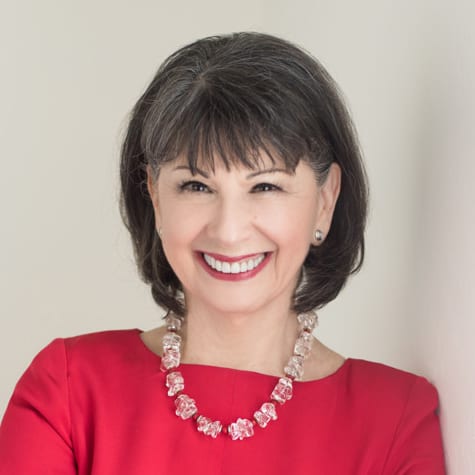
GLORIA FELDT is the New York Times bestselling author of several books including No Excuses: 9 Ways Women Can Change How We Think About Power, a sought-after speaker and frequent contributor to major news outlets, and the Co-Founder and President of Take The Lead. People has called her “the voice of experience,” and among the many honors she has been given, Vanity Fair called her one of America’s “Top 200 Women Legends, Leaders, and Trailblazers,” and Glamour chose her as a “Woman of the Year.”
As co-founder and president of Take The Lead, a leading women’s leadership nonprofit, her mission is to achieve gender parity by 2025 through innovative training programs, workshops, a groundbreaking 50 Women Can Change The World immersive, online courses, a free weekly newsletter, and events including a monthly Virtual Happy Hour program and a Take The Lead Day symposium that reached over 400,000 women globally in 2017.
3 Comments
Leave a Comment
You must be logged in to post a comment.
I truly appreciate what you’ve written here, and I myself am still undecided in terms of what Democratic candidate I’m ultimately going to support. I do think, however, that the need for change is so strong in the youth movement that they’re willing to put all of their efforts and strength behind someone who is just as wide-eyed and progressive as they see themselves to be. For many of those in younger generations, myself included, there has never been a time when a Clinton or a Bush hasn’t dominated the American political spectrum. To some of them, change can’t possibly come from someone who has both influenced and infiltrated a political system that has proven time and time again to be inherently flawed beyond repair. Hillary Clinton has quite a battle to fight if she is intending to secure the nomination, because she has to account for all that is present in politics, and all that came before her. Obama has an advantage because, like most in younger generations, he feels himself to be capable of combatting the tyrants of corporate and beauracratic oppression.Clinton, while equally capable, also has the stigma of dealing with her deeply embedded political and social connections. To the young voters, Hillary doesn’t try extra hard to speak out against corporate domination just because she is so passionate about the subject – she does it because she once walked among them, and she has to apologize for it.
Enlightenment, as with age, matures as time goes by. Democrats, Republicans, and Independents alike seem to be stuck in between three facets of the American dream: the established woman, the war hero, and the African-American man. It seems, just like you’ve said, that this is anyone’s game.
Your thoughts on this election have been insightful and appreciated. I have cited a previous entry of yours in this video – noting the importance of this historical moment. So thanks!
http://ca.youtube.com/watch?v=qREHwZf9DT4#GU5U2spHI_4
I find the current fragmenting of progressive activists in this election to be disheartening- As a feminist, I listen to other feminists lambast Obama’s message of hope as if they know for a fact he won’t even attempt to act on it. I am tired of being made to feel guilty for being inspired by Obama despite the fact that I am a woman- as though any woman candidate has a *right* to my vote regardless of viewpoint- time and time again women say “I’m not voting for Hillary just because she’s a woman” yet in the same breath, they seem to privilege that characteristic above all others.
I understand the importance of having a woman become President and I understand the link between our under-representation and our history of disparate treatment, but I also understand that her gender will not automatically assure that she will truly represent progressive ideals once in office.
I respect Hillary Clinton a great deal and will vote for her if she gets the nominiation but do I believe in my heart that she will advocate for my progressive ideals? I honestly don’t know but right now, I am not completely convinced. I am not convinced that Hillary will say no to a trumped up war with Iran based on the same type of faulty intelligence. I am not sure she will stand up against those who will call her ‘weak on national security’ if she does not continue this ill-concieved and patently illegal war in Iraq. And while Hillary may be pro-choice, will she follow in the foot-steps of her ‘liberal’ husband and throw gay rights under the bus when it matters most (DADT, DOMA)? Is she going to advocate for my [federal] right to marry my partner and have that contract respected by other states?
Will Obama do any of the above? For some reason, I think he will try. Perhaps I am wrong, but I like his message. And quite frankly, I could use a bit of hope.
Perhaps we should all spend less time accepting democratic candidates who are just as knee deep in the muck with big business, war profiteers, the pharmaceutical lobby and the Washington status quo as the GOP are, regardless of race or gender, and fight for a candidate who truly respect progressive values. I can’t help but think the division among progressives will have lasting [negative] implications for a long time. Many, including myself, think a fantastic ticket would be Clinton-Obama (regardless of which one is Pres or VP) but the fact is, they have spent so much time personally attacking each other and letting their egos rule the day, that it seems unlikely that that would happen.
I appreciate your thoughts and I love your new site.