
She's Doing It: Dorothy Seymour Mills Finds Her Voice–and Uses It!
Earlier this year, I reviewed baseball historian Dorothy Seymour Mills’ book, First in the Field, a book that offers readers insight into the history behind gender-based affirmative action policies.
Today, Mills returns to 9 Ways to discuss her new book. A work of fiction, Drawing Card is steeped in Mills’ trademark historical-fact-made-relevant-today.
According to Amazon reviewer Joan M. Thomas, “Mills’ extensive knowledge of history and ethnic cultures makes the fast paced story all the more real. Moreover, while the events occur during earlier times, inequities that persist today become crystal clear.”
Today’s guest blogger, Dorothy Seymour Mills, is the personification of what it means to embrace Power tool #1, Know Your History–and she’s using Power Tool #8, Employ Every Medium, using her voice to speak her truth.
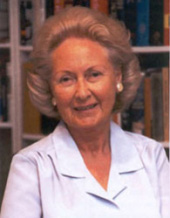
In researching women’s baseball history, I discovered that at least two female baseball players had been signed to minor-league contracts but didn’t play. That’s because the Commissioner of Baseball, Kenesaw M. Landis, canceled their contracts as soon as he learned that they were women. Landis scoffed at the idea that women could play baseball, just as some baseball men do today.
INTENTIONING
Sex, Power, Pandemics, and How Women
Will Take The Lead for (Everyone’s) Good
The new book from Gloria Feldt about the future, taking the leadership lessons learned from this disruption and creating a better world for all through the power of intention.
Apparently, the minor-league managers who had signed these two women to contracts failed to fight for them. Behaving as women were supposed to behave, they went home quietly and found some other athletic endeavor to engage in.
I began to wonder what would have happened if these two women had refused to accept their rejection on the basis of gender. What if they had made some kind of fuss about it? I realized that I had the theme for an intriguing historical novel.
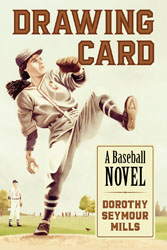 Annie Cardello, the main character of my new novel, Drawing Card, just published by McFarland, pitches for a Cleveland women’s team in the 1930s. When a scout signs her to an International League contract, she happily travels to Albany. But as soon as Landis discovers a woman’s name on a contract, he cancels it. Annie goes back home, but she does not forget the slight she has suffered. She lets her resentment fester within her until she finally decides to act.
Making Annie into a daughter of Sicilian immigrants gives me the opportunity, through flashbacks, to show her as the descendant of feisty Sicilians resentful of the constant invasions by the Greeks and others. It also enables me to show that throughout history, athletic women’s aspirations have constantly been blocked. Why is that important? Because it’s still happening today. Many baseball men have no idea that women have a real history in baseball, with each generation turning up some very good players. Today’s female baseball players (and umpires) have a tough time getting the respect they deserve.
Now I’m under contract to write a history of women’s baseball for young people, who all know about Babe Ruth but not Babe Didrickson. They’ve heard of Jackie Robinson but not Jackie Mitchell. It’s about time they found out that women have some baseball heroes of their own.
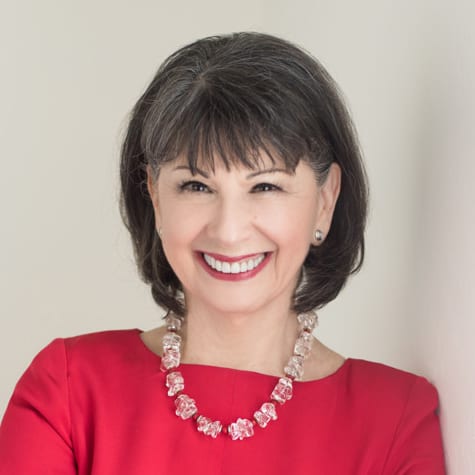
GLORIA FELDT is the New York Times bestselling author of several books including No Excuses: 9 Ways Women Can Change How We Think About Power, a sought-after speaker and frequent contributor to major news outlets, and the Co-Founder and President of Take The Lead. People has called her “the voice of experience,” and among the many honors she has been given, Vanity Fair called her one of America’s “Top 200 Women Legends, Leaders, and Trailblazers,” and Glamour chose her as a “Woman of the Year.”
As co-founder and president of Take The Lead, a leading women’s leadership nonprofit, her mission is to achieve gender parity by 2025 through innovative training programs, workshops, a groundbreaking 50 Women Can Change The World immersive, online courses, a free weekly newsletter, and events including a monthly Virtual Happy Hour program and a Take The Lead Day symposium that reached over 400,000 women globally in 2017.