
Remembering Jeannette Rankin, First US Congresswoman
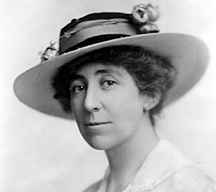 If women had held the preponderance of political leadership roles for the last few millennia, would peace have become more of a central organizing theme of history than war?
Jeannette Rankin, a Montana Republican and lifelong pacifist, was elected to Congress in 1916; that’s four years before the Constitution gave all women the right to vote. Not only did Rankin lead the way as a first for women, she defied all semblance of political tradition by opposing both World War I and World War II.
Rankin’s leadership style has many lessons for us today, especially since she did not shy away from controversy. The subject of Rankin’s very first Congressional vote (against President Wilson’s WWI war resolution) set the stage for her destiny. Rankin lost the support of most of the women’s suffragists who had campaigned for her, because they feared her anti-war vote made women look weak and hurt the suffrage movement. Embracing controversy can be tough when we ruffle the feathers of our opponents, but it’s even tougher when we lose the support of our closest friends and allies.
Filmmaker Kamala Lopez explores Jeannette Rankin’s life in the film “A Single Woman.” The film’s website sums up Rankin’s life in brief:
In 1920, Rankin became founding vice-president of the American Civil Liberties Union who, in 1933, tried to persuade President Roosevelt to revise immigration laws and allow Jewish refugees into the United States.
INTENTIONING
Sex, Power, Pandemics, and How Women
Will Take The Lead for (Everyone’s) GoodThe new book from Gloria Feldt about the future, taking the leadership lessons learned from this disruption and creating a better world for all through the power of intention.

Twenty-two years later, in 1940, Jeannette was re-elected as Congresswoman from Montana on a peace platform and once again voted against a world war, this time as the lone anti-war voice in the American Legislature. She was mobbed and vilified and spent the rest of her life traveling to India and studying the teachings and methods of Gandhi and the effects of colonialism on peoples all over the world.
During the Vietnam era, she enjoyed a renaissance when the anti-war culture of the day celebrated her perseverance as a dedicated pacifist and human rights advocate.
Be sure to watch the trailer here for a small whiff of what truly solitary, ahead of the curve, leadership feels and looks like. And listen to an oral history interview with Rankin, who lived long enough to oppose the Vietnam War before she died in 1973 at age 93.
Jeannette Rankin’s story is an important study in the complexities of leadership in women’s history. To be sure, many female leaders – Golda Meir, Margaret Thatcher for example – were far from pacifists. Still, most of the peace movements have been started and led by women from the fictional Lysistrata through Code Pink today. Thoughts as to why that has been the case? Please share them in the comments section.
For more thoughts on how women can reach parity in elected office, check out this interview.
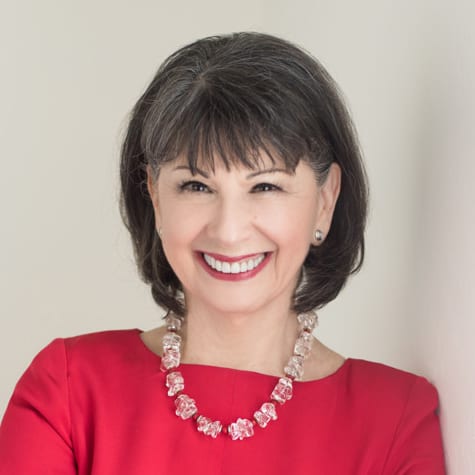
GLORIA FELDT is the New York Times bestselling author of several books including No Excuses: 9 Ways Women Can Change How We Think About Power, a sought-after speaker and frequent contributor to major news outlets, and the Co-Founder and President of Take The Lead. People has called her “the voice of experience,” and among the many honors she has been given, Vanity Fair called her one of America’s “Top 200 Women Legends, Leaders, and Trailblazers,” and Glamour chose her as a “Woman of the Year.”
As co-founder and president of Take The Lead, a leading women’s leadership nonprofit, her mission is to achieve gender parity by 2025 through innovative training programs, workshops, a groundbreaking 50 Women Can Change The World immersive, online courses, a free weekly newsletter, and events including a monthly Virtual Happy Hour program and a Take The Lead Day symposium that reached over 400,000 women globally in 2017.
No Comments
Leave a Comment
You must be logged in to post a comment.
#
Kelley Bell I was perusing your book the other day and came across the story of Sybil Luddington, the 16 year old girl who rode with Paul Revere. You said it’s a shame kids don’t learn about women like her in school, so I wrote a song and will perform it at a Women’s poetry gathering next month. -Thanks Gloria. Your words make a difference.
#
Joanne Tombrakos Thank you for your posts! They are such good reminders why as women, we need to know our history!
#
Gloria Feldt Thanks, friends, I love this stuff. It’s is so heartening to me to know you like it too.