
Posts Tagged ‘Women’s History Month’
Who Will the Woman of Tomorrow Be?
“What do you want to be?” we ask our daughters and sons when they are growing up.
It seems only right that as Women’s History Month draws to a close, we don’t just look backward but that we also focus forward to ask what we as women want to be and what women of the future might or should become.
This article on Canadian women’s economic power indicates economic parity is on the way. A new study published in the Harvard Business Review says women are better leaders than men on almost every measure of leadership. But does that translate to women moving from the current 18% to parity in top leadership positions?
Since the power to define the woman of tomorrow is to a large extent in our hands (See Power Tool #3) and based upon the history we make today (see power tool #1), I’m asking what you think:
Read MoreAre You Angry Enough to Embrace Your Power To Act? (3 Signs You Are)
In decades of experience as a women’s advocate, I’ve learned people can be inspired to action by one of two things: anger or aspiration.
 A roiling, boiling anger is propelling women — even many who’ve never been activists before — to embrace their “power to” to take leadership and make change. They’re making their voices heard over the din of political rhetoric they might shun under other circumstances.
There was no one trigger, rather a succession of insults. I talked with Richard Lui about them this week on MSNBC’s Jansing & Co. Here’s a smattering:
- After 30-year-old Georgetown University law student Sandra Fluke was denied the chance to speak about why contraceptives should be covered by insurance…
- After the stunning optics of an all-male “expert” panel pontificating on women’s reproductive health before a Senate committee (also all-male because the women on the committee were so incensed they walked out)…
- After shock jock Rush Limbaugh denigrated Fluke, calling her a slut and a prostitute (can one be both—don’t sluts give it away?) and demanding to see videos of her having sex…
- After bills like those in Texas and Virginia forcing women seeking abortions to submit to 10″ ultrasound “shaming wands” (as Doonesbury dubbed them), an AZ bill requiring women to bring notes to their employers verifying they take birth control for health reasons not pregnancy prevention or risk being fired, and a Tennessee bill that mandates public reporting of the doctors by name and the demographics of each patient…
Women are rightly furious.
Why is this happening?
Read More"Black Woman Novelist" -Toni Morrison Defines Her Own Terms
“I’ve just insisted – insisted! – upon being called a black woman novelist…And I decided what that meant, because I have claimed it. As a black and a woman, I have had access to a range of emotions and perceptions that were unavailable to people who were neither.”
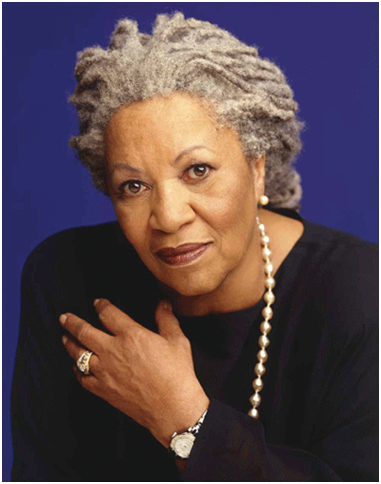
It’s Women’s History Month and I can’t resist profiling Toni Morrison, a prolific writer who has worked to represent through fiction the experience of black people—particularly women–in America. Ms. Morrison’s novels focus on marginalized characters struggling to find their place in a society built upon the legacy of slavery and the violence of racial prejudice. Most known for her imaginative fiction, Morrison has also written essays, non-fiction, plays, a libretti, and children’s books.
Ms. Morrison developed her first novel, The Bluest Eye (1970), while raising two children and teaching at Howard University. She later took a job as an editor at Random House, where she played a vital role in bringing black literature into the mainstream, editing books by authors such as Toni Cade Bambara, Angela Davis, and Gayl Jones.
Commercially successful and critically acclaimed, her 1987 Pulitzer Prize winning novel “Beloved” was chosen by a New York Times survey of prominent writers to be the best work of American fiction of the previous 25 years. In “Beloved”, Morrison imagines what it would have felt like to be Margaret Garner, a fugitive slave woman who chose to kill her infant daughter rather than see her grow up in slavery.
In an interview with the Paris Review, Morrison says about Margaret Garner:
Read MoreShe’s Doing It: What Courtney Martin Learned This Year
Read MoreWhen I speak on college campuses, I score points with students when they find out I know Courtney Martin, author, among several books, of Perfect Girls, Starving Daughters and Do It Anyway. Though she’s the youngest of the four of us on the WomenGirlsLadies intergenerational feminist panel, she is usually the most together. The one who knows where we’re supposed to be when, gets the power point together, and remains calm when things go awry.
Follow Courtney @courtwrites and find her commentaries on The American Prospect and many other publications. Courtney is the Founding Director of the Solutions Journalism Network, along with New York Times columnist David Bornstein. In addition, she is the leader of the Op-Ed Project’s Public Voices Fellowship Program at Princeton University–coaching women academics to become part of public debate. She is a partner in Valenti Martin Media, a communications consulting firm focused on making social justice organizations more effective in movement building and making change and is an Editor Emeritus at Feministing.com.
Here’s what Courtney says she learned since I interviewed her for No Excuses:
Lesser-Known Women Often Make History
Today in the Women’s History Month series, let’s shine a light on lesser known women. 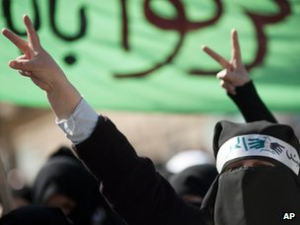
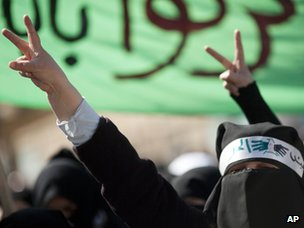
In the spirit of the month, here are links to articles drawing attention to women you may not have heard of—and the awesome things they are doing today.
- Anna Clark has compiled a list of underrated women writers of novels, stories, poems, and graphic novels from around the globe.
- The BBC has profiled some of the women activists involved in Syria’s uprising.
- Bitch Flicks recommends 11 films about trailblazing women.
- Houston Press lists ten of their favorite Female Artists making music today. Rock on ladies!
Aung San Suu Kyi Says Value Change Over Regime Change
“Regime change can be temporary, but value change is a long-term business. We want the values in our country to be changed.”
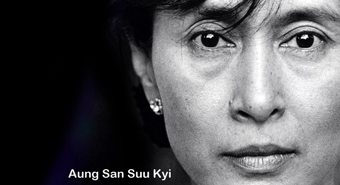
As a contemporary figure making women’s history, Daw Aung San Suu Kyi reflects the kind of ‘power-to’ leadership which is truly earth shattering.
“Regime change can be temporary,” she says, “but value change is a long-term business. We want the values in our country to be changed. “
Winner of the Nobel Peace Prize in 1991 Daw Aung San Suu Kyi is the leading pro-democracy opposition leader in Myanmar, formerly known as Burma, one of the world’s most isolated and repressive nations.
Since a military junta grabbed power of the country in 1962, it has secured its power by rigging elections and suppressing opposition. Ms. Aung San Suu Kyi spent 15 of the last 20 years under house arrest after her party, the National League for Democracy, won an overwhelming victory in the 1990 elections but was denied power. In November 2010 elections, Myanmar’s main military-backed party won in a vote again engineered to assure the military’s continued grip on power. The National League of Democracy boycotted this election and called it what it was—undemocratic.
Ms. Aung San Suu Kyi—who was released from house-arrest November of 2010—and her party, the National League for Democracy, have chosen to participate in elections this time around. On April 1 of this year, Suu Kyi and other pro-democratic candidates will run for 47 of the 48 open seats in Parliament.
Her campaign speech, which will appear on National TV, will mark the first time the Nobel Peace laureate has been given the opportunity to use state media to promote her party’s platform. She calls for amending the 2008 constitution,
Read MoreWear The Shirt And Make Women’s History
“Well behaved women rarely make history” ~ Laurel Thatcher Ulrich

I often wear a t-shirt bearing historian Ulrich’s advice because people react with a chuckle and it starts conversations. Conversations we need because women’s history is rarely given its due.
March is Women’s History Month, so designated because history has largely been framed through the male lens, recorded by male pens, and thus not surprisingly showcases men as the protagonists and the leaders; women, if noticed at all, play supporting roles (unless of course they take “male” personas, such as generals).
Yet women were everywhere, giving birth to everyone, among many other accomplishments. I’ve often wondered whether, if women had been documenting history for the last millennium, keeping peace and making things rather than making war and destroying things would be the central organizing narrative.
Then, once history is made, it seems so normal that it can easily be taken for granted. When I asked my grandson if he would vote for a woman for president, he responded “Yeaaah” in that drawn out way that made it sound as though I had three heads to ask such a dumb question.
And Sunday’s New York Times front page boasted a photo of German Chancellor Angela Merkel and International Monetary Fund head Christine Lagarde—with little comment about what a power shift those two symbolize. Yet, as Lagarde said at the recent Women in the World conference, the global financial meltdown might not have occurred if Lehman Brothers had been Lehman Sisters—or at least Lehman Brothers and Sisters. History has consequences for the future.
Women’s History: A Revolutionary Shift
Read MoreFrom Olympe de Gouges to Women Demanding Rights Worldwide
“A woman has the right to mount the scaffold. She must possess equally the right to mount the rostrum [speaker’s platform].”
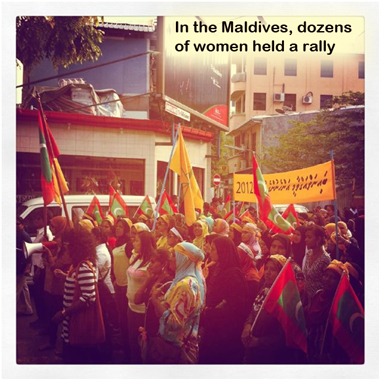
Olympe de Gouges was an 18th Century French playwright and political activist way ahead of her time, and her feminist and abolitionist writings stirred political discourse in ways that presaged uprisings by women around the world last week.
Disenchanted when equal rights were not extended to women after the outbreak of the French Revolution, Olympe de Gouges wrote a Declaration of the Rights of Woman and the Female Citizen. Modeled on the 1789 Declaration of the Rights of Man and of the Citizen by the National Assembly, De Gouges’ Declaration echoed the same language, replacing ‘Man’ with ‘Woman’.
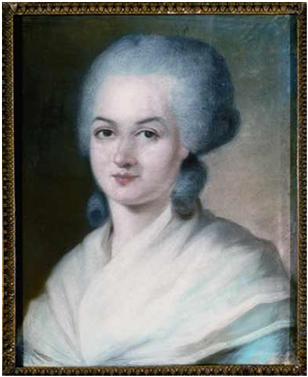 De Gouges argued that the rights revolutionaries were attempting to expand for men should be extended to women as well. She passionately insisted upon universal suffrage, legal equality in marriage, women’s right to divorce in cases of abuse and her right to property and custody of her children, among other things. In her postscript, Gouges exhorted women to awaken to consciousness of their rights to embrace their power. She encouraged them to step up, take action and demand equality.
Sound familiar?
Read MoreShe’s Doing It: Jen Nedeau and the Joy of Media
Are there generational differences in women’s relationship with power?
When I started writing No Excuses, I wanted to interview young women in their 20’s to learn about their relationships with power. Media relations professional and digital strategist Jen Nedeau, then 24, brought together several of her friends for a frank and far reaching conversation.
Jen, who seems to have been born knowing her power, blew me away with her poise, sense of balance, and that power of intention that many women of all ages need to be urged to pursue. See what I mean in her update—she must keep those power tools in her purse, because she uses them so proficiently to deal with the ups and downs of life. (As befitting a digital strategist, you can follow Jen on Twitter @JenNedeau.)

Gloria Feldt: In No Excuses, I asked, “When did you know you had the power to_____?” What have you learned about your power to ______ during the past year or so?
Jen Nedeau: When I spoke to you for the book, we talked about finding the “power source. ” For me, few experiences have been more profound in discovering my own source of power than the past three years I’ve spent in New York. Since moving here, I watched a company I once worked for go bankrupt, I’ve been robbed three times, lived with far too many random roommates and I had to stare down an army of cockroaches on a regular basis in my old apartment in the Lower East Side.
I would definitely say that I had to employ Power Tool #5: Carpe the Chaos on a regular basis.
But if the company I worked for hadn’t gone bankrupt, I probably would not have started my own consultancy and secured a variety of clients in the arts, media and non-profit worlds—proving to myself that I could make it on my own—before taking a job with a major magazine publisher. After two years of living here, I was able to move out of my cramped apartment in the Lower East Side and into a studio apartment, which I am glad to say is thus far, free of Manhattan’s favorite pests.
All of these challenges, big and small, helped me learn that I have the power not only to survive life’s challenges, but succeed despite them. Now, at age 27, I can say that even a bit of struggle can reap big rewards. I am enjoying my life here, meeting amazing people and working on interesting projects, but more importantly, I know that no matter what happens, I have the ability to make it on my own. And independence, in any form, is one of the most empowering tools in the toolbox.
GF: Was there a moment when you felt very powerful recently? Was there a moment when you felt powerless?
How Far Women Have Come and Where They’re Going
“As an activist for women through almost four decades, I know that no movement for social justice moves forward without struggle, nor does forward movement necessarily go in a straight line.”
Today, March 8, is celebrated around the globe as International Women’s Day . Some decry its commercialization, as corporate sponsors have realized it’s in their best interests to appeal to women who make over 85 percent of consumer purchases around the globe.
But it’s a day whose meaning inspires me to think back to a very special moment on September, 1995.
I was attending the United Nations Fourth World Conference on Women, where hugely ambitious and thrilling goals were set for improving the lives of women, and by extension their families and the world.
The official conference was in Beijing, but the much larger convocation of activists from nongovernmental organizations—40,000 enthusiastic women and a few good men like my husband—was literally stuck in the mud in Huairu, a suburb an hour’s drive from the city.
Thousands of sleepy people had arrived at dawn on the morning of Sept. 6, to stand packed together under a roof of brightly colored umbrellas, jockeying for the few hundred seats inside the auditorium where then first lady of the United States Hillary Clinton was slated to give a speech.
Thanks to my training in clinic defense, which had taught me how to form a wedge and move expeditiously through even the most aggressive crowd, I was fortunate not only to get inside but to get a seat. The program was running late; Hillary was running even later and the crowd was getting restless.
Just as it seemed a revolt might be brewing, Shirley May Springer Stanton, the cultural coordinator of the conference, sauntered onto the stage and began to sing a capella, ever so softly: “Gonna keep on moving forward. Never turning back, never turning back.”
Then she asked the audience to join her. Pretty soon the house was rocking. By the time the first lady arrived and gave her brilliant “human rights are women’s rights and women’s rights are human rights” speech, it truly felt like the global movement for women’s rights was unstoppable.
It was, you might say, an ovular moment.