
Posts Tagged ‘women’s history’
March Women’s History Madness: Thanks for a Month of Inspiring Guest Posts
I’ve been delighting as I’ve reviewed the rich and inspiring Women’s History Month guest posts here on 9 Ways and invite all 9 Ways readers to read or reread them to get the full spectrum.
Thank you Beverly Wettenstein, Kathy Groob, The Population Institute, Kathy Korman Frey, Anna North, Emily Jasper, Bonnie Marcus, Emmily Bristol, Deborah Siegel, Suzan St. Maur, Sara Messelaar, Liz O’Donnell, Linda Brodsky!
Read on and enjoy each tasty morsel…
A huge “thank you” shout out to each generous contributor–you know who you are, so please take a virtual bow.
Some of the guest posts give new insights about women you’ve heard of, while others tell stories of women neither famous nor infamous, but whose lives touched the writers in profound ways. Enjoy each tasty morsel of women’s history! And as always, please share your thoughts in the comments section below. Or just check in to say “thanks” for a story that moved, inspired, or surprised you.
Read MoreBella Abzug and Florence Feldt: Contrasts in Women's History
Since we’re wrapping up Women’s History Month, this tribute to my mother, Florence Feldt, and feminist icon Bella Abzug–two very different women from the same generation who died on this day in 1998–seems a fitting close.
I hope that you’ve been inspired by this month’s posts, and that they help you create the future of your choice!
My mother Florence Feldt died March 31, 1998.
[caption id="attachment_4037" align="alignright" width="300" caption="Me, my cutie pie sister Candy, and our mother, Florence"][/caption] Read More

Ma McDonough Was No Ordinary Woman
Another great guest post. All of them have made this my best WHM series ever. Today’s post is from Liz O’Donnell from Hello Ladies. I hope you enjoy reading about her great-grandmother as much as I do.
 I live in the house where I was raised. Some may think of me as a “townie,” one of those New England creatures who never leaves home. And when they look at my house, I’m sure they see a place that needs lots of work. The yard needs landscaping, the upstairs bathroom needs plumbing, and the kitchen has a gaping hole in the ceiling over the sink (see upstairs bathroom). But what they can’t see is the foundation. Not the cement that supports the frame of the house, but the history that holds me up.
This Women’s History Month. While I honor the women who have, should or will make the history books – Rosa Parks, Lilly Ledbetter, Hillary Clinton and so many others, I find myself thinking about my personal history and one of the women who shaped my life. The National Women’s History Project writes, “Learning about women’s tenacity, courage, and creativity throughout the centuries is a tremendous source of strength.” I know this is true.
Eighty years ago, my great-grandmother Ma McDonough bought the house where I live. At that time, women didn’t purchase property, but Ma McDonough was no ordinary woman.
My great-grandmother came from a well-to-do family in Ireland. As was the tradition then, her older brother was set to inherit the family farm and she would inherit nothing. So Ma McDonough left for Boston, rather than be dependent on someone else. She married, raised four children and somehow managed to save money. When her husband died, she moved out of the city and bought herself and three of her then adult children a new house in the suburbs. It was the Great Depression and the builder had run out of money. Ma McDonough had cash and moved in.
Read MoreWomen's History Open Thread: Infamous Women
In No Excuses, not all of the women I talk about have had a positive impact on women’s lives. In fact, I share a quote from Madeleine Albright that says “There’s a special place in hell for women who don’t help other women.” But should women support women like Michelle Bachmann and Sarah Palin, who oppose policies that help women, such as reproductive rights, fair pay legislation, and social programs that are most likely to help women and children who constitute the majority of those living in poverty?
Read MoreViolence Against Women: Not in MY Backyard—Er, Subway Car?
There are many ways of turning the wheels of history. Sometimes an act that seems small and obvious at the time changes the course of a group’s actions. Like the butterfly wings flutter that changes the climate halfway around the world, I believe every one on the subway car described by author and co-founder of SheWrites.com, Deborah Siegel, will forever think twice before looking away from a violent act.
 The other day I was riding the number 2 train home from the city, thinking about what I might write here in honor of Women’s History Month and feeling overpowered by current affairs. The tsunami, earthquake, nuclear disaster. Senseless murders in Libya. The gang rape of an 11-year-old girl. This month, I sense such widening circles of sorrow swirling, it’s easier, I confess, to shut off and just hold close those I love. If I pause long enough to truly let the world in, I fear I’ll be carried out on a wave, swallowed up by a sea of emotion from which there is no return. And then, there’s the tragedy going on right in our own backyards—that which lifts us out of our chairs and just kind of compels us, without thinking, to act.
Here is what I mean:
On the subway seat across from me, a woman sits with a large-sized purse taking up half the seat next to her. A hulking man enters the car and sits down—partly on the seat with the bag, and partly on the woman who owns the bag. The woman gets up in a huff.
“You don’t sit on women,” she says.
“Your bag was taking up half the seat,” he says.
“You don’t sit on women!”
“Your bag was taking up half the seat!”
This seems like it’s going to go on for a while. People nearby are getting edgy. I try to catch the woman’s eye, shoot her a glance of solidarity.
An older woman sitting closest to her catches her eye instead and says, “Let it go. You’re the bigger person.”
The two women chat. I can’t hear what they’re saying, but the man is listening all the while. The first woman gets off at the next stop. The man, it seems, is not through.
“She’s the bigger person huh?” he says to the older woman.
“Oh you’ve got the wrong one. The wrong one. Don’t you start with me now,” she says.
As the subway doors close, the dozens ensue. I try not to listen but, like a rubbernecked driver who can’t look away from a car wreck, I’m compelled. The words “Your mama…” “Your wife…” “Your mama…” “You’ve got the wrong one…” pour from the pair repetitively, and in escalating tones. There’s a feeling of gas rising to the point of combustion.
And then: THUNK. Sound of woman’s head being slammed against subway wall. Next, a piercing wail.
Read MoreLois Rabinowitz: Now You Can Wear Slacks
Today’s guest post is from women’s success coach Bonnie Marcus. Bonnie takes a candid look at how attitudes towards women’s attire have often had serious consequences. Shining the light on lesser known women is what Women’s History Month is all about in my opinion. Enjoy!
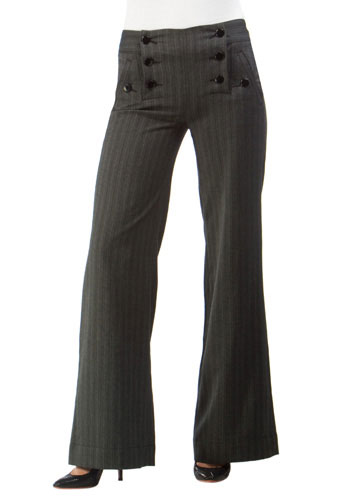 It’s hard to imagine the days when women were frowned upon for wearing slacks in public. In the 1960’s, however, this was the case. Women were expected to wear a hat, gloves, high heels, nylons and a girdle. It was commonly accepted behavior for women to dress up every day before they left the house.
In the summer of 1960, Lois Rabinowitz went to traffic court in New York City to pay a speeding ticket for her boss. Lois was a 28-year-old secretary for an oil company executive. She was a newlywed and her husband of just two weeks drove her to the courthouse that morning. Lois was neatly dressed in slacks and a blouse.
Upon seeing Lois in slacks, the Magistrate of the court was outraged and sent her home.
Read MoreRemembering Jeannette Rankin, First US Congresswoman
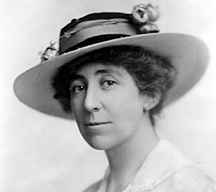 If women had held the preponderance of political leadership roles for the last few millennia, would peace have become more of a central organizing theme of history than war?
Jeannette Rankin, a Montana Republican and lifelong pacifist, was elected to Congress in 1916; that’s four years before the Constitution gave all women the right to vote. Not only did Rankin lead the way as a first for women, she defied all semblance of political tradition by opposing both World War I and World War II.
Rankin’s leadership style has many lessons for us today, especially since she did not shy away from controversy. The subject of Rankin’s very first Congressional vote (against President Wilson’s WWI war resolution) set the stage for her destiny. Rankin lost the support of most of the women’s suffragists who had campaigned for her, because they feared her anti-war vote made women look weak and hurt the suffrage movement. Embracing controversy can be tough when we ruffle the feathers of our opponents, but it’s even tougher when we lose the support of our closest friends and allies.
Read MoreOctavia Butler, A Pioneer In Science Fiction
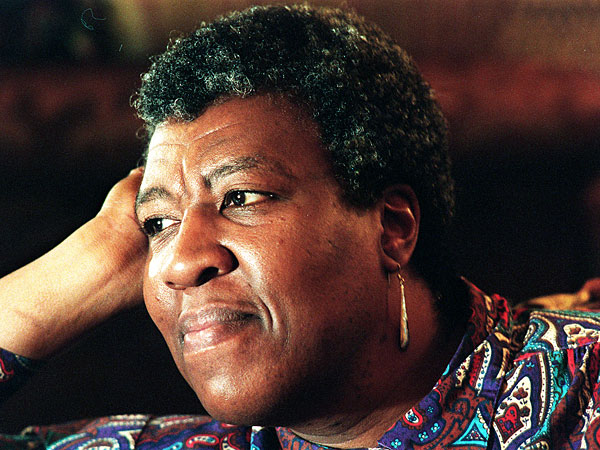 When an interviewer asked Hugo- and Macarthur-winning novelist Octavia Butler what she thought of her books being classed as science fiction, she said, “Really, it doesn’t matter. A good story is a good story.” Here is (some of) the story of Butler’s life.
Butler grew up in Pasadena, raised by a single mother who’d had to leave school after the third grade. Of her own early years, Butler has written,
At school I was always taller than the rest of my class, and because I was an only child I was comfortable with adults, but shy and awkward with other kids. I was quiet, bookish, and in spite of my size, hopeless at sports. In short, I was different. And even in the earliest grades, I got pounded for it. I learned that five- and-six-year-old kids have already figured out how to be intolerant.
But she also discovered writing at the age of 10 – she chose science fiction, she says, because “because it was so wide open. I was able to do anything and there were no walls to hem you in and there was no human condition that you were stopped from examining.” Her books – the first, Patternmaster, was published in 1976, and the last, Fledgling, came out in 2005 – did more than examine. They also reflected the deep inequalities plaguing America – and humanity as a whole — and sounded a warning for the future. Butler said her novel Parable of the Sower “calls people’s attention to the fact that so much needs to be done and obviously [there] are people who are running this country who don’t care.”
Read MoreBest of International Women's Day: Be a Front Porch Lady
How did you recognize the 100th anniversary of International Women’s Day March 8? If you haven’t yet signed the “Million for a Billion” petition to tell Congress you want them to fund international family planning and save the lives of so many women and children around the world, please do so here. This is one meaningful way to honor the women who founded IWD to promote equality for women, including the right to vote and hold public office. Another is to reach out to help another woman. Today’s guest post from Kathy Korman Frey, entrepreneur in residence at George Washington University School of Business and founder of The Hot Mommas Project tells just such a story. Read on, and keep reading for a roundup of some of the best of IWD posts:
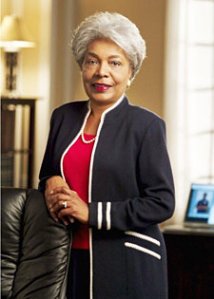 A dignified, beautiful, African-American woman stood at the podium during the Wake Forest Women’s Weekend. All eyes were on Esther Silver-Parker, one of the most senior former executives at Wal-Mart and now president of the Silver-Parker Group. Would she talk about women’s advancement to the C-suite? Would she share her secrets to success? That, she did. And one of them was not at all what we expected.
Silver-Parker grew up in rural North Carolina, in a two-bedroom house, with her parents and many siblings. She recounted a screenplay-like story about a group of women she called: The Front Porch Ladies. “The Front Porch Ladies were the women who sat on their front porches as we came home from school,” Silver-Parker said. “They would treat our business like it was their business.”
When Silver-Parker was accepted to college, imagine her surprise when the Front Porch Ladies showed up on her front porch. There they all stood, having brought with them a full set of blue luggage for her to take off to school. “From time to time at college, I would get letters from the Front Porch Ladies,” Silver-Parker told the audience. “They would write words of encouragement, and sometimes include a dollar or two.”
Read MoreBreaking Barriers: Kentucky’s First Female African American Senator, Georgia Davis Powers
Kathy Groob, former elected city council member, publisher of ElectWomen Magazine, and partner at November Strategies political consulting firm contributed this inspiring article about Georgia Davis Powers, the first woman and first African American elected to the Kentucky state senate. It’s the first of a number of Women’s History Month guest posts I’m excited to share with 9 Ways readers.
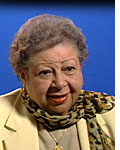 At the time, Georgia Davis Powers had no idea she had made history in 1968 by becoming the first woman AND the first African-American elected to Kentucky’s State Senate. All she knew was that she wanted to make a difference in her community.
It was never her intention to become a politician, or even to work in government, but in the spring of 1962 Powers was introduced to politics upon the suggestion of fellow church member Verna Smith. Upon Ms. Smith’s advice she joined the U.S. Senatorial campaign staff of Wilson Wyatt. This led to six more years of managing mayoral, gubernatorial, and congressional campaigns. She also became heavily involved in the civil rights movement, leading the Allied Organization for Civil Rights in promoting statewide public accommodations and fair employment law in the early 1960’s. In 1964, she was one of the organizers of a march on the capital in Frankfort in support of equity in public accommodations, in which Dr. Martin Luther King and baseball legend Jackie Robinson participated.
In 1964 she was the first black woman elected to the Jefferson County Democratic Executive Committee. But after two years she resigned after becoming discouraged by the fact that the Committee had not discussed a single one of her proposals.
In 1966 she worked in the bill room during the legislative session for the Kentucky House of Representatives. This gave her the opportunity to see first hand how government functioned; as a result her political ambitions grew.
Read More