
Posts Tagged ‘women’
Women’s History Month: How Rosabeth Moss Kanter Led the Way for Women in the Workforce
I remember how excited I was to discover Rosabeth Moss Kanter in the early 1980’s. She was one of the few females writing about leadership and organizational change management. I hungrily devoured The Change Masters as a relatively new nonprofit CEO navigating roiling changes in the healthcare and political landscape while learning to lead a complex organization toward continued growth.
This distinguished Harvard Business School professor’s influential theories about change in the workforce have permeated much of the thinking about organizational change. And unlike the men writing and teaching about it, Kanter infused her work with a lens on one of the biggest workplace changes of the 20th century: women breaking through workplace glass ceilings.
Kanter, former editor of Harvard Business Review and author of 18 books, has been named one of the “50 most powerful women in the world” by the Times of London, and the “50 most influential business thinkers in the world” by Accenture and Thinkers 50 research.
Her groundbreaking book Men and Women of the Corporation—I mean, who had ever mentioned “women” and “corporations” in the same book title?—remains a classic analysis of power distribution within organizations.
Kanter told the hard truth about women in the workforce, after conducting a five-year study on the American manufacturing company. She explained how women were tokenized to work in clerical jobs rather than management; and how even though there were plenty of women in large organizations, they rarely ran the show. She observed that the first women breaking through to leadership roles were still tokens in a male dominated workforce.
In 1979, she wrote:
Read MoreThe Young Politica: What’s Next for Student Loans
In my last column, I wrote about how the sequester could deeply impact students of all ages—by cutting education jobs, programs like Head Start, food stamps, and limiting financial aid. Well, once again, kids trying to get an education are at risk of being undercut by the federal government.
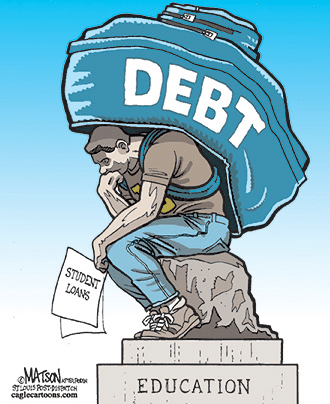
The interest rate of new federally subsidized Stafford loans will revert to 6.8 percent from 3.4 percent. The rate subsidized loans, which go to low-income households, was supposed to rise to 6.8 percent back in June 2012, but the rate’s expiration was postponed for a year. This year’s extension lasts until June 30, 2013. If Congress does not act to change the rules or extend the loan rate expiration date, an estimated 7.4 million college students will be affected.
Note that each year the date to change the rate is extended, the federal government loses out on about $6 billion in revenue. But students don’t necessarily have to be the ones paying the price. If there would have been more oversight on the financial aid process, the federal government could have prevented a loss of $200 million in federal student aid fraud since 2009.
What’s a good solution? Rather than postponing the expiration again, the House Education and the Workforce Committee argued that Congress should reevaluate their rate-setting process for all government-issued college loans.
FoxNews.com reports that the Department of Education has also been sending out letters to inform Direct PLUS Loan borrowers that their fees are being raised as a direct result of the automatic budget cuts (or the sequester) that happened after the federal government could not come to a fiscal agreement. Fees for loans issued after March 1, 2013, will have an adjusted loan rate fee—from 4.0 percent to 4.204 percent.
Students are taking more and more hits, but at least they’re putting up a fight.
Read MoreWomen's History Month: New Hampshire's Barrier Breaking Political Leaders
Today’s U.S. Congress is made up of less than 20% of female members—18% to be exact—a far cry from the parity we strive toward. Any conversation about Women’s History Month must include the rather dismal representation of women in American politics across the board.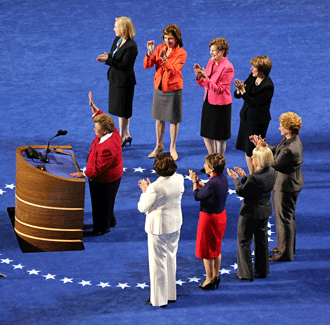
The Congressional delegation from New Hampshire are the exception to that 20% barrier. Last November, two women won Congressional seats, joining the two women who already held New Hampshire’s two Senate seats. To top it all off, the state’s governor, speaker of the State House, and chief justice of the State Supreme Court are all women as well.
These women have made history by making New Hampshire the first state with an all-female Congressional delegation.
The senators include Jeanne Shaheen (D) and Kelly Ayotte (R). The new Representatives are Carol Shea-Porter (D) and Ann McLand Kuster (D). Let’s not forget about Gov. Maggie Hassan (D), the only female Democratic governor in 2013, state speaker Terie Norelli (D) and State Chief Justice Linda Stewart Dalianis.
While this should be celebrated as a historic win for women and women’s rights, the beliefs of these women are diverse, to say the least. On one hand, there’s Carol Shea-Porter, who stands with EMILY’s List and the National Women’s Political Caucus, among other feminist organizations. And then there’s Kelly Ayotte,
Read MoreThe Young Politica: Why the Paycheck Fairness Act Will Narrow the Wage Gap
Last week, Sen. Barbara Mikulski (D-MD) introduced the Paycheck Fairness Act, which would allow employees to discuss their salary information without the fear of companies pursuing legal action against them.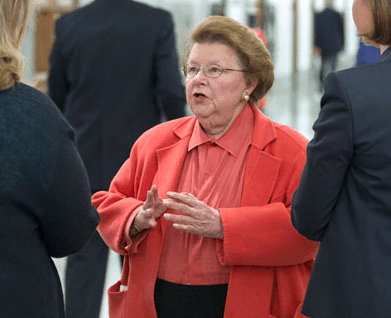
The bill is on its third try. In a 2010 senate vote, the bill failed to get any Republican support, even by the female Republican Senators Susan Collins (R-ME), Kay Bailey Hutchinson (R-TX) and Olympia Snowe (R-ME), who all voted for the Lilly Ledbetter Act.
According to Senator Tom Harkin (D-IA), the Fair Pay Act will:
• Amend the Fair Labor Standards Act of 1938 to prohibit discrimination in the payment of wages on the basis of sex, race or national origin;
• Require employers to provide equal pay for jobs that are comparable in skill, effort, responsibility and working conditions;
• Prohibit companies from reducing other employees’ wages to achieve pay equity;
• Require public disclosure of employer job categories and pay scales, without requiring specific information on individual employees; and
• Allow payment of different wages under a seniority system, merit system, or system that measures earnings by quantity or quality of production.
The bill makes perfect sense—give all female workers a chance to see what their equal male counterparts are earning, and see if it matches up without getting sued by employers. In an economy where women earn some 33% less than males, why wouldn’t politicians see this as a good measure for ensuring equal rights?
Read MoreShe's Doing It: IntergenFem and You…Join In!
Look who picked me up. Come join us and tweet your opinions at the #InterGenFem tweet chat 1/31 at 2pm eastern. Read the details below:

Intergenerational feminism.
Does it exist? Can we do a better job?
Why does working together across differences (generation is just one of many, including race, class, gender, sexuality, ability) matter for the cultural and political goals feminists are looking to achieve?
These conversations keep happening, and the idea for this TweetChat grew out of a great conversation that happened spontaneously on Twitter between @AndreaPlaid, @erintothemax, @ShelbyKnox, @StephHerold, @veronicaeye and @WentRogue. Along the way we picked up @GloriaFeldt and now we’re hoping to pick up YOU (yes, YOU are enthusiastically invited!) to join us for a broader conversation that is intended to be productive, solutions-oriented and totally helpful to your personal and professional endeavors to realize justice in this lifetime.
Some of the themes to discuss:
- 1. “Young feminism” – what does it mean?
- 2. Organizational feminism – what is and isn’t connecting with different age groups?
- 3. How does race and racial privilege intersect with intergenerational issues in the movement?
- 4. What is the unfinished business of feminism?
- 5. What does sharing power look like?
- 6. What can we all do to better support each other?
Is there more that needs to be discussed? Good. That’s another reason for you to join, so you can bring it up.
TweetChat is Thursday, Jan. 31. Use the hashtag #InterGenFem.
#InterGenFem + YOU = Join In!
Be there 2-3 p.m. and tell your friends.
Read MoreThe Young Politica: The Growing Debate On Unpaid Internships
Internships are awesome. They look great on a resume and they help you hone your craft with real-world experience. As a journalism student, I’ve heard the same advice many times: “Do as many internships as you can.” So I have done internships, both paid and unpaid, for the sake of gaining some experience while I’m still in school.
Within my school and other universities across the nation, it seems like full-time, unpaid internships are a common practice. For many, these unpaid internships are taken at the cost of relocating away from school (e.g. taking a summer internship in NYC) and/or paying for extra school credit. See, that’s a loophole, folks. As long as it is labeled as ‘educational’, an employer does not have to pay its intern. In reality, paying interns is not about thriving, really; it’s about surviving. Many times, a student is not even reimbursed for housing, food, or transportation.
But there’s a group going against the current, telling students to resist unpaid work. #PayGenY, an initiative sponsored by She Negotiates Consulting and Training, argues that most unpaid internships are illegal.
“We have a very simple lesson: influence for-profit employers, university and professional schools to pay interns,” Victoria Pynchon, co-founder of She Negotiates, said.
Read MoreThe Young Politica: After the Fiscal Cliff, What?
For now, it seems that the fiscal cliff crisis has been temporarily adverted. The Senate and House approved the American Taxpayer Relief Act of 2012, which has prevented old budgeting from sending the country hurtling down the Fiscal Cliff.
But don’t get too excited. The battle isn’t over and in some ways it’s just beginning. The new deal, which is designed to keep our economy from another recession, increases taxing on the wealthy but has temporarily halted many changes in government spending.
In further detail, here’s what some of the new bill entails:
- Tax rates will increase for taxpayers with incomes higher than $450,000
- Changes in estate taxing was adverted
- Middle class has an extension on stimulus tax cuts
- Capital gains taxes increase to 20% for high earners
- Some estimates say the deal will provide bout $600 B in revenue over the next 10 years.
However, there’s been no real agreement on what should be done about government spending cuts.
Read MoreHappy 2013: Why Women Must Change Our Narrative to Break Through to Leadership
The stories we tell ourselves about ourselves define us and how we engage with the world. It’s time for women to write ourselves a new narrative, so when asked to write a piece for the fabulous new “Kardashian free” women-owned and focused website Vitamin W (you may recall the “She’s Doing It” column on Amy-Willard Cross who created the site), I decided to put this idea out to you.
Judging from the unusually large number of tweets and retweets, it has hit a chord. Here’s the link to the original post on Vitamin W.
I want to start a conversation that will lead to specific initiatives of all kinds—social, political, workplace, personal relationships. Let me know what you think, and what initiatives you’d like to see. I’d very much appreciate your comments, shares, and tweets.
With a virtual thud, the Catalyst 2012 Census of Fortune 500 companies hit my e-mailbox:
NEW YORK (December 11, 2012)—Despite high-profile news about gender gaps, equal pay, and women on boards, once again the needle barely budged for women aspiring to top business leadership in corporate America, according to the 2012 Catalyst Census: Fortune 500 Women Board Directors and 2012 Catalyst Census: Fortune 500 Executive Officers and Top Earners.
Ouch.
Read MoreNew Year’s Wishes for Women
Who needs the fiscal cliff stress we’ve been getting starting out the new year? Mika Bzrezinski slammed Congress and President, says women negotiators would solve fiscal cliff. I tend to agree. But, meanwhile we have a brave new year to embrace to the full.
One of my favorite leadership coaches for women (or fem-evangelist as she describes herself), Ann Daly, asked me and a number of my women’s advocate sheroes to tell her their wishes for women in 2013. Then she was kind enough to allow me to repost the results, the original of which appeared on Ann’s blog on New Year’s Day.
Please share: what are your wishes for women in 2013?

Happy New Year! At this time of renewal, I’m reflecting on what we can achieve together as women. And how we can help each other as women. So I asked my favorite women’s advocates, “What do you wish for women in 2013?” What would you add to the list?
Several decades ago, my cousin Chris gave me the following advice: “Remember to laugh out loud and make your own luck.” I have often marveled at just how challenging that is to do, but every day I strive to do both.
Janet Hanson
CEO and Founder, 85 Broads
I wish for women the collective will to hold elected officials’ feet to the fire on issues that really matter to us. After this election, it’s clear that women’s votes brought them into this world, and that women voters can also kick them out!
Lisa Maatz
Director of Public Policy & Government Relations, American Association of University Women
We're Doing It And You Can Too: Here's a 9 Ways Power Tools Planning Worksheet
On Thursday, December 6, I’ll be delivering a No Excuses Power Tools speech and mini-workshop at the amazing Massachusetts Conference for Women in Boston.
I’m told they expect over 7000 women this year, making it one of the largest women’s conferences in the country—and I think it will be among the most exciting.
Other speakers include former Ogilvy and Mather CEO Charlotte Beers , vulnerability scholar Brene Brown, and actor Kristin Chenowith who starred in one of my all-time fave Broadway shows, “Wicked,” among many other roles.
Come if you can, and if you do, please stop by and say “hello.” Even if you can’t, consider this Power Tools Worksheet my gift of intention to you for your “power to” do whatever you want to achieve.) Bookmark it so you can reuse it any time you need to think through a problem or plan to achieve a goal. And if you need a quick refresher on the 9 Ways Power Tools, here’s a one-page summary.
Read More