
Posts Tagged ‘leadership’
Join The Conversation: Is It Time To Lean In To Feminism?
A very interesting conversation between InPower founder Dana Theus and myself led to this upcoming webcast. I hope you will join and put in your two cents worth. Women are making history every day. But we don’t always realize that. On the other hand, we do love to analyze ourselves, and the topic of intergenerational communication about feminism is always a hot one. See all the details and join up for the live broadcast or via replay!

Our Panelists include YOU and:
Gloria Feldt– Past President of Planned Parenthood and Author of No Excuses: 9 Ways WOMEN Can Change How We Think About POWER
Emily Bennington – Author of Who Says It’s a Man’s World?
Eva Swanson – Student and Women’s Advocate at the College of William & Mary
Dana Theus – Founder, InPower Women (Moderator)
Questions we’ll explore:
Read MoreJustice Sonia Sotomayor: The "Wise Latina" Makes History Intentionally
This Women’s History Month, I want to pay special attention to women leaders who are making history today. U.S. Supreme Court Justice Sonia Sotomayor is one woman who is not only making history; she is consciously and deliberately doing so—and telling the story.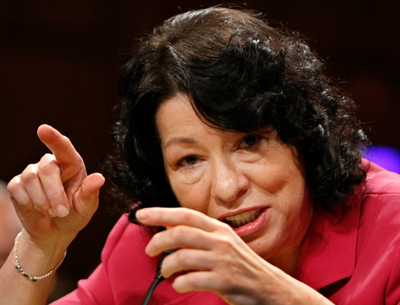
In January, Justice Sotomayor released her memoir, “My Beloved World,” which provided an honest look at the life of an American leader. While her role in the government is often sanitized, and many people have no idea what the life of a Supreme Court justice is like, Sotomayor reminds her readers that she, too, is a human being.
Sotomayor comes from humble beginnings. As a young girl from the Bronx, she had to administer her own insulin injections. Both of her parents emigrated to the United States from Puerto Rico, and she lost her father at nine years old. At Princeton, she advocated for Latinos by setting up an action group for Puerto Ricans on campus and by lobbying for Latino professors to join the Ivy League’s ranks.
Even though her job requires her to remain dispassionate about her work, Sotomayor comes off a bit more emotionally in-tune than her colleagues. As the third woman and first Hispanic to join the Supreme Court, her individuality in the courtroom sets a positive example. Understanding her own significance allows her to advocate for the progress of other women and other Latinas who need someone of high authority to be in the public scope, to be visible—to be a role model who can inspire others to achieve as she has done.
Read MoreSmart Women Take the Lead
Smart Women Take The Lead monthly global webcast by Smartwomen Smartconversations (SWSC) and Take The Lead for women in the workplace to launch Friday March 15 at 2:30 pm EDT
 Perhaps you want a promotion, or a raise, or you feel ‘stuck’ in your career?
Maybe you’re going on maternity leave or returning to work after a few years?
Or perhaps you want to talk to your boss about flexible working, or you want to get on the fast-track for a leadership position?
SWTTL is a live monthly webcast and community for women who want to get ahead. Our aim is to help accelerate effective change for women in the workplace by addressing key issues and creating real breakthroughs!
And our two organizations are modeling the kind of collaboration we think women individually and women’s organizations collectively must if we are to move the dial of leadership parity forward for women.
Read MoreLadies! Stop Arguing About Work/Life Balance and Work Together to Change the Workplace
Women’s leadership, or not, is the hottest topic of the moment, thanks to Facebook COO Sheryl Sandberg’s terrific new book Lean In. It prompted CNN.com to ask me to write this commentary.
They changed my title and last line (I wrote “Leaning In together…” which I thought more apropos than “Striving together…”). And they edited out my fun opening reference to the grey umbrella party favors with the Bloomberg logo that were presented to each guest as we exited into the snowy night, and a few other fun details of the AAA list Lean In launch party. Start reading here, click to the full article on CNN.com, and share your comments here and there (tweets and reposts will be appreciate too):
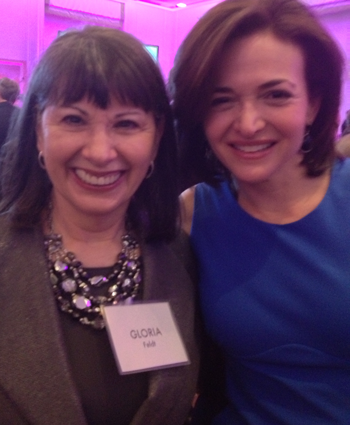
(CNN) — At the launch party for Facebook executive Sheryl Sandberg’s controversial new book, “Lean In,” New York Mayor Michael Bloomberg complained only half jokingly that the book — which hit Amazon.com’s best seller list well ahead of its March 11 release — is doing way better than his book did. Then he introduced Arianna Huffington, who introduced the woman of the moment.
And this is unquestionably a moment.
Read MoreMalala Yousafzai: On International Women's Day, Honoring A Fearless Leader at Just 15 Years Old
Malala Yousafzai is living proof that leadership comes in all shapes and sizes, genders, ethnicities, nationalities, and ages. We usually think of history being made by people with some years on them, but this courageous young woman demonstrates that anyone of any age can be a history maker.
In 2009, Yousafzai began sharing her stories under a pseudonym for the BBC. Yousafzai documented the drop in attendance of girls at her school after an increased concern over safety. Just after her blog ended, the Taliban temporarily banned women from going to jobs and to the market. In Pakistan her and her father received death threats in person, in newspapers, and online.
Despite the dangers associated with reaching out to press, Yousafzai continued to talk to media to advocate equal education. She could be the poster child for No Excuses Power Tool #8: employ every medium [link].
In 2012, the young activist was shot by members of the Taliban in the Swat district of Pakistan, while returning home from school. Yousafzai was targeted after being recognized in Pakistan for advocating education for all girls. Even though Yousafzai was shot at point blank range, she lived to tell the tale.
Read MoreThe Young Politica: Students Should Brace for the Sequester
Once again, we’ve waited until the last minute to try and fix our fiscal problems. This time, it’s the sequester that will go into effect on March 1st unless Congress acts. 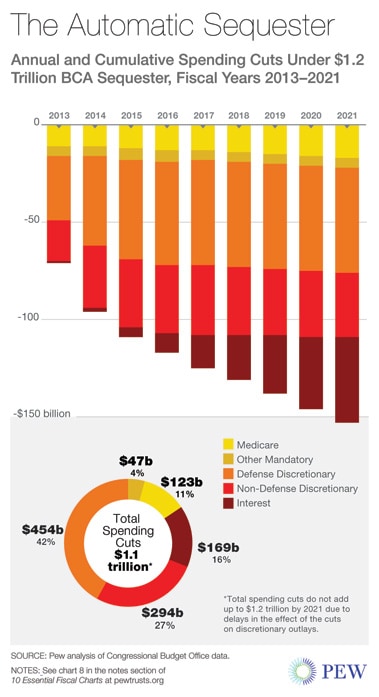
If the sequester goes into effect, about one trillion dollars of federal spending will get cut—half of the cuts going towards defense ($42.7 billion). These cuts may cause furloughs in defense sectors (military, airport security) and other cuts may leave many teachers out of jobs.
About $3 billion of sequester cuts will go towards education. According to the National Education Association the sequester will result in:
- Services cut or eliminated for millions of students.
- Funding for children living in poverty, special education, and Head Start slashed by billions.
- Ballooning class sizes.
- Elimination of after-school programs.
- Decimation of programs for our most vulnerable—homeless students, English language learners, and high-poverty, struggling schools.
- Slashing of financial aid for college students.
- Loss of tens of thousands of education jobs—at early childhood, elementary, secondary, and postsecondary levels.
However, the education cuts can be made smarter in a smarter way.
Read MoreMy 5 Fave parts of Obama’s 2013 State of the Union Address
The yoga class I took just before last night’s State of the Union (SOTU) address wiped me out. I fell asleep immediately afterward. Which is good because I had a chance to think overnight about the parts that resonated most with me.
I’ve been tough on the president in the past, disappointed with his timidity and unwillingness to set a big bold agenda.
The other good thing about writing the day after is that others have fact checked. And the de rigeur liberal critique as well as Sen. Ted Cruz’s (R-TX) really awful other-party rebuttal have been duly hashed and rehashed.
With the benefit of reflection, here are my three favorite parts of the speech.
Read MoreThe Young Politica: Why the Paycheck Fairness Act Will Narrow the Wage Gap
Last week, Sen. Barbara Mikulski (D-MD) introduced the Paycheck Fairness Act, which would allow employees to discuss their salary information without the fear of companies pursuing legal action against them.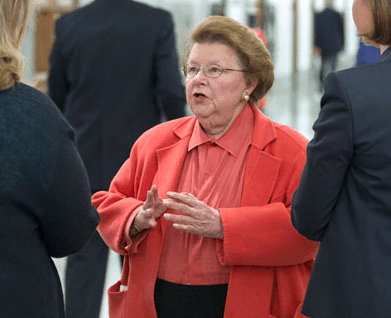
The bill is on its third try. In a 2010 senate vote, the bill failed to get any Republican support, even by the female Republican Senators Susan Collins (R-ME), Kay Bailey Hutchinson (R-TX) and Olympia Snowe (R-ME), who all voted for the Lilly Ledbetter Act.
According to Senator Tom Harkin (D-IA), the Fair Pay Act will:
• Amend the Fair Labor Standards Act of 1938 to prohibit discrimination in the payment of wages on the basis of sex, race or national origin;
• Require employers to provide equal pay for jobs that are comparable in skill, effort, responsibility and working conditions;
• Prohibit companies from reducing other employees’ wages to achieve pay equity;
• Require public disclosure of employer job categories and pay scales, without requiring specific information on individual employees; and
• Allow payment of different wages under a seniority system, merit system, or system that measures earnings by quantity or quality of production.
The bill makes perfect sense—give all female workers a chance to see what their equal male counterparts are earning, and see if it matches up without getting sued by employers. In an economy where women earn some 33% less than males, why wouldn’t politicians see this as a good measure for ensuring equal rights?
Read MoreThe Young Politica: How Increasing Girls in STEM Programs Can Improve the Nation
In your junior high science classes, how many female scientific pioneers were in your textbook? I doubt more that there were more than a handful. In freshmen geometry class, did you learn about any famous female mathematicians? Probably not. I did not know about Sally Ride until I graduated from high school and even today, I could not tell you about any legendary female mathematicians. Pioneering women have been historically absent from all school subjects, not just science and mathematics, since the dawn of the schoolhouse.
Even these days, when more women are going to college than men in this country, there is still a lack of women entering science, technology, engineering, and math (STEM) career fields. The reasons for the interest gap are complicated, according to Christi Corbett, senior researcher for for the American Association of University of Women.
“The direction of scientific inquiry is influenced by the people doing the work,” Corbett told me over the phone. Women comprise of about only 20% of the bachelor’s degrees in STEM-related fields. One can concur that women must then only make about 20% of the decisions in, say, scientific research.
Corbett helped compile Why So Few?—a comprehensive report that tries to solve why so few women are entering STEM fields.
Read MoreShe's Doing It: IntergenFem and You…Join In!
Look who picked me up. Come join us and tweet your opinions at the #InterGenFem tweet chat 1/31 at 2pm eastern. Read the details below:

Intergenerational feminism.
Does it exist? Can we do a better job?
Why does working together across differences (generation is just one of many, including race, class, gender, sexuality, ability) matter for the cultural and political goals feminists are looking to achieve?
These conversations keep happening, and the idea for this TweetChat grew out of a great conversation that happened spontaneously on Twitter between @AndreaPlaid, @erintothemax, @ShelbyKnox, @StephHerold, @veronicaeye and @WentRogue. Along the way we picked up @GloriaFeldt and now we’re hoping to pick up YOU (yes, YOU are enthusiastically invited!) to join us for a broader conversation that is intended to be productive, solutions-oriented and totally helpful to your personal and professional endeavors to realize justice in this lifetime.
Some of the themes to discuss:
- 1. “Young feminism” – what does it mean?
- 2. Organizational feminism – what is and isn’t connecting with different age groups?
- 3. How does race and racial privilege intersect with intergenerational issues in the movement?
- 4. What is the unfinished business of feminism?
- 5. What does sharing power look like?
- 6. What can we all do to better support each other?
Is there more that needs to be discussed? Good. That’s another reason for you to join, so you can bring it up.
TweetChat is Thursday, Jan. 31. Use the hashtag #InterGenFem.
#InterGenFem + YOU = Join In!
Be there 2-3 p.m. and tell your friends.
Read More