
Posts Tagged ‘Jewish women’
She's Doing It: Rabbi Holly Cohn
Read More
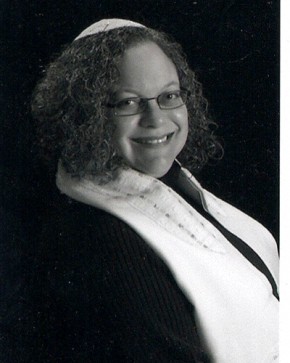
When I was told by my good Midland TX friend Dr. Norman Gould that the congregation I belonged to when I lived in West Texas had hired a woman, Rabbi Holly Cohn, as its first fulltime spiritual leader, I knew instantly that I wanted to write about her for this “She’s Doing It” column. I found her optimism and devotion to her calling inspiring. And I was also struck by how women are playing an ever-larger role in religion and religious observance.
This piece was originally published on the Sisterhood Blog of the Jewish Daily Forward. “Rabbi Holly in Mojoland” was my original title. I’d love to know your reactions. And whatever your religious persuasion, what have been your own experiences as women have been taking on increasingly significant roles as members of the clergy?
Burning Women: Triangle Fire 100th Anniversary Illuminates Wisconsin Union-Busting
Watch the full episode. See more American Experience.
The Triangle Waist Company, site of the fire that fanned the U.S. union movement into full flame, was housed, ironically, in the Asch Building.
On Saturday, March 25, 1911, it became an inferno, snuffing out the lives of 146 employees, mostly women, primarily immigrants, about two-thirds Jewish and one-third Italians, over one-half of them teenagers. Many were girls as young as twelve or thirteen years old. Child labor was routine at the time, as was weekend work.
Triangle’s owners, Isaac Harris and Max Blanck, placed immense pressure on he women to force their treadle sewing machines, like racehorses in their final lap, to produce women’s shirtwaist garments ever-faster. Their goal, not surprisingly, was to raise the factory’s profitability in an increasingly competitive field.
The Asch Building stood in the heart of New York’s Greenwich Village. Triangle Waist Company, a million dollar a year business, was one of the best-equipped factories of its day. Still, it was a horrible sweatshop with few safety provisions and almost no protections for workers against unfairly low pay, discrimination, sexual harassment, and certainly no paid sick leave, health insurance, or vacation.
Precautions against fire consisted of twelve red buckets of water.
Read MoreCourageous Leadership for Women Religious – First Bat Mitzvah
Thanks to the Jewish Women’s Archive for this article. I serve on the board of this terrific organization. Check out their blog, Jewesses with Attitude, where you’ll find podcasts in addition to vibrant articles. They’ve recently published the Jewish Women’s Encyclopedia, an invaluable resource for educators and anyone who likes fascinating stories about women who have done extraordinary things with their lives. But enough of this …read on about how and why the first bat mitzvah occurred. It always takes someone to be the boundary breaker, and then all the rest of us can follow suit, embellish, make a once sweeping change seem just normal. The last paragraph brought me to tears.
Judith Kaplan, at age 12, became the first American to celebrate a Bat Mitzvah on March 18, 1922. Judith was the oldest daughter of Rabbi Mordecai Kaplan, the founder of Reconstructionist Judaism. Believing that girls should have the same religious opportunities as their brothers, Rabbi Kaplan arranged for his daughter to read Torah on a Shabbat morning at his synagogue, the Society for the Advancement of Judaism.
The Kaplan Bat Mitzvah marked a turning point for Conservative Judaism in America. Always torn between tradition and modernity, the movement struggled for many decades with women’s roles in the synagogue. Judith Kaplan herself did not read from the Torah scroll, as modern Bat Mitzvah celebrants do; instead, she read a passage in Hebrew and English from a printed Chumash (the first five books of the Bible) after the regular Torah service. Still, Rabbi Kaplan’s innovation gained followers. By 1948, about a third of Conservative congregations had conducted Bat Mitzvah ceremonies. By the 1960s, Bat Mitzvah was a regular feature of Conservative congregational life; today it is a mainstay in synagogues from Reform to Modern Orthodox.
Read More