
Posts Tagged ‘feminism’
The Grand Folly of Focusing on “Common Ground”
I believe in making common cause with people of all persuasions, but here’s what I learned about the quest for common ground on issues where people have diametrically opposing worldviews. Originally published at On The Issues Magazine.
©Elaine Soto
 The day before the Food and Drug Administration (FDA) was expected to rule, rumors circulated that the agency would approve Plan B One Step emergency contraception as a non-prescription item and allow it to be sold without age restrictions. Freelance writer Robin Marty predicted via e-mail, “Conservative reaction will be a total shitstorm.”
Why did the supercommittee fail? (Duh!)
Silly question today but I decided to answer it anyway. More to the point, what in your opinion should be the next steps? Who should take leadership?
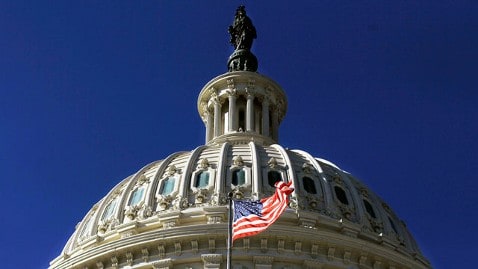 Arena Asks: Congress is bracing today for the failure of the supercommittee, which will most likely fail to submit paperwork to the Congressional Budget Office by its Monday deadline.
Is this a big hit for Congress, which had a nine percent approval rating in a recent poll? And why was the supercommittee unable to make ends meet?
My Answer: The supercommittee was doomed from the start because the Republicans have less to lose politically by being intractable on revenue. The supercommittee process played right into their hands and the Democrats took the bait…
Read More
Friday Round Up : As Pink Headlines Declare End of Feminism (Again), World’s Women Leaders Keep Moving Forward
Want to have a little cognitive dissonance?
First watch this video of U.S. Secretary of State Hillary Clinton delivered a keynote address at the first-ever Asia Pacific Economic Cooperation (APEC) Women and the Economy Summit 9/16/11 in San Francisco CA, essentially saying that women are the key to the world’s economic future.
[youtube]http://www.youtube.com/watch?v=0jbLUHIveIQ[/youtube]
And for good measure, take a gander at the latest
Read MoreFeminism in Second Life–and Its Challenges in the 21st Century Real Life
Listen on Blogtalk radio to the lively multi-generational conversation that took place last night on Second Life–and please share your comments–I’d love to hear how you would answer the questions that we were asked.
The panelists are journalist and author Lynn Harris, youth activist Shelby Knox, and myself talking with host Jay Ackroyd.
WomenGirlsLadies on Ronnie Eldridge Show
 Three of our WomenGirlsLadies inter-generational panel members, Deborah Siegel, Courtney Martin, and I (we were missing Kristal Brent Zook, who couldn’t change her teaching schedule to appear on the show) had a chance to talk with Eldridge and Co. host Ronnie Eldridge on her CUNY television show.
Click the photo above to see the video. We covered the inter-generational waterfront, from the state of the women’s movement, what happens when feminists disagree about political candidates, how we’re going to get work-life balance policies and actual practice, and what we all have in common to how the women’s movement has changed men too.
Our next public event will be Sept. 28 at the University of Missouri Kansas City. We’d love to come speak to your group too! Contact me and I’ll be delighted to give you more information.
Read MoreWhy Do I Consider Myself a Feminist?
 [/caption]
Thanks to my great friend and an activist who has always put her convictions into action, Rita Harkins Dickinson for this guest post. She wrote this moving personal essay after attending a WomenGirlsLadies inter-generational panel.
After attending the Feldt-Barbanell Women of the World Lecture at Arizona State University recently, I have questioned if I can honestly call myself a feminist. I always thought of myself as one, but do I deserve to wear the badge? The remarkable women on the panel had defining moments that justified them considering themselves feminists. I don’t have one “aha” moment. My sense of feminism is more organic.
My childhood was glorious. I am a Boomer, but June Cleaver was only a fantasy character on television. Conversely, I didn’t have militant women in my life either. Women surrounding me were strong, independent, and smart. Although our family is small, I had eight significant female relatives within reach: my mother, my grandmothers, my great-grandmother, my aunt, two great aunts and a great-great aunt.
Most of the significant influences in my childhood were subtle, yet extremely fond memories. I remember attending graduate classes with my mother, taking colored pencils and newsprint (we weren’t allowed to have coloring books – they would stifle creativity). We spent a great deal of time outdoors; we went to the beach, and we camped every summer. None of this is remarkable, except that my mother had survived polio when pregnant with my older brother, resulting in paralysis from the waist-down.
Read MoreWhat is Feminism?
Check out my interview with Ted Simons, host of KAET-TV Horizon news show. We covered a wide range of questions on this topic. I’d love to know how you’d answer them. I posted this on Heartfeldt because we inevitably talked politics quite a bit.
Read MoreHelen Zia: A Disobedient Daughter and Her Passion For Justice
 [/caption]
I am delighted to welcome a very powered young woman, Lee Taylor, as a regular guest poster. Lee is a writer and feminist activist who is a senior at SUNY Purchase College majoring in History and minoring in Women’s Studies. She is currently working on her senior thesis about Helen Rogers Reid, her great-grandmother, and former President of the New York Herald Tribune. After she graduates she plans on teaching high school. I’m especially thrilled that her first post here is a profile of my friend and Women’s Media Center board member sister, Helen Zia.
Helen Zia was born into a Chinese American family in New Jersey in 1952. Although the fifties was a time Lee Taylor and Helen Ziaof great conformity, the seeds of revolution were sown the day that Zia was born. Zia was brought into an immigrant family which observed traditional Confucian beliefs, including the Three Obediences: a daughter must obey her father, a wife must obey her husband, and a widow must obey her son; the trajectory of Zia’s life proves that she was truly a radical visionary and community organizer who broke seemingly insurmountable social and cultural barriers.
Helen Zia graduated from Princeton University in the first class that accepted women. She was also breaking racial boundaries as one of the few female, Asian American members of the prestigious university. Zia attended Princeton on a full scholarship, working her way through school and majoring in the Woodrow Wilson School of Public and International Affairs.
She was highly conscious of and became an active participant in the political transformations taking place in her young adulthood. Zia and her generation witnessed the nascent feminist movement, and the full-fledged civil rights movement, as well as the assassinations of John F. Kennedy, Robert Kennedy, Malcolm X and Martin Luther King. Hers was the baby boom generation – huge numbers of young people who were dissatisfied by their government’s war in Vietnam and inequality at home – they were idealistic about the opportunities for peace and sisterhood.
Zia’s career experiences after Princeton, however, showed that the youth-led social justice movements had not reached all areas of society. After graduation, Zia enrolled in Tufts Medical School in Boston. She moved to Boston’s South End; a neighborhood then predominantly inhabited by low-income Chinese, Puerto Rican, and African Americans, far from the glamorous place it is today. Helen soon discovered that medicine, a conservative white and male institution at the time, was not a friendly place for an Asian American woman committed to progressive social change. After two years of medical school, Zia felt a sincere urge to get involved in grassroots efforts to change troubled communities – she quit medical school and became a construction worker in her South End community, which offered Zia a way to create change, educate herself on community needs, and pay the bills.
Read MoreBefore Oprah, There Was Molly
 [/caption]
Before Lucy Ricardo, before Oprah Winfrey there was Molly Goldberg, powered woman and media mogul. In this Women’s Media Center exclusive, Emily Wilson interviews prize-winning filmmaker Aviva Kempner, whose documentary brings to life the star, writer and producer of the first TV sitcom, “The Goldbergs.” Yoo hoo, readers–Trust me, darlings, when I say you should go to the nearest theater where “Yoo Hoo, Mrs. Goldberg” is playing. You’ll find a fascinating story that weaves together global events with feminism, anti-semitism, and the American Dream through the prism of one groundbreaking woman’s life. Enjoy!
Filmmaker Aviva Kempner, in town to receive an award at the San Francisco Jewish Film Festival, has a lot to say. She tells stories about a photographer who complimented her about her earrings, muses on why her hotel room has a little jar of stones (“Are these supposed to center me? Because I’m in San Francisco?”), and when her brother Jonathan pops in she greets him enthusiastically. Most of all, she wants to talk about her latest documentary, Yoo Hoo, Mrs. Goldberg, the story of television and radio pioneer Gertrude Berg, which she says would make a perfect date movie.
“Don’t go see The Hangover, go see Yoo Hoo, Mrs. Goldberg,” she says. “It’s a great uplifting story for young women.”
Read MoreTo Run the World (Better), Power Up Feminism

In the Spring ’09 edition, On The Issues Magazine writers and artists discuss feminist and progressive values that transcend politics — our Lines In The Sand. I’m pleased to have been asked to contribute this article to the mix.
Were you thinking we were done with elections and could take a few minutes to celebrate a pro-woman administration and a Democratically-controlled Congress that appears ready to embrace pro-choice and pro-equality measures? Sorry, my Sisters. Elections are never over when they are over.
Candidates are already gearing up for 2010 and 2012. It’s critically important that feminists review the lessons of 1992 and its parallels to 2008 so we can avoid repeating mistakes—and more urgently, so we can charge ahead with strategies that advance a bold vision of gender equality and justice.
After all, men have been making America’s political decisions for over 200 years now, and I don’t need to tell you it’s not a pretty picture. Women, especially those not afraid to identify themselves with the F-word, are the change we need. But whether women will be the change we get depends on whether we use the power we have.
For the one constant in politics is that every victory sows the seeds of the next defeat and every defeat sows the seeds of the next victory, unless eternal vigilance is applied. This means using a movement mentality that continually advances bold new ideas and keeps its grassroots watered.
Read More