
Posts Tagged ‘9 Ways’
She's Doing It: Kristal Brent Zook Defines Her Own Chaos
Continuing the series of asking women I interviewed when I was writing No Excuses “What have you learned about your relationship with power since we talked?” here is a beautiful essay from Kristal Brent Zook explaining her answer about a very personal choice.
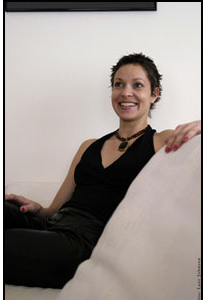
How Gloria Feldt’s No Excuses Reminded Me of My Power
Not long ago, my friend Gloria Feldt, author of No Excuses, asked me to take another look at her 9 ways women can embrace power to see if any of the strategies had resonated lately, in the year or so since the initial release of her book.
Since we all know how political the personal will always be, I thought immediately about the upheavals of the past year in my home life.
Last February, my husband and I decided—on a whim, really—to relocate from Manhattan to the suburbs of Long Island.
“Why not leave the city?” we asked ourselves. It seemed like a good idea at the time. Get some fresh air. A yard. A real house. It would shorten my commute to Hofstra University; and of course, we would be saving all that money.
A charming, two-story 1923 Colonial about 30 miles east of the city caught our eye: it was more than 5,000 square feet, with two sun rooms and front and back yards. The rent was $1,200 less than our midtown high-rise, and ditching New York City taxes meant another $1,000 a month in savings.
“Let’s do it!” we agreed excitedly, handing over a check for the first month’s rent.
Read MoreWho Will the Woman of Tomorrow Be?
“What do you want to be?” we ask our daughters and sons when they are growing up.
It seems only right that as Women’s History Month draws to a close, we don’t just look backward but that we also focus forward to ask what we as women want to be and what women of the future might or should become.
This article on Canadian women’s economic power indicates economic parity is on the way. A new study published in the Harvard Business Review says women are better leaders than men on almost every measure of leadership. But does that translate to women moving from the current 18% to parity in top leadership positions?
Since the power to define the woman of tomorrow is to a large extent in our hands (See Power Tool #3) and based upon the history we make today (see power tool #1), I’m asking what you think:
Read More"Black Woman Novelist" -Toni Morrison Defines Her Own Terms
“I’ve just insisted – insisted! – upon being called a black woman novelist…And I decided what that meant, because I have claimed it. As a black and a woman, I have had access to a range of emotions and perceptions that were unavailable to people who were neither.”
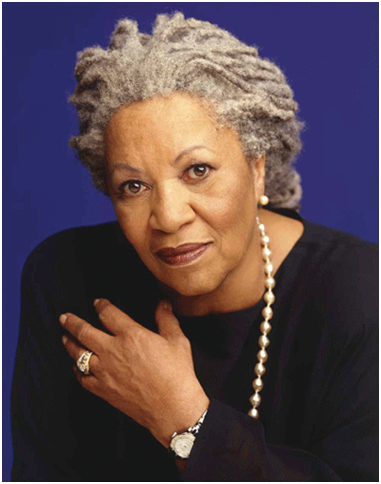
It’s Women’s History Month and I can’t resist profiling Toni Morrison, a prolific writer who has worked to represent through fiction the experience of black people—particularly women–in America. Ms. Morrison’s novels focus on marginalized characters struggling to find their place in a society built upon the legacy of slavery and the violence of racial prejudice. Most known for her imaginative fiction, Morrison has also written essays, non-fiction, plays, a libretti, and children’s books.
Ms. Morrison developed her first novel, The Bluest Eye (1970), while raising two children and teaching at Howard University. She later took a job as an editor at Random House, where she played a vital role in bringing black literature into the mainstream, editing books by authors such as Toni Cade Bambara, Angela Davis, and Gayl Jones.
Commercially successful and critically acclaimed, her 1987 Pulitzer Prize winning novel “Beloved” was chosen by a New York Times survey of prominent writers to be the best work of American fiction of the previous 25 years. In “Beloved”, Morrison imagines what it would have felt like to be Margaret Garner, a fugitive slave woman who chose to kill her infant daughter rather than see her grow up in slavery.
In an interview with the Paris Review, Morrison says about Margaret Garner:
Read MoreShe’s Doing It: What Courtney Martin Learned This Year
Read MoreWhen I speak on college campuses, I score points with students when they find out I know Courtney Martin, author, among several books, of Perfect Girls, Starving Daughters and Do It Anyway. Though she’s the youngest of the four of us on the WomenGirlsLadies intergenerational feminist panel, she is usually the most together. The one who knows where we’re supposed to be when, gets the power point together, and remains calm when things go awry.
Follow Courtney @courtwrites and find her commentaries on The American Prospect and many other publications. Courtney is the Founding Director of the Solutions Journalism Network, along with New York Times columnist David Bornstein. In addition, she is the leader of the Op-Ed Project’s Public Voices Fellowship Program at Princeton University–coaching women academics to become part of public debate. She is a partner in Valenti Martin Media, a communications consulting firm focused on making social justice organizations more effective in movement building and making change and is an Editor Emeritus at Feministing.com.
Here’s what Courtney says she learned since I interviewed her for No Excuses:
Lesser-Known Women Often Make History
Today in the Women’s History Month series, let’s shine a light on lesser known women. 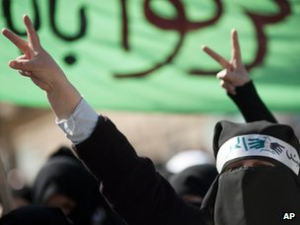
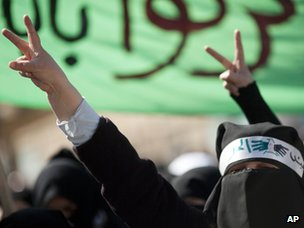
In the spirit of the month, here are links to articles drawing attention to women you may not have heard of—and the awesome things they are doing today.
- Anna Clark has compiled a list of underrated women writers of novels, stories, poems, and graphic novels from around the globe.
- The BBC has profiled some of the women activists involved in Syria’s uprising.
- Bitch Flicks recommends 11 films about trailblazing women.
- Houston Press lists ten of their favorite Female Artists making music today. Rock on ladies!
Aung San Suu Kyi Says Value Change Over Regime Change
“Regime change can be temporary, but value change is a long-term business. We want the values in our country to be changed.”
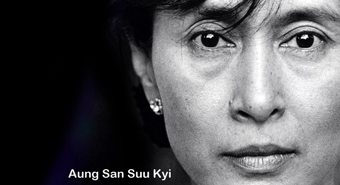
As a contemporary figure making women’s history, Daw Aung San Suu Kyi reflects the kind of ‘power-to’ leadership which is truly earth shattering.
“Regime change can be temporary,” she says, “but value change is a long-term business. We want the values in our country to be changed. “
Winner of the Nobel Peace Prize in 1991 Daw Aung San Suu Kyi is the leading pro-democracy opposition leader in Myanmar, formerly known as Burma, one of the world’s most isolated and repressive nations.
Since a military junta grabbed power of the country in 1962, it has secured its power by rigging elections and suppressing opposition. Ms. Aung San Suu Kyi spent 15 of the last 20 years under house arrest after her party, the National League for Democracy, won an overwhelming victory in the 1990 elections but was denied power. In November 2010 elections, Myanmar’s main military-backed party won in a vote again engineered to assure the military’s continued grip on power. The National League of Democracy boycotted this election and called it what it was—undemocratic.
Ms. Aung San Suu Kyi—who was released from house-arrest November of 2010—and her party, the National League for Democracy, have chosen to participate in elections this time around. On April 1 of this year, Suu Kyi and other pro-democratic candidates will run for 47 of the 48 open seats in Parliament.
Her campaign speech, which will appear on National TV, will mark the first time the Nobel Peace laureate has been given the opportunity to use state media to promote her party’s platform. She calls for amending the 2008 constitution,
Read MoreFrom Olympe de Gouges to Women Demanding Rights Worldwide
“A woman has the right to mount the scaffold. She must possess equally the right to mount the rostrum [speaker’s platform].”
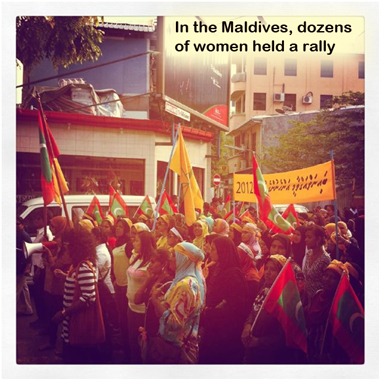
Olympe de Gouges was an 18th Century French playwright and political activist way ahead of her time, and her feminist and abolitionist writings stirred political discourse in ways that presaged uprisings by women around the world last week.
Disenchanted when equal rights were not extended to women after the outbreak of the French Revolution, Olympe de Gouges wrote a Declaration of the Rights of Woman and the Female Citizen. Modeled on the 1789 Declaration of the Rights of Man and of the Citizen by the National Assembly, De Gouges’ Declaration echoed the same language, replacing ‘Man’ with ‘Woman’.
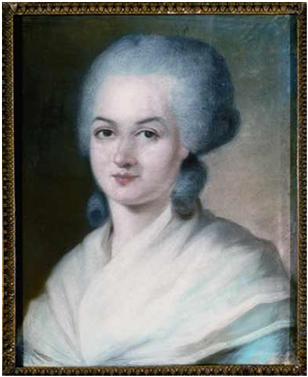 De Gouges argued that the rights revolutionaries were attempting to expand for men should be extended to women as well. She passionately insisted upon universal suffrage, legal equality in marriage, women’s right to divorce in cases of abuse and her right to property and custody of her children, among other things. In her postscript, Gouges exhorted women to awaken to consciousness of their rights to embrace their power. She encouraged them to step up, take action and demand equality.
Sound familiar?
Read MoreShe’s Doing It: Jen Nedeau and the Joy of Media
Are there generational differences in women’s relationship with power?
When I started writing No Excuses, I wanted to interview young women in their 20’s to learn about their relationships with power. Media relations professional and digital strategist Jen Nedeau, then 24, brought together several of her friends for a frank and far reaching conversation.
Jen, who seems to have been born knowing her power, blew me away with her poise, sense of balance, and that power of intention that many women of all ages need to be urged to pursue. See what I mean in her update—she must keep those power tools in her purse, because she uses them so proficiently to deal with the ups and downs of life. (As befitting a digital strategist, you can follow Jen on Twitter @JenNedeau.)

Gloria Feldt: In No Excuses, I asked, “When did you know you had the power to_____?” What have you learned about your power to ______ during the past year or so?
Jen Nedeau: When I spoke to you for the book, we talked about finding the “power source. ” For me, few experiences have been more profound in discovering my own source of power than the past three years I’ve spent in New York. Since moving here, I watched a company I once worked for go bankrupt, I’ve been robbed three times, lived with far too many random roommates and I had to stare down an army of cockroaches on a regular basis in my old apartment in the Lower East Side.
I would definitely say that I had to employ Power Tool #5: Carpe the Chaos on a regular basis.
But if the company I worked for hadn’t gone bankrupt, I probably would not have started my own consultancy and secured a variety of clients in the arts, media and non-profit worlds—proving to myself that I could make it on my own—before taking a job with a major magazine publisher. After two years of living here, I was able to move out of my cramped apartment in the Lower East Side and into a studio apartment, which I am glad to say is thus far, free of Manhattan’s favorite pests.
All of these challenges, big and small, helped me learn that I have the power not only to survive life’s challenges, but succeed despite them. Now, at age 27, I can say that even a bit of struggle can reap big rewards. I am enjoying my life here, meeting amazing people and working on interesting projects, but more importantly, I know that no matter what happens, I have the ability to make it on my own. And independence, in any form, is one of the most empowering tools in the toolbox.
GF: Was there a moment when you felt very powerful recently? Was there a moment when you felt powerless?
Loretta Lynn, The Pill, and Family Planning: Happy International Women’s Day!
Just in time to celebrate International Woman’s Day, Catherine Eng contributes this blog post that celebrates a medical solution to family planning that many take for granted and yet remains out of reach 52 years later to millions of women around the world.
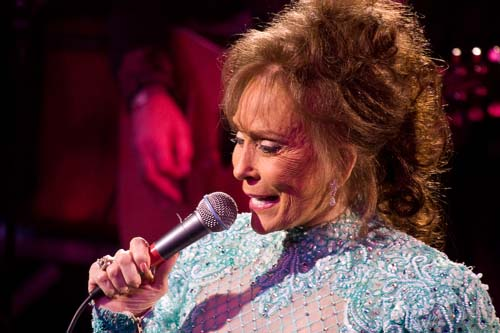
Country music legend Loretta Lynn was known for lyrics that bluntly addressed issues in the lives of many women. She believed no topic was off limits, as long as it spoke to other women.
In 1975, Lynn released The Pill, a single considered to be the first song to discuss birth control. The song tells a story of a wife who is upset about her husband getting her pregnant year after year, but is now happy because she can control her own reproductive choices. The song’s frank discussion of birth control was unprecedented at a time when many would have considered contraception a risqué subject matter. Some radio stations refused to play her song on these grounds.
“There’s gonna be some changes made right here on nursery hill…‘cause now I’ve got the pill.”
Be sure to click on the video link below to listen and laugh.
In an interview later in life, Lynn recounted how she had been congratulated after the song’s success by a number of rural physicians, telling her how The Pill had done more to highlight the availability of birth control in isolated, rural areas, than all the literature they’d released.
Fifty-two years after the inception of the pill in America, conservative newscaster Rush Limbaugh felt free to call Sandra Fluke, a Georgetown university student who asked her university to cover hormonal birth-control, a prostitute and a whore. His ignorant comment reminds us that there still exist widespread misconceptions and stigmas surrounding contraception. Let’s take the opportunity on International Women’s day to clear up any misconceptions, to examine the many social benefits of contraception and family planning.
Read MoreShe's Doing It: Philactivist Barbara Lee Sparks Power of Intention
Yes, I made up “philactivist.” But what else do you call someone who combines philanthropy with political activism in a unique way, driven by her power of intention. Barbara Lee is one of the women I profiled in No Excuses because I so admire her drive, her vision, and her commitment to women’s advancement in politics. This continues my series of “She’s Doing It” columns in which I ask women what they have learned since I interviewed them.
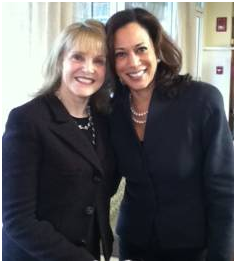
Barbara Lee pictured with California Attorney General Kamala Harris
Gloria Feldt: In No Excuses, I asked, “When did you know you had the power to_____?”
What have you learned about your power to _____ during the past year or so?
Going to Girl Scout camp at age 12 was my first time away from home. I vividly recall the sound and smell of fresh pine needles crunching under my feet as I gathered twigs to build a fire to earn my campfire badge. I remember rubbing two sticks together for what seemed like forever and with each spark I learned more and more about the power of intention. I was determined to start that fire. It was the first step for me in knowing my own power. Ever since I have kindled my belief in myself and have used the power of intention to make the world a better place for women.
Barbara Lee: Was there a moment when you felt very powerful recently? If so, please describe the circumstances, what you did, and why you were aware of your power. Was there a moment when you felt powerless recently? If so, please describe the circumstances, what you did, and why you felt your lack of power.
Read More