
Women’s History
International Women’s Day and Women’s History Month: What Do You Want to Be?
“What do you want to be?” we ask our daughters and sons when they are growing up.
Barack Obama poses this question to elementary school children in this delightful video called “I Want to Be” that looks at political leadership of women through American history. Take a look and ask yourself the same question: what do you want to be next?
This video is just in time for International Women’s Day– March 8–and Women’s History Month, celebrated throughout March. “Celebrated” is the right word for where women are today, too: on the cusp of a great leaping point toward true equality and even in some instances, parity.
Watch and see where U.S. women are in national political leadership as compared to other countries. You’ll find interesting vignettes of women shattering barriers, others who didn’t succeed but paved the way for the next woman who tried, and some facts that might surprise you.
Read MoreRoe v Wade Anniversary Thank-You to Sarah Weddington
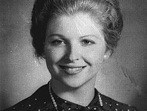 Today, on the 36th anniversary of Roe v Wade, I salute Sarah Weddington.
I first met Sarah, the lawyer who successfully argued Roe v Wade before the U.S. Supreme court when she was just 27 years old, in a church meeting room in Midland TX. Yes, the heart of George Bush country where we both had roots. It was around 1975, I was the relatively new executive director of Planned Parenthood of West Texas, then called Permian Basin Planned Parenthood, and the topic that brought together a number of family planning providers from the wide expanse of West Texas was legislation to allow nurse practioners to work in our health centers so that more women could get birth control and related health services to prevent unintended pregnancy and plan wanted ones. The demand from women desiring to plan and space their childbearing was clearly outstripping the supply of services available to them.
As a state legislator, Sarah continued her commitment to women by working tirelessly to make sure they could get access to reproductive health services. She understood that legality is one thing; access can be quite another, and rights without access are meaningless.
Sarah continues now to speak, write, teach, and work on behalf of women. Her accomplishments are legendary and too numerous to mention. But the most striking thing about Sarah is that she is such a great friend and a generous, devoted colleague in the continuing movement to secure the human rights of women to make their own childbearing decisions.
Read MoreIN WOMEN’S EQUALITY DAY SPEECH, HILLARY WILL LOOK WITH LONG EYES
 All eyes will be on Hillary Clinton when she speaks tonight at the Democratic National Convention.
Media pundits and McCain loyalists will be parsing her every word, scrutinizing her every nuance, analyzing every element of her body language for quite a different reason. They love a political food fight. They’ll pounce on any whiff of tepidness, real or imagined, in her support for Barack Obama’s presidential candidacy. The Republicans have even set up a “Happy Hour for Hillary”, lying in wait to whip up animosity toward Obama, whether their spin is real, or if all else fails, conjured up by their Rovian attack dogs.
But while talking heads will strain to see any shred of conflict between the Democratic nominee-to-be and the second-runner, some of us will be looking at the occasion with what the Tohono O’Odham people call “long eyes”.
Read MoreHappy Birthday, Margaret
Woman must have her freedom, the fundamental freedom of choosing whether or not she will be a mother and how many children she will have. Regardless of what man’s attitude may be, that problem is hers – and before it can be his, it is hers alone.
September 14 is the birthday of Margaret Sanger, founder of the U.S. birth control movement. She was born Margaret Higgins in Corning NY in 1879, though ever vain, she would later alter the family Bible to appear three years younger. The sixth child of eleven living siblings, her earliest childhood memories were of crying beside her mother’s bed as after she almost died following a difficult childbirth.
Sanger’s mother, Anne Higgins, did die, worn out from those too frequent pregnancies and births, at age 50. These experiences formed the sensibilities that propelled Margaret Sanger to advocate for birth control. She dedicated her first book on the fundamental rights of women to control their fertility to her mother. The quotation above and those that follow reveal her clear worldview about women and a laser beam focus on the work she believed with all her heart to be the most essential to women’s health, well-being, and rightful place in the world.
Read MoreBang Those Pots and Keep This Movement Moving
Today is March 8, International Women’s Day 2006. But before getting into that, let’s think back to September 1995.
Spin the globe and stop the world on China.
It’s the United Nations Fourth World Conference on Women, where hugely ambitious and thrilling goals were set for improving the lives of women, and by extension their families and the world.
The official conference was in Beijing, but the much larger convocation of activists from nongovernmental organizations was literally stuck in the mud in Huairu, a suburb an hour’s drive from the city.
Thousands of us had arrived early on the morning of Sept. 6, to stand packed together under a roof of brightly colored umbrellas, jockeying for the few hundred seats inside the auditorium where then first lady of the United States Hillary Clinton was slated to give a speech.
Read MoreFebruary 2006 Newsletter
“Well behaved women rarely make history”
~Laurel Thatcher Ulrich
Honor Our Mothers by Celebrating Women’s History Month and International Women’s Day on March 8.
Here’s a little background on Women’s History Month: In my youth and up until the 1970’s, women’s history was virtually nonexistent the public school curriculum or in public consciousness. The Education Task Force of the Sonoma County (California) Commission on the Status of Women first initiated a “Women’s History Week” celebration in 1978. They chose the week of March 8 to make International Women’s Day the focal point of the observance.
Read More