
She’s Doing It
She's Doing It: Kristal Brent Zook Defines Her Own Chaos
Continuing the series of asking women I interviewed when I was writing No Excuses “What have you learned about your relationship with power since we talked?” here is a beautiful essay from Kristal Brent Zook explaining her answer about a very personal choice.
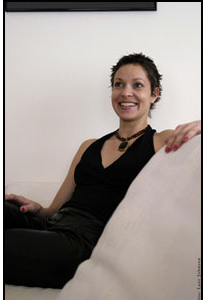
How Gloria Feldt’s No Excuses Reminded Me of My Power
Not long ago, my friend Gloria Feldt, author of No Excuses, asked me to take another look at her 9 ways women can embrace power to see if any of the strategies had resonated lately, in the year or so since the initial release of her book.
Since we all know how political the personal will always be, I thought immediately about the upheavals of the past year in my home life.
Last February, my husband and I decided—on a whim, really—to relocate from Manhattan to the suburbs of Long Island.
“Why not leave the city?” we asked ourselves. It seemed like a good idea at the time. Get some fresh air. A yard. A real house. It would shorten my commute to Hofstra University; and of course, we would be saving all that money.
A charming, two-story 1923 Colonial about 30 miles east of the city caught our eye: it was more than 5,000 square feet, with two sun rooms and front and back yards. The rent was $1,200 less than our midtown high-rise, and ditching New York City taxes meant another $1,000 a month in savings.
“Let’s do it!” we agreed excitedly, handing over a check for the first month’s rent.
Read MoreShe’s Doing It: What Courtney Martin Learned This Year
Read MoreWhen I speak on college campuses, I score points with students when they find out I know Courtney Martin, author, among several books, of Perfect Girls, Starving Daughters and Do It Anyway. Though she’s the youngest of the four of us on the WomenGirlsLadies intergenerational feminist panel, she is usually the most together. The one who knows where we’re supposed to be when, gets the power point together, and remains calm when things go awry.
Follow Courtney @courtwrites and find her commentaries on The American Prospect and many other publications. Courtney is the Founding Director of the Solutions Journalism Network, along with New York Times columnist David Bornstein. In addition, she is the leader of the Op-Ed Project’s Public Voices Fellowship Program at Princeton University–coaching women academics to become part of public debate. She is a partner in Valenti Martin Media, a communications consulting firm focused on making social justice organizations more effective in movement building and making change and is an Editor Emeritus at Feministing.com.
Here’s what Courtney says she learned since I interviewed her for No Excuses:
She’s Doing It: Jen Nedeau and the Joy of Media
Are there generational differences in women’s relationship with power?
When I started writing No Excuses, I wanted to interview young women in their 20’s to learn about their relationships with power. Media relations professional and digital strategist Jen Nedeau, then 24, brought together several of her friends for a frank and far reaching conversation.
Jen, who seems to have been born knowing her power, blew me away with her poise, sense of balance, and that power of intention that many women of all ages need to be urged to pursue. See what I mean in her update—she must keep those power tools in her purse, because she uses them so proficiently to deal with the ups and downs of life. (As befitting a digital strategist, you can follow Jen on Twitter @JenNedeau.)

Gloria Feldt: In No Excuses, I asked, “When did you know you had the power to_____?” What have you learned about your power to ______ during the past year or so?
Jen Nedeau: When I spoke to you for the book, we talked about finding the “power source. ” For me, few experiences have been more profound in discovering my own source of power than the past three years I’ve spent in New York. Since moving here, I watched a company I once worked for go bankrupt, I’ve been robbed three times, lived with far too many random roommates and I had to stare down an army of cockroaches on a regular basis in my old apartment in the Lower East Side.
I would definitely say that I had to employ Power Tool #5: Carpe the Chaos on a regular basis.
But if the company I worked for hadn’t gone bankrupt, I probably would not have started my own consultancy and secured a variety of clients in the arts, media and non-profit worlds—proving to myself that I could make it on my own—before taking a job with a major magazine publisher. After two years of living here, I was able to move out of my cramped apartment in the Lower East Side and into a studio apartment, which I am glad to say is thus far, free of Manhattan’s favorite pests.
All of these challenges, big and small, helped me learn that I have the power not only to survive life’s challenges, but succeed despite them. Now, at age 27, I can say that even a bit of struggle can reap big rewards. I am enjoying my life here, meeting amazing people and working on interesting projects, but more importantly, I know that no matter what happens, I have the ability to make it on my own. And independence, in any form, is one of the most empowering tools in the toolbox.
GF: Was there a moment when you felt very powerful recently? Was there a moment when you felt powerless?
She's Doing It: Philactivist Barbara Lee Sparks Power of Intention
Yes, I made up “philactivist.” But what else do you call someone who combines philanthropy with political activism in a unique way, driven by her power of intention. Barbara Lee is one of the women I profiled in No Excuses because I so admire her drive, her vision, and her commitment to women’s advancement in politics. This continues my series of “She’s Doing It” columns in which I ask women what they have learned since I interviewed them.
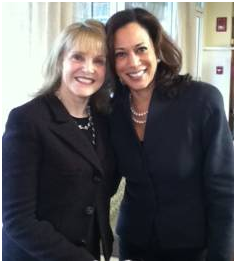
Barbara Lee pictured with California Attorney General Kamala Harris
Gloria Feldt: In No Excuses, I asked, “When did you know you had the power to_____?”
What have you learned about your power to _____ during the past year or so?
Going to Girl Scout camp at age 12 was my first time away from home. I vividly recall the sound and smell of fresh pine needles crunching under my feet as I gathered twigs to build a fire to earn my campfire badge. I remember rubbing two sticks together for what seemed like forever and with each spark I learned more and more about the power of intention. I was determined to start that fire. It was the first step for me in knowing my own power. Ever since I have kindled my belief in myself and have used the power of intention to make the world a better place for women.
Barbara Lee: Was there a moment when you felt very powerful recently? If so, please describe the circumstances, what you did, and why you were aware of your power. Was there a moment when you felt powerless recently? If so, please describe the circumstances, what you did, and why you felt your lack of power.
Read MoreShe's Doing It: Keli Goff Sizes up Politics and the Power of Women (Plus Big No Excuses News!)
I’m leaping with joy: the paperback edition of No Excuses: 9 Ways Women Can Change How We Think About Power is coming.
On Leap Day February 29, 2012!Could there be a more perfect day for a book urging women to embrace their power?
Thank you for making No Excuses “the little book that could.” It had a 9-month stint on amazon.com’s leadership and feminist theory bestseller lists. It has inspired many, even changed a few lives, and moved me to create a new No Excuses Leadership Workshop in addition to keynotes and panels.
I interviewed amazing women for the book, and I was curious what they’ve learned about power and leadership since then. Today, the “She’s Doing It” weekly series will start answering that question.
The first is a woman I admire greatly for her astute political analysis and smart writing. Keli Goff is the author most recently of The GQ Candidate and you can catch her regularly on The Dylan Ratigan Show. She’s a contributing editor at Loop21.com and blogs at www.TheHuffingtonPost.com. Follow @KeliGoff on twitter. Now, read more from her here:


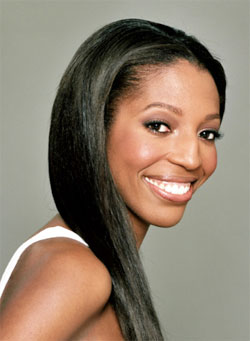
Gloria: Was there a moment when you felt very powerful recently?
Read MoreFierce and Female: A Self-Defense Expert Challenges Women To Define What is Non-Negotiable
We often think of power as being a concept that is disembodied and theoretical. But it’s also very physical.
I previously posted here about Ellen Snortland, whose book, Beauty Bites Beast, about the psychological value as well as the physical importance of women becoming proficient at self-defense I always recommend to my students when I teach Women, Power, and Leadership.
Now comes Dr. Ruthless with yet more practical tools for what she refers to as the “Killer Instinct…to preserve and protect life.” And, she says, women need to forge their fear into fire. Read on…and share your experiences with physical fear and strength.
Q&A With Dr. Ruthless on her “Dharma of Defense” and Why we Must Venerate the Warrior Spirit
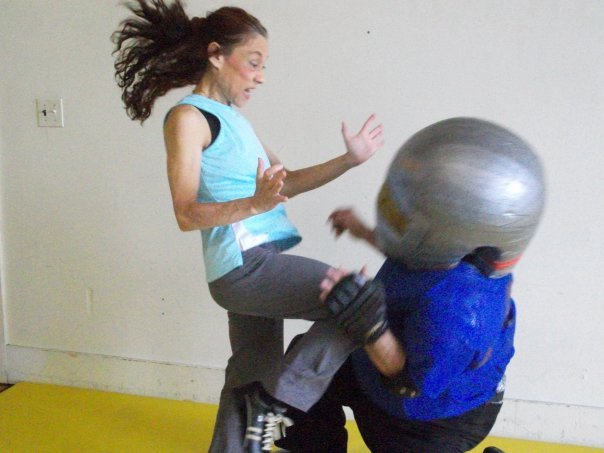
What happens when you combine primal self-defense methods with the insights of a psychotherapist and the heart of a warrior?
Meet Dr. Ruthless, also known as Melissa Soalt. An award-winning women’s self-defense expert and Black Belt Hall of Fame recipient, Dr. Ruthless emerged at the forefront of the women’s self defense movement in the mid 1980’s and has created her own “Dharma of Defense.” You can see her in action in her acclaimed DVD, Fierce & Female.
Her teachings encompass the physical and spiritual dimensions of self-defense. She unabashedly advocates for women to leverage their Killer Instinct —not for the sake of destruction, but to preserve and protect life. In this interview, Dr. Ruthless shares her perspective on the female warrior spirit and why we must learn to mobilize our survival instinct and forge fear into fire.
Brooke Axtell: What attracted you to training in self-defense and teaching other women how to defend themselves?
Dr. Ruthless: In my late teens, I lived in the Middle East and traveled around Asia. I was attacked multiple times and violently groped. I learned I was a scrappy bitch. I successfully fought off rape attempts in Israel and Pakistan and I suffered a lot of indignities. Women who have been violated know what it’s like to be reduced to anti-matter. It’s utterly dehumanizing. I also witnessed appalling inequities, the ways women are controlled by men. This birthed my undying reverence for female disobedience and the need for women’s self defense.
Read MoreShe's doing It: Catherine Engh Wants More Female Characters Like Leslie Knopes
Catherine Engh is a feminist and an aspiring writer particularly interested in the ways that girls and women are represented in fiction and television. She wrote this piece for 9 Ways–it’s a great example of No Excuses Power Tool # 8: Employ Every Medium. Plus there are some useful tips on how to be a media activist.
Catherine also likes to do as much yoga as is possible–perhaps she’ll write about that next.
Why Television Needs more Leslie Knopes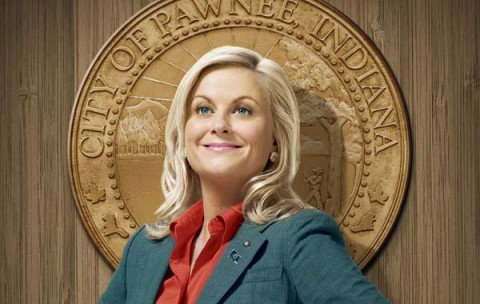
Recently, I couldn’t help but notice that many of my favorite television shows are about men. Don Draper, Nucky Thompson, Walter White, Hank Moody and Vincent Chase are just a few male lead roles that come to mind.
It is not news that stories about the identity struggles of white men sell. Thus, they are more commonly aired than shows that explore women’s lives and choices. Though women are more likely to watch entertainment programming than men, the majority of those involved with television creation are male. Women’s Media Center reported that in the 2010-2011 year,
Read MoreShe's Doing It: Merle Hoffman – "It Takes Bad Girls to Get Good Things Done"
Often when I speak about No Excuses, I ask “When did you know you had the power to __(fill in the blank)___?”
This question intrigues people, but rarely does anyone have as clear and direct answer as Merle Hoffman, this week’s “She’s Doing It.” She seems to have been born knowing, and born quite willing to buck the norm of being the archetypical nice and compliant “good girl” in favor of getting done the things she believes are important.
Merle, the President and CEO of Choices Women’s Medical Center, has recently published a memoir I highly recommend, Intimate Wars: The Life and Times of the Woman Who Brought Abortion Out of the Back Alley and Into the Boardroom.
Merle was kind enough to answer some questions about her life and times for 9 Ways:
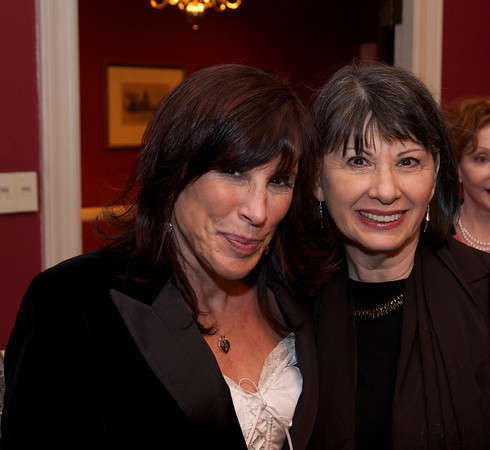
Tell me your personal story…why and how did you come to be doing what you a doing?
I really fell into it serendipitously. My early years and adolescence were spent preparing to become a concert pianist. After I graduated from Music and Art, I also dabbled in painting and drama. When I finally decided to go to college at the age of 22, I need three part time jobs to pay for tuition—and one was with an internist , Dr. Martin Gold, for whom I worked as a medical assistant. At just this time (1970), abortion was decriminalized in New York which was three years before Roe v. Wade legalized abortion nationally. Dr. Gold, one of the architects of HIP, wanted to start a service for women subscribers. I got involved in the beginning of this project and it has become my life’s work.
What motivates you? What’s your passion?
I am motivated by very deep feelings of responsibility which began with the first patient who came to Choices.
Read MoreSettling the Score: Dorothy Seymour Mills Finally Tells Her Story
“Everyone assumed that he had done all that work by himself — that’s what he wanted them to assume, but we were equal partners” –Dorothy Seymour Mills
- Photo source: Dorothy Jane Mills
Dorothy Seymour Mills is one of the great baseball historians of all time. But you probably never heard of her.
Instead, she worked alongside her late husband, Harold Seymour. From 1960-1990; he received all the credit and did become famous in his field. Together they completed three of the earliest and most widely read books on baseball history.
First in the Field is Dorothy’s belated claim to her own life’s work. In it, she reveals her approach to baseball history, pervasive attitudes about woman interested in baseball, her reasons for finally demanding the credit she deserves so late in life and her struggle for recognition after her husband’s death.
The short eBook reads more like a research paper than a memoir. But then, the author is after all first and foremost a historical researcher. First in the Field moves through her personal and professional history much as an encyclopedia entry might, chronologically from fact to fact, event to event. Readers will not find much in the way of literary language: Dorothy’s narrative is told without literary flourish or thematic subtlety.
Yet despite the stylistic simplicity, or perhaps because of its straightforwardness and lack of pretense, the story will tug at the heartstrings of anyone who has experienced discrimination. And in recognition that one’s personal story is also political, Dorothy ties the personal injustices she faced to the widespread marginalization of women
Read MoreAre You an Iron Lady?
The Golden Globe Awards this week featured the most gorgeous dresses I’ve ever seen (yes, I confess to being a fashion watcher) and Meryl Streep winning her 9th Golden Globe, for her extraordinary portrayal of the British rock-ribbed Conservative former Prime Minister Margaret Thatcher, the first and only woman ever to serve in that post.…
Read More