
No Excuses
Leading With Intention
Not long ago I sat down with freelance writer Corine Garcia for this interview. The article originally appeared as a blog post at Womenetics.
Years ago, as a teenage mother without a college education, one could only imagine that Gloria Feldt felt somewhat limited in career options. But with the right amount of optimism, the proper use of power and her penchant for saying “Yes” to every opportunity, Feldt paved her way to leadership success as the former president and CEO of Planned Parenthood.
Now, after recently being listed as one of “America’s Top 200 Women Leaders, Legends, and Trailblazers” by Vanity Fair magazine, Feldt’s latest bestselling book “No Excuses: 9 Ways Women Can Change How We Think About Power” offers well-founded advice to other women.
Womenetics: Vanity Fair named you one of “America’s Top 200 Women Leaders.” To what do you attribute your success as a leader?
Read MoreShe’s Doing It: Lily Finds Women Revolting and a 9-Year-Old Feminist
You met Lily Womble in last week’s She’s Doing It and learned that she attended the AWID (Association for Women’s Rights in Development) international forum in Istanbul.
There, she recorded video interviews with a number of women from around the globe. Besides the two in this post (watch them to learn what the post title means), you can see more on Lily’s YouTube channel.
Now back in college in Mississippi, 19-year-old Lily reflected on her experience:
Read MoreShe’s Doing It: Meet Lily Womble Out Loud, Part 1
“I am a college woman living in the worst state for women: Mississippi (as determined by the Institute for Women’s Policy Research), and I am passionate about empowering our women and girls!”
So began the e-mail that made my day, March 29 to be exact. It was from Lily Womble, whom I’d never met but immediately knew was a force to be reckoned with. In a very good way.
Lily told me about her blog, Smart Girls Out Loud and her plans to attend the AWID (Association of Women’s Rights in Development) conference in Istanbul April 19—22.
There is no way I could tell you this whole story in one post. So this is part one of a two-part series. Here I’ll introduce you to this very out-loud and proudly feminist young woman whose declared intention
Read MoreMemo to Julia Louis-Dreyfus: How Veep Can Lead Without Power
I could hardly wait to see Julia Louis-Dreyfus in her new life-after-Seinfeld sitcom, Veep.
As a student of women’s relationship with power, I made sure to be curled up in bed for Veep’s 10pm edt HBO premier last night, ready to soak it up and take notes on my equally charged up ipad.
My excitement deflated minute by minute.
Entertainment Watch’s plot overview is one reason:
Louis-Dreyfus’ Vice President Selina Meyer is a veep without much influence constantly trying to gain some, a ripe premise for comedy.… In the first installment of Veep, we saw V.P. Meyer trying to advance her green initiative with the introduction of cornstarch-based utensils in government offices, a move that irritated (“outrage” being too strong a word to use for anything a Vice President introduces) the plastics lobby.
Now, I know that Franklin Roosevelt’s vice president John Nance Garner (do you even know who he was?) described the job as “not worth a bucket of warm piss.” And when Veep Meyer asks her former senatorial colleague what she’s been missing since she left the Senate to take the vice-presidency, the senator replies, “Power?”
As the tension between corn starch versus plastic utensils mounts, Veep receives repeated messages that the White House doesn’t want any mention of anything that could bring down the wrath of Big Oil’s mega lobby. The President himself is never seen or heard—rubbing the wound of Meyer’s perceived powerlessness with sea salt.
But that’s just the beginning of the narrative by which Veep renders the foul-mouthed Meyer less than influence-commanding.
Read MoreShe’s Doing It: Elisa Parker Creates Movements Every Day
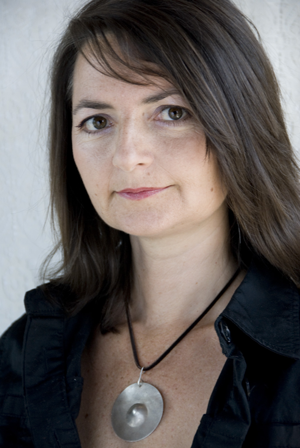
Elisa Parker, this week’s She’s Doing It, is the visionary co-founder, president and host of the award winning radio program, See Jane Do.
An activist for women, social justice, and the environment, Elisa’s work takes her around the world to discover and share the extraordinary stories and solutions in each of us.
She hosts her weekly show for nationally acclaimed radio station KVMR and is the co-founder of the Passion into Action™ Women’s Conference. She is an alumna of the Women’s Media Center Progressive Women’s Voices program & The White House Project’s Go Run program.
Elisa holds a BA in Communications from SF State and a MA in Organization Development at University of SF. She lives in the Sierra Foothills with her husband and two daughters.
I’ll be privileged to speak at the 3rd Annual Passion into Action Women’s Conference Oct. 12th-14th, 2012 in Grass Valley, CA, along with musician Holly Near, author activist Frances Lappe, Girl Scouts Rhiannon and Madison (of Roots and Shoots), and many more inspiring speakers.
Gloria Feldt: In No Excuses, I asked, “When did you know you had the power to_____?” What have you learned about your power to) during the past year or so?
Elisa Parker: I knew I had the power to be the solution from a very young age. Social justice has always been very important to me and I’m generally the one that will stand up for the underdog. I’m not one to hang on the sidelines but to go for the front line instead with the attitude of “if not me then who”.
Of course my Pollyanna attitude often creates a surge of anxiety for my husband. He’s never sure what I’ll do next. Considering that women still have a ways to go when it comes to gender parity, it’s not surprising that I’ve taken on the challenge of standing up for women just like myself.
I was recently reminded of one of my defining be the solution moments when I interviewed my long time hero, Lily Tomlin.
Read MoreWhat Do Boomers Want? Here's Boomer, Babe, and No Excuses
I was in Arizona last week, and who knew that a national radio program I’d been asked to do emanated from just across the valley from my Scottsdale home, in Youngtown AZ?
Youngtown being a euphemism for older folks, which Baby Boomers are quickly becoming in the millions—a very important segment of America. It was great to talk with Pete and Debra who are “Boomer and the Babe”
Listen to the interview right here and chime in with your thoughts in comments.
Open the podcast in a separate window here or listen now by clicking the PLAY arrow above.
Read MoreShe's Doing It: Jamia Wilson Learns Resilience and Power of Inter-generational Bonds
I’m a little biased about Jamia Wilson having had the pleasure of knowing her and working with her as we both went through several career transitions during the last decade.
She’s an inspiration to me because of her seamless commitment to social justice and her positive way of putting her ideas into action.
Her responses to my questions continue the series in which I ask people I interviewed for No Excuses what they’ve learned since then. You can connect with Jamia on Facebook and Twitter.
Gloria Feldt: In No Excuses, I asked, “When did you know you had the power to _____?” What have you learned about your power to _____ during the past year or so?
Jamia Wilson: In the past year or so, I have learned so much about faith and perseverance. I have faced many triumphs and challenges during a transitional time in my life and have learned so much.
The rough edges and moments where I stared fear in the face taught me about the importance of courage and authenticity above all else. I have learned that I have the power to choose to be who I am authentically without apology and let that guide me towards realizing my dreams and my highest power.
As Janis Joplin said, “Don’t compromise yourself, you’re all you’ve got”. 2010-2011’s greatest gift to me was an appreciation for my own resilience and that to me is one of my most sacred superpowers.
GF: Was there a moment when you felt very powerful recently?
Read More"Black Woman Novelist" -Toni Morrison Defines Her Own Terms
“I’ve just insisted – insisted! – upon being called a black woman novelist…And I decided what that meant, because I have claimed it. As a black and a woman, I have had access to a range of emotions and perceptions that were unavailable to people who were neither.”
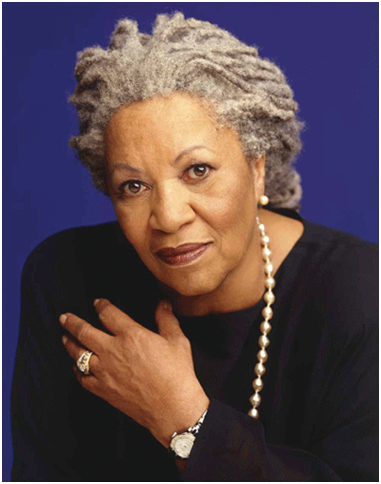
It’s Women’s History Month and I can’t resist profiling Toni Morrison, a prolific writer who has worked to represent through fiction the experience of black people—particularly women–in America. Ms. Morrison’s novels focus on marginalized characters struggling to find their place in a society built upon the legacy of slavery and the violence of racial prejudice. Most known for her imaginative fiction, Morrison has also written essays, non-fiction, plays, a libretti, and children’s books.
Ms. Morrison developed her first novel, The Bluest Eye (1970), while raising two children and teaching at Howard University. She later took a job as an editor at Random House, where she played a vital role in bringing black literature into the mainstream, editing books by authors such as Toni Cade Bambara, Angela Davis, and Gayl Jones.
Commercially successful and critically acclaimed, her 1987 Pulitzer Prize winning novel “Beloved” was chosen by a New York Times survey of prominent writers to be the best work of American fiction of the previous 25 years. In “Beloved”, Morrison imagines what it would have felt like to be Margaret Garner, a fugitive slave woman who chose to kill her infant daughter rather than see her grow up in slavery.
In an interview with the Paris Review, Morrison says about Margaret Garner:
Read MoreFrom Olympe de Gouges to Women Demanding Rights Worldwide
“A woman has the right to mount the scaffold. She must possess equally the right to mount the rostrum [speaker’s platform].”
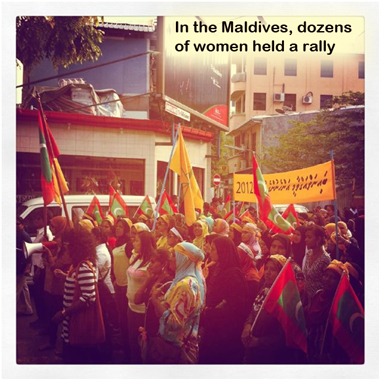
Olympe de Gouges was an 18th Century French playwright and political activist way ahead of her time, and her feminist and abolitionist writings stirred political discourse in ways that presaged uprisings by women around the world last week.
Disenchanted when equal rights were not extended to women after the outbreak of the French Revolution, Olympe de Gouges wrote a Declaration of the Rights of Woman and the Female Citizen. Modeled on the 1789 Declaration of the Rights of Man and of the Citizen by the National Assembly, De Gouges’ Declaration echoed the same language, replacing ‘Man’ with ‘Woman’.
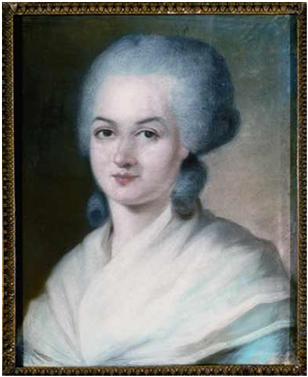 De Gouges argued that the rights revolutionaries were attempting to expand for men should be extended to women as well. She passionately insisted upon universal suffrage, legal equality in marriage, women’s right to divorce in cases of abuse and her right to property and custody of her children, among other things. In her postscript, Gouges exhorted women to awaken to consciousness of their rights to embrace their power. She encouraged them to step up, take action and demand equality.
Sound familiar?
Read MoreHow Far Women Have Come and Where They’re Going
“As an activist for women through almost four decades, I know that no movement for social justice moves forward without struggle, nor does forward movement necessarily go in a straight line.”
Today, March 8, is celebrated around the globe as International Women’s Day . Some decry its commercialization, as corporate sponsors have realized it’s in their best interests to appeal to women who make over 85 percent of consumer purchases around the globe.
But it’s a day whose meaning inspires me to think back to a very special moment on September, 1995.
I was attending the United Nations Fourth World Conference on Women, where hugely ambitious and thrilling goals were set for improving the lives of women, and by extension their families and the world.
The official conference was in Beijing, but the much larger convocation of activists from nongovernmental organizations—40,000 enthusiastic women and a few good men like my husband—was literally stuck in the mud in Huairu, a suburb an hour’s drive from the city.
Thousands of sleepy people had arrived at dawn on the morning of Sept. 6, to stand packed together under a roof of brightly colored umbrellas, jockeying for the few hundred seats inside the auditorium where then first lady of the United States Hillary Clinton was slated to give a speech.
Thanks to my training in clinic defense, which had taught me how to form a wedge and move expeditiously through even the most aggressive crowd, I was fortunate not only to get inside but to get a seat. The program was running late; Hillary was running even later and the crowd was getting restless.
Just as it seemed a revolt might be brewing, Shirley May Springer Stanton, the cultural coordinator of the conference, sauntered onto the stage and began to sing a capella, ever so softly: “Gonna keep on moving forward. Never turning back, never turning back.”
Then she asked the audience to join her. Pretty soon the house was rocking. By the time the first lady arrived and gave her brilliant “human rights are women’s rights and women’s rights are human rights” speech, it truly felt like the global movement for women’s rights was unstoppable.
It was, you might say, an ovular moment.