
The Young Politica: Scoring Obama’s New College Scorecard
During last Tuesday’s State of the Union address, President Barack Obama revealed the new College Scorecard, which aims to help prospective college students determine which schools would be right for them based on several variables (cost, distance, etc.).
A yet-to-be-seen component of the site is each college’s return on investment (ROI). This will highlight colleges that have the most ‘bang for your educational buck’.
Bill Destler for the Huffington Post, argued that forcing all schools through the same ROI filter may hinder some schools’ ability to compete. Destler does not think all schools are equal. He cites the Rochester Institute of Technology, which has a 10% deaf or hard-of-hearing population.
“…deaf graduates from RIT are employed at a much higher rate than the deaf population as a whole, they still have a more difficult time finding employment and they don’t earn as much on average as their hearing counterparts.”
Should RIT be judged on the same level as every other school when it has this special interest in mind?
The scorecard makes makes macroeconomic sense when the idea is to show students the most affordable colleges. After all, that’s why th
Read MoreMy 5 Fave parts of Obama’s 2013 State of the Union Address
The yoga class I took just before last night’s State of the Union (SOTU) address wiped me out. I fell asleep immediately afterward. Which is good because I had a chance to think overnight about the parts that resonated most with me.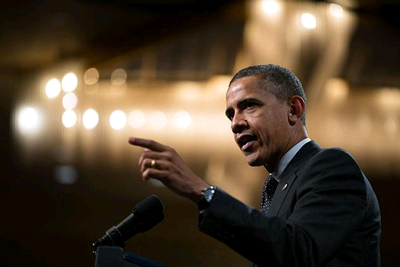
I’ve been tough on the president in the past, disappointed with his timidity and unwillingness to set a big bold agenda.
The other good thing about writing the day after is that others have fact checked. And the de rigeur liberal critique as well as Sen. Ted Cruz’s (R-TX) really awful other-party rebuttal have been duly hashed and rehashed.
With the benefit of reflection, here are my three favorite parts of the speech.
Read MoreMy 5 Fave Parts of Obama’s 2013 State of the Union Address
The yoga class I took just before last night’s State of the Union (SOTU) address wiped me out. I fell asleep immediately afterward. Which is good because I had a chance to think overnight about the parts that resonated most with me.

I’ve been tough on the president in the past, disappointed with his timidity and unwillingness to set a big bold agenda.
The other good thing about writing the day after is that others have fact checked. And the de rigeur liberal critique as well as Sen. Ted Cruz’s (R-TX) really awful other-party rebuttal have been duly hashed and rehashed.
With the benefit of reflection, here are my three favorite parts of the speech.
Read MoreThe Young Politica: Harness the Power of Our New Generation’s Tools
During times of political strife—heck, even in times of political triumph—the university has been a place of radical discourse that explores and encourages academic examination of political norms. It’s supposed to be a safe haven for dialogues that aren’t so popular in mainstream USA. For example, the recent controversy over a pro-Palestine forum at Brooklyn College.
We’ve always been the liberal crowd, but in recent years, it seems like there’s been a wane of liberal activism within the university. It wasn’t until the Occupy movement that students were reinvigorated with a passion similar to the student strikes against the war in Vietnam. But unlike the anti-war protests, those protesting with Occupy saw few fruits for their labor in terms of government recognition and reform.
For the past few decades, college students have trended more conservative than their 1960’s and 1970’s counterparts. Thus, more and more American students are calling themselves middle-of-the-road. A recent UCLA study claims that college students’ central political views are shifting left. That means that more students who consider themselves ‘middle of the road’ are leaning towards liberal legislation.
This shift from center may lead to a paradigm shift within what all Americans see as ‘middle-of-the-road’. We saw a victory for the left in the 2012 election because of the youth vote. It isn’t far cry off to say that our views will become the new normal in just a couple of decades.
As we begin to infiltrate political ranks and take on powerful leadership roles, our middle will easily become everyone else’s middle. Consider this: our generation of Americans is comprised of more minorities than generations past. Thus, our voting patterns tend to reflect what will benefit minorities the most.
Is it really any surprise that our middle-of-the-road is shifting left, though? Our generation sees their dreams as one student loan away. They are betting on their futures and the government is betting on them, too. Increasingly, our generation is betting on the future in other ways as well. Investing interest in climate change has gained more momentum than ever in the student community.
Read MoreShe's Doing It: Cry at Work? Here's Why Selena Soo Says You Can
I loved this blog post by business strategist and founder of S2 Groupe Selena Soo so much that I asked her if I could republish it here on 9 Ways.
What crying experiences do you have to share? Do you agree with Selena’s reasons why she says it’s OK?

Last summer, my friend introduced me to a potential client (whom I’ll refer to as “Ryan”). Ryan was a highly-respected entrepreneur who had built multiple million-dollar businesses. He was funny, quirky, and visionary. I thought we were a match made in business heaven.
Ryan and I would talk on the phone and on Skype. I sent him five pages of my ideas, and in our next conversation, he hired me on the spot. I was on cloud nine and excited to get started, and then the next day he broke up with me. Ryan told me that things were moving too quickly. “You don’t just marry the first person you date,” he explained.
Ryan said that he would be talking to several other PR and marketing firms. He wanted to make an objective, informed decision. I told him I understood. I thanked him for his honesty.
When he visited New York a few weeks later, we met up for coffee at the Ace Hotel. Then we walked over to Madison Square Park. We sat next to the fountain, talked about our Myers-Briggs personality types, and then he proceeded to break my heart. “I think you’re great,” he explained, “but these are my reservations about hiring you…”
Read MoreThe Young Politica: Why the Paycheck Fairness Act Will Narrow the Wage Gap
Last week, Sen. Barbara Mikulski (D-MD) introduced the Paycheck Fairness Act, which would allow employees to discuss their salary information without the fear of companies pursuing legal action against them.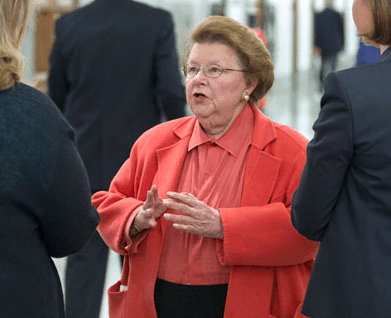
The bill is on its third try. In a 2010 senate vote, the bill failed to get any Republican support, even by the female Republican Senators Susan Collins (R-ME), Kay Bailey Hutchinson (R-TX) and Olympia Snowe (R-ME), who all voted for the Lilly Ledbetter Act.
According to Senator Tom Harkin (D-IA), the Fair Pay Act will:
• Amend the Fair Labor Standards Act of 1938 to prohibit discrimination in the payment of wages on the basis of sex, race or national origin;
• Require employers to provide equal pay for jobs that are comparable in skill, effort, responsibility and working conditions;
• Prohibit companies from reducing other employees’ wages to achieve pay equity;
• Require public disclosure of employer job categories and pay scales, without requiring specific information on individual employees; and
• Allow payment of different wages under a seniority system, merit system, or system that measures earnings by quantity or quality of production.
The bill makes perfect sense—give all female workers a chance to see what their equal male counterparts are earning, and see if it matches up without getting sued by employers. In an economy where women earn some 33% less than males, why wouldn’t politicians see this as a good measure for ensuring equal rights?
Read MoreShe's Doing It: Thank You Hillary Clinton
Hillary Clinton’s star turn as Secretary of State exemplifies an important leadership lesson.
Sometimes, you win when you lose. And by putting yourself forward toward a big goal, even if you don’t reach it, you usually accomplish much more than if you had aimed toward a lower goal and achieved it instead. And what a legacy!
Ambassador Swanee Hunt wrote this marvelous analysis. But Clinton summed it up well herself, in this memo sent by the White House shortly after the baton was passed to now former Senator John Kerry.
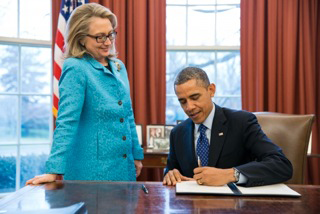
U.S. DEPARTMENT OF STATE
Office of the Spokesperson
For Immediate Release
January 31, 2013
2013/0102
STATEMENT BY SECRETARY CLINTON
Presidential Memorandum on Promoting Gender Equality and
Empowering Women and Girls Globally
Read MoreThe Young Politica: How Increasing Girls in STEM Programs Can Improve the Nation
In your junior high science classes, how many female scientific pioneers were in your textbook? I doubt more that there were more than a handful. In freshmen geometry class, did you learn about any famous female mathematicians? Probably not. I did not know about Sally Ride until I graduated from high school and even today, I could not tell you about any legendary female mathematicians. Pioneering women have been historically absent from all school subjects, not just science and mathematics, since the dawn of the schoolhouse.
Even these days, when more women are going to college than men in this country, there is still a lack of women entering science, technology, engineering, and math (STEM) career fields. The reasons for the interest gap are complicated, according to Christi Corbett, senior researcher for for the American Association of University of Women.
“The direction of scientific inquiry is influenced by the people doing the work,” Corbett told me over the phone. Women comprise of about only 20% of the bachelor’s degrees in STEM-related fields. One can concur that women must then only make about 20% of the decisions in, say, scientific research.
Corbett helped compile Why So Few?—a comprehensive report that tries to solve why so few women are entering STEM fields.
Read MoreShe's Doing It: IntergenFem and You…Join In!
Look who picked me up. Come join us and tweet your opinions at the #InterGenFem tweet chat 1/31 at 2pm eastern. Read the details below:

Intergenerational feminism.
Does it exist? Can we do a better job?
Why does working together across differences (generation is just one of many, including race, class, gender, sexuality, ability) matter for the cultural and political goals feminists are looking to achieve?
These conversations keep happening, and the idea for this TweetChat grew out of a great conversation that happened spontaneously on Twitter between @AndreaPlaid, @erintothemax, @ShelbyKnox, @StephHerold, @veronicaeye and @WentRogue. Along the way we picked up @GloriaFeldt and now we’re hoping to pick up YOU (yes, YOU are enthusiastically invited!) to join us for a broader conversation that is intended to be productive, solutions-oriented and totally helpful to your personal and professional endeavors to realize justice in this lifetime.
Some of the themes to discuss:
- 1. “Young feminism” – what does it mean?
- 2. Organizational feminism – what is and isn’t connecting with different age groups?
- 3. How does race and racial privilege intersect with intergenerational issues in the movement?
- 4. What is the unfinished business of feminism?
- 5. What does sharing power look like?
- 6. What can we all do to better support each other?
Is there more that needs to be discussed? Good. That’s another reason for you to join, so you can bring it up.
TweetChat is Thursday, Jan. 31. Use the hashtag #InterGenFem.
#InterGenFem + YOU = Join In!
Be there 2-3 p.m. and tell your friends.
Read MoreI Have a Dream…Martin Luther King's Memorable Speech
I am happy to join with you today in what will go down in history as the greatest demonstration for freedom in the history of our nation.
Five score years ago, a great American, in whose symbolic shadow we stand today, signed the Emancipation Proclamation. This momentous decree came as a great beacon light of hope to millions of Negro slaves who had been seared in the flames of withering injustice. It came as a joyous daybreak to end the long night of their captivity.
But one hundred years later, the Negro still is not free. One hundred years later, the life of the Negro is still sadly crippled by the manacles of segregation and the chains of discrimination. One hundred years later, the Negro lives on a lonely island of poverty in the midst of a vast ocean of material prosperity. One hundred years later, the Negro is still languishing in the corners of American society and finds himself an exile in his own land. So we have come here today to dramatize a shameful condition.
In a sense we have come to our nation’s capital to cash a check. When the architects of our republic wrote the magnificent words of the Constitution and the Declaration of Independence, they were signing a promissory note to which every American was to fall heir. This note was a promise that all men, yes, black men as well as white men, would be guaranteed the unalienable rights of life, liberty, and the pursuit of happiness.
Read More