
My Little Red Book
 Today’s Women’s History Month post deals with one of the most universal women’s issues: menstruation.
Nora Ephron got this sage advice in her novel Heartburn: invest in something people use once and throw away. So she invested in tampons and made a lot of money.
I thought of that when I met a young woman named Toyna Chin, whose company produces Petite Amie, an appealingly designed kit containing a custom designed mix of products a tween or teen needs when she has her monthly period. Not only was Toyna investing in products people use once and throw away, she was packaging them as a stylish health and beauty product rather than a tacky sterile necessity that smacks of embarrassment when plucked from the shelf.
Petite Amie is perfectly in synch with changes in how girls approach menstruation now compared to previous generations. In the same way that girls today learn to compete because Title IX increased their access to competitive sports (Think Sarah “Barracuda” Palin), they are much more likely to embrace and talk frely about the tangible evidence of puberty than the women who birthed them, and certainly more than their grandmothers, for whom “the curse” was just that.
 Enter My Little Red Book, an amazingly engaging anthology of first person stories of women’s first periods, collected from women of all ages from around the world and edited by 19-year old Rachel Kauder Nalebuff (she actually began collecting these stories when she was 13). Who knew period stories could capture one’s attention for an entire book?
From the publisher’s promotional description:
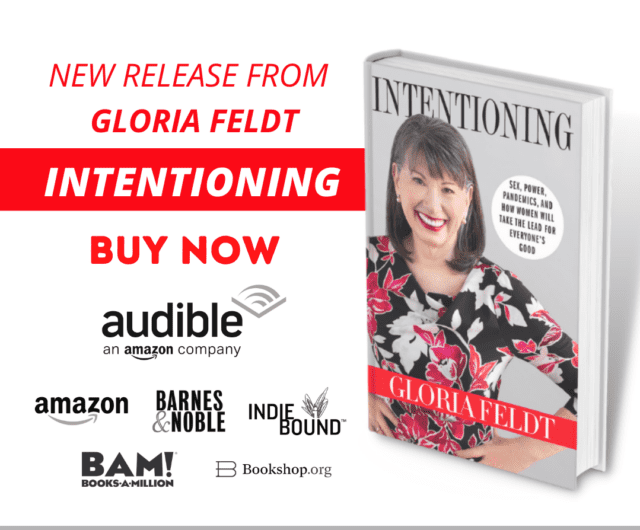
INTENTIONING
Sex, Power, Pandemics, and How Women
Will Take The Lead for (Everyone’s) Good
The new book from Gloria Feldt about the future, taking the leadership lessons learned from this disruption and creating a better world for all through the power of intention.
The accounts range from light-hearted (the editor got hers while water skiing in a yellow bathing suit) to heart-stopping (a first period discovered just as one girl was about to be strip-searched by the Nazis). The contributors include well-known women writers (Meg Cabot, Erica Jong, Gloria Steinem, Cecily von Ziegesar), alongside today’s teens. And while the authors differ in race, faith, or cultural background, their stories share a common bond: they are all accessible, deeply honest, and highly informative. Ultimately, My little red book is more than a collection of stories… By revealing what it feels like to undergo this experience first hand, and giving women the chance to explain their feelings in their own words, it aims to provide support, entertainment, and a starting point for discussion for mothers and daughters everywhere. It is a book every girl should have. Period.
Kauder Nalebuff says she “wants to break this last taboo about women’s bodies and to build a movement of story-tellers so that no more girls are left in the dark.” However, what struck me the most what that the younger the women and girls telling their stories are, the more likely their stories are about wanting their periods to start and celebrating when they appear, rather than the dread I recall feeling.
And goodness knows, the silence and shame about having one’s period has been dulled if not completely superceded by ubiquitous ads for tampons, pads, and panty liners. The New York Times reported on a new Tampax ad campaign in which “Mother Nature” appears to present a red box of tampons and actually using the word “period” instead of euphemisms or the verbal equivalent of a wink.
All proceeds from My Little Red Book go to women’s health organizations. You’ll want one for yourself and one for every girl and woman in your life.
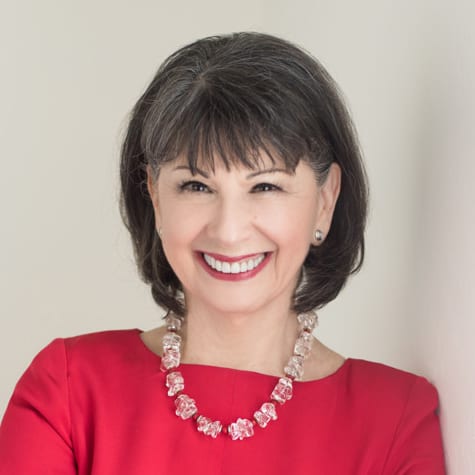
GLORIA FELDT is the New York Times bestselling author of several books including No Excuses: 9 Ways Women Can Change How We Think About Power, a sought-after speaker and frequent contributor to major news outlets, and the Co-Founder and President of Take The Lead. People has called her “the voice of experience,” and among the many honors she has been given, Vanity Fair called her one of America’s “Top 200 Women Legends, Leaders, and Trailblazers,” and Glamour chose her as a “Woman of the Year.”
As co-founder and president of Take The Lead, a leading women’s leadership nonprofit, her mission is to achieve gender parity by 2025 through innovative training programs, workshops, a groundbreaking 50 Women Can Change The World immersive, online courses, a free weekly newsletter, and events including a monthly Virtual Happy Hour program and a Take The Lead Day symposium that reached over 400,000 women globally in 2017.