
Courageous Leadership for Women Religious – First Bat Mitzvah
Thanks to the Jewish Women’s Archive for this article. I serve on the board of this terrific organization. Check out their blog, Jewesses with Attitude, where you’ll find podcasts in addition to vibrant articles. They’ve recently published the Jewish Women’s Encyclopedia, an invaluable resource for educators and anyone who likes fascinating stories about women who have done extraordinary things with their lives. But enough of this …read on about how and why the first bat mitzvah occurred. It always takes someone to be the boundary breaker, and then all the rest of us can follow suit, embellish, make a once sweeping change seem just normal. The last paragraph brought me to tears.
Judith Kaplan, at age 12, became the first American to celebrate a Bat Mitzvah on March 18, 1922. Judith was the oldest daughter of Rabbi Mordecai Kaplan, the founder of Reconstructionist Judaism. Believing that girls should have the same religious opportunities as their brothers, Rabbi Kaplan arranged for his daughter to read Torah on a Shabbat morning at his synagogue, the Society for the Advancement of Judaism.
The Kaplan Bat Mitzvah marked a turning point for Conservative Judaism in America. Always torn between tradition and modernity, the movement struggled for many decades with women’s roles in the synagogue. Judith Kaplan herself did not read from the Torah scroll, as modern Bat Mitzvah celebrants do; instead, she read a passage in Hebrew and English from a printed Chumash (the first five books of the Bible) after the regular Torah service. Still, Rabbi Kaplan’s innovation gained followers. By 1948, about a third of Conservative congregations had conducted Bat Mitzvah ceremonies. By the 1960s, Bat Mitzvah was a regular feature of Conservative congregational life; today it is a mainstay in synagogues from Reform to Modern Orthodox.
After her ground-breaking Bat Mitzvah, Kaplan Eisenstein (she married Ira Eisenstein who became Kaplan’s successor in leading the Reconstructionist movement) went on to a successful career in Jewish music. After studying at the Institute of Musical Art (now the Julliard School) in New York, she attended the Jewish Theological Seminary (JTS) Teachers Institute and Columbia University’s Teachers College, where she earned an M.A. in music education in 1932. She later earned a Ph.D. in the School of Sacred Music at Hebrew Union College-Jewish Institute of Religion (HUC-JIR).
Kaplan Eisenstein taught music pedagogy and the history of Jewish music at JTS, HUC-JIR, and the Reconstructionist Rabbinical College for many years. She also created the first Jewish songbook for children, Gateway to Jewish Song (1937). Her other published works include Festival Songs (1943) andHeritage of Music: The Music of the Jewish People (1972). In 1987, she created and broadcasted a 13-hour radio series on the history of Jewish music. In 1992, at age 82, Kaplan Eisenstein celebrated a second Bat Mitzvah, surrounded by leaders of the modern Jewish feminist movement. This time, she read from a Torah scroll. Kaplan Eisenstein died on February 14, 1996.
INTENTIONING
Sex, Power, Pandemics, and How Women
Will Take The Lead for (Everyone’s) Good
The new book from Gloria Feldt about the future, taking the leadership lessons learned from this disruption and creating a better world for all through the power of intention.

For more on Judith Kaplan Eisenstein, see Jewish Women: A Comprehensive Historical Encyclopedia.
For more on Bat Mitzvah “firsts,” see JWA’s Go & Learn lesson plan “Taking Risks, Making Change: Bat Mitzvah and Other Evolving Traditions.”
Sources: Jewish Women in America: An Historical Encyclopedia, pp. 126-128, 370-371; New York Times, March 19, 1992, February 15, 1996.
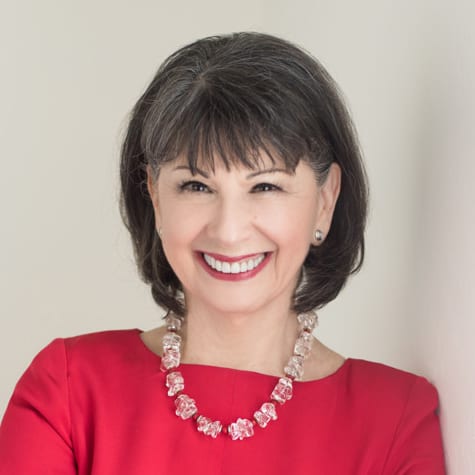
GLORIA FELDT is the New York Times bestselling author of several books including No Excuses: 9 Ways Women Can Change How We Think About Power, a sought-after speaker and frequent contributor to major news outlets, and the Co-Founder and President of Take The Lead. People has called her “the voice of experience,” and among the many honors she has been given, Vanity Fair called her one of America’s “Top 200 Women Legends, Leaders, and Trailblazers,” and Glamour chose her as a “Woman of the Year.”
As co-founder and president of Take The Lead, a leading women’s leadership nonprofit, her mission is to achieve gender parity by 2025 through innovative training programs, workshops, a groundbreaking 50 Women Can Change The World immersive, online courses, a free weekly newsletter, and events including a monthly Virtual Happy Hour program and a Take The Lead Day symposium that reached over 400,000 women globally in 2017.