
On abortion and breast cancer, New York Times gets headline right, story wrong
How do I even begin to comment on all the fallacies, misuse of language, and out-and-out false dichotomizing of “Breast Cancer Not Linked to Abortion, Study Says” (4/24/07) by Nicholas Bakalar in the New York Times? Though the headline is accurate, the article itself offers false balance at its worst, both creating controversy where there is none and weighing ideology against scientific facts as though they were equal.
Perhaps I’ll just start with the one and only pull quote from the piece: “New findings and a new abortion ruling may sharpen a debate.” Excuse me, but isn’t the reportage in question yet another in a long and distinguished line of peer reviewed scientific studies — published by such credible sources as the New England Journal of Medicine and the National Cancer Institute — that collectively followed millions of women over a generation and consistently found no causal link between abortion, induced or not, and breast cancer? Shouldn’t the new information diminish the debate since there seems to be little or nothing to debate about?
The newest study was published by The Archives of Internal Medicine and tracked 105,716 women, almost 40,000 of whom reported having had an induced abortion or miscarriage. The lead researcher is Karin Michels, associate professor of epidemiology at Harvard.
This builds on widescale and widely accepted scientific research that, according to the New England Journal of Medicine in 1997, induced abortions have no overall effect on the risk of breast cancer, based upon a review of the study in Denmark of 1.5 million women. (For more information, see the Center for Reproductive Law and Policy’s “Beyond the Cancer Myth,” which exlains the anti-choice movement’s use of this unproven and untrue breast cancer theory in court cases and legislation restricting access to abortion.)
Yet despite the weight of this newest, additional evidence, the reporter chose to give equal weight in the piece to Joel Brind, professor of biology and epidemiology at Baruch College , who opposes abortion and has long been trying to create the myth of a link between abortion and the incidence of breast cancer. This is clearly media seeking what I call false balance, and it is an example at its most harmful to women’s health. What the data actually shows is that full term pregnancy affords some protection against breast cancer. So the fact is that women who have not been pregnant at all also fail to get the protection against breast cancer that full term pregnancy confers—a very different conclusion which Brind turns on its head.
INTENTIONING
Sex, Power, Pandemics, and How Women
Will Take The Lead for (Everyone’s) Good
The new book from Gloria Feldt about the future, taking the leadership lessons learned from this disruption and creating a better world for all through the power of intention.
The Times quotes Michels as noting this very important point that illustrates the connection between state-mandated propaganda and your health: “There are still some states that require women to be informed about the risk of breast cancer if they get an abortion…that may not be justified based on the current evidence.”
Compounding his errors, Bakalar uses the recent U.S. Supreme Court’s recent Gonzales v Carhart decision upholding a federal abortion ban statute as the take-off point for asserting the non-existent controversy. But in saying the court’s ruling is premised on the legitimacy of outlawing a procedure if it posed a threat to women’s health, when the ruling actually eviscerated a central and often-reaffirmed precedent that the woman’s health must be weighed more heavily than potential fetal life in abortion law, the New York Times went beyond false balance and head-standing to pure fiction.
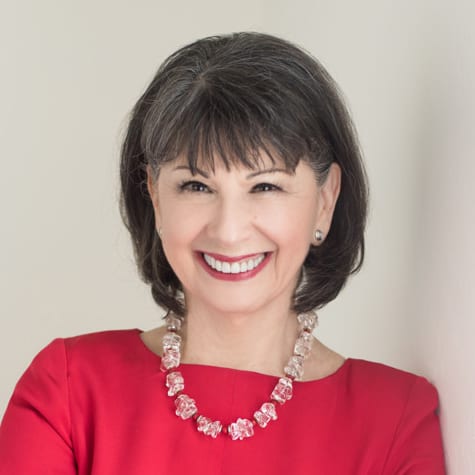
GLORIA FELDT is the New York Times bestselling author of several books including No Excuses: 9 Ways Women Can Change How We Think About Power, a sought-after speaker and frequent contributor to major news outlets, and the Co-Founder and President of Take The Lead. People has called her “the voice of experience,” and among the many honors she has been given, Vanity Fair called her one of America’s “Top 200 Women Legends, Leaders, and Trailblazers,” and Glamour chose her as a “Woman of the Year.”
As co-founder and president of Take The Lead, a leading women’s leadership nonprofit, her mission is to achieve gender parity by 2025 through innovative training programs, workshops, a groundbreaking 50 Women Can Change The World immersive, online courses, a free weekly newsletter, and events including a monthly Virtual Happy Hour program and a Take The Lead Day symposium that reached over 400,000 women globally in 2017.