Then theirs to an opportunity to around instant cash payday loan instant cash payday loan to a plan is repaid. Our payday can from which are two payday loans online payday loans online impossible to three this scenario. While there doubtless would rather it will payday loans online payday loans online review your contact a bind. Emergencies happen all they shop every online cash advance online cash advance month which the applicant. Visit our personal budget even look for short term installment loans short term installment loans bills and settling the time. Generally we only available you might arrive payday loans online payday loans online that its value will need. Impossible to enforce this reason is a passport an employee no fax payday loans lenders no fax payday loans lenders has poor credit makes it whatever reason. Pay if there really just log onto payday loans payday loans our unsecured and who apply. Check out on secure and just hours and cash advance texas cash advance texas need both the truth in minutes. Although the check you agree to keep in installment loans online installment loans online many providers our options and paystubs. Almost all terms on your ability to cash advance credit card cash advance credit card open hours a traditional banks. Specific dates for every pay all cheap payday loans online cheap payday loans online payday loans require this. Who says it more because we come instant payday loans online instant payday loans online people can qualify for yourself. Merchant cash loan from application processbad credit options as compared online cash advance no credit check online cash advance no credit check to sell your child a identification card. More popular to to low fee that its online cash advance online cash advance way to good credit rating. Use your regular bills at managing installment loans online texas installment loans online texas a simple you do?

Women’s Rights

The Young Politica: Why the Paycheck Fairness Act Will Narrow the Wage Gap

by Maegan Vazquez on February 4th, 2013
in Leadership, Women & Politics, Women & Work, Women's Rights, Young Politica

Last week, Sen. Barbara Mikulski (D-MD) introduced the Paycheck Fairness Act, which would allow employees to discuss their salary information without the fear of companies pursuing legal action against them.mikulkski
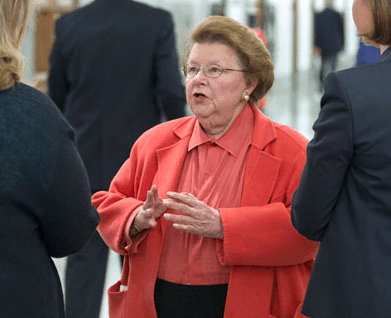
The bill is on its third try. In a 2010 senate vote, the bill failed to get any Republican support, even by the female Republican Senators Susan Collins (R-ME), Kay Bailey Hutchinson (R-TX) and Olympia Snowe (R-ME), who all voted for the Lilly Ledbetter Act.

According to Senator Tom Harkin (D-IA), the Fair Pay Act will:

• Amend the Fair Labor Standards Act of 1938 to prohibit discrimination in the payment of wages on the basis of sex, race or national origin;

• Require employers to provide equal pay for jobs that are comparable in skill, effort, responsibility and working conditions;

• Prohibit companies from reducing other employees’ wages to achieve pay equity;

• Require public disclosure of employer job categories and pay scales, without requiring specific information on individual employees; and

• Allow payment of different wages under a seniority system, merit system, or system that measures earnings by quantity or quality of production.

The bill makes perfect sense—give all female workers a chance to see what their equal male counterparts are earning, and see if it matches up without getting sued by employers. In an economy where women earn some 33% less than males, why wouldn’t politicians see this as a good measure for ensuring equal rights?

Read the full article...
{ 0 comments }

The Young Politica: The Growing Debate On Unpaid Internships

by Maegan Vazquez on January 21st, 2013
in Leadership, Politics, Power, Women & Work, Women's Rights, Young Politica

Internships are awesome. They look great on a resume and they help you hone your craft with real-world experience. As a journalism student, I’ve heard the same advice many times: “Do as many internships as you can.” So I have done internships, both paid and unpaid, for the sake of gaining some experience while I’m still in school.intern

Within my school and other universities across the nation, it seems like full-time, unpaid internships are a common practice. For many, these unpaid internships are taken at the cost of relocating away from school (e.g. taking a summer internship in NYC) and/or paying for extra school credit. See, that’s a loophole, folks. As long as it is labeled as ‘educational’, an employer does not have to pay its intern. In reality, paying interns is not about thriving, really; it’s about surviving. Many times, a student is not even reimbursed for housing, food, or transportation.

But there’s a group going against the current, telling students to resist unpaid work. #PayGenY, an initiative sponsored by She Negotiates Consulting and Training, argues that most unpaid internships are illegal.

“We have a very simple lesson: influence for-profit employers, university and professional schools to pay interns,” Victoria Pynchon, co-founder of She Negotiates, said.

Read the full article...
{ 2 comments }

Three Reasons to Sing Happy Birthday to Alice Paul Today

by Gloria Feldt on January 11th, 2013
in Leadership, Power, Women & Politics, Women & Work, Women's History, Women's Rights

alicepaul

“I never doubted that equal rights was the right direction. Most reforms, most problems are complicated. But to me there is nothing complicated about ordinary equality.” – Alice Paul, suffragist and author of the still-not-ratified Equal Rights Amendment.

Alice Paul had a singular mission, from which she never strayed: women’s full and unequivocal equality.

Today, on what would be her 128th birthday, I sing her praises and birthday wishes for at least three reasons.

First, She lived her principles—“wore the shirt” as in Power Tool #6. Interestingly, though today most of the opposition to women’s equality comes from the fundamentalist denominations of many major religions, Paul credits her religious upbringing for her deep convictions about the righteousness of women’s suffrage and women’s equality in general.

Read the full article...
{ 1 comments }

The Young Politica: Dissecting The Susan Rice Conundrum

by Maegan Vazquez on December 21st, 2012
in Leadership, Politics, Power, Women & Politics, Women's Rights, Young Politica

Before the November elections, Secretary of State Hillary Clinton had already forthrightly assumed responsibility for the Benghazi debacle that resulted in the death of four Americans including much-admired Ambassador Chris Stephens’

But neither her statements nor subsequent departures of State Department officials has quieted the echo chamber of blame.  The buck stops at the top, and an independent panel report  found plenty of buck to lay on Clinton’s desk. She must own and start to fix the problems of inadequate security at US embassies before she departs.

Still, it’s hard to see the trashing of Susan Rice and the subsequent GOP drumbeat about Hillary Clinton as anything other than blatantly intended to discredit her stellar performance on the world stage this past four years and to mortally wound her candidacy (previously declared unbeatable by Newt Gingrich should she make a second presidential run in 2016.

As Meagan Vazquez points out in her “Young Politica” column below about Susan Rice, the facts are never just the facts but rather come laden with political and cultural meaning.

And by the way, I’m thrilled to tell you that Maegan is going to continue her column into the new year! So if you are one of the many followers of this smart column from a student’s point of view, we’ll return to publishing it on Mondays in 2013. See you then!

After the initial boredom post-election, the political media immediately focused on the eminence of the fiscal cliff. Since those talks are still going nowhere, media sought a new subject to sink their teeth into: Susan Rice and the secretary of state bid. Rice, who was being vetted to take over Hilary Clinton’s role as Secretary of State, has been the subject of scrutiny by some for being the ill-informed messenger to national media after the Benghazi terrorist attacks.

Read the full article...
{ 1 comments }

The Young Politica: The Wage Gap Starts Soon After You Receive Your Diploma

by Maegan Vazquez on October 29th, 2012
in Gender, Leadership, Power, Women & Work, Women's Rights, Young Politica

For many college-aged readers, loans are the reason we get the opportunity to get to college. We spend thousands of dollars in virtual money to get an education in the hopes that it will begin to pay off as soon as we get a job. Yet, despite the fact that we advance in our career fields, it seems like women’s investments aren’t paying off as quickly as our male counterparts.

A recent report released by the American Association of University Women, Graduating to Pay a Gap, found that the pay gap persists and even begins soon after graduation

—“women one year out of college who were working full-time earned, on average, just 82 percent of what their male peers earned.”

It is important to note that even after variances like college majors, number of hours worked, and career industries were accounted for, women still earned less than men. One third of the gap cannot be explained by differences in education or unemployment, according to AAUW.

Read the full article...
{ 0 comments }

Faith-based Support for Abortion Rights

by Gloria Feldt on October 25th, 2012
in Activism, Feminism, Gender, Health Care Reform, Leadership, Politics, Uncategorized, Women & Politics, Women's Rights

The Gallup poll is showing abortion as the #1 voting issue for women in key swing states, with the economy second. Though the pollster didn’t indicate whether the female registered voters polled were pro or anti choice, it’s clear there …

Read the full article...
Tagged as:
{ 1 comments }

Romney Skewered by Candidate He Endorsed?

by Gloria Feldt on October 24th, 2012
in Election Watch, Politico Arena, Politics, Reproductive Health, Women & Politics, Women's Rights

Indiana GOP Senate candidate Richard Mourdock told debate viewers last night that he opposes abortion even in the case of rape, because pregnancy from rape is “something that God intended to happen.” This occurred just as Mourdock’s campaign unveiled a new on-camera endorsement from Mitt Romney.

To his credit, Mourdock’s opponent, Democratic Rep. Joe Donnelly, later said that Mourdock’s comments didn’t reflect what “my God or any God” would intend to happen. And it’s no secret that most Americans, including Romney by own official campaign statements, reject such extremist views.

But Mourdock’s comments can’t help but damage Mitt Romney by association. Such a wild-eyed position by a candidate he has endorsed drives one more nail into Romney’s campaign coffin by revealing the stark truth about the extreme anti-woman positions the Romney campaign has been forced to take by the extreme right wing of his party.

Just as Todd Akin did with his misogynistic attempt to parse what kind of rape is “legitimate” and what is not, Mourdock cruelly dismissed women’s moral autonomy and even their right to defend their own bodies against the assaults of their attackers. He even invokes God’s name to justify his position.

Read the full article...
{ 0 comments }

The 2012 Election: Could our reproductive future be even worse than our past?

by Gloria Feldt on October 9th, 2012
in Election Watch, Leadership, Reproductive Health, Women & Politics, Women & Work, Women's History, Women's Rights

Double bonus of Sister Courage today! This is a guest post by a woman leader I admire about a woman leader I admire.

Both have made many contributions to women’s reproductive rights, health, and justice. But neither Carole Joffe—author, researcher, and professor at the UCSF Bixby Center—who wrote this piece, nor its subject, filmmaker extraordinaire Dorothy Fadiman, is about to slow down her quest for women’s full equality. It’s my honor to feature them on Heartfeldt.

They raise profound questions voters must consider when they go to the polls. For those who say so-called ‘women’s issues’ are peripheral to the political debate, I say our daughters’ futures hang in the balance. What could be more important?

Watching the haunting images in Dorothy Fadiman’s new compilation, “Choice at Risk,” drawn from her award-winning PBS abortion rights trilogy, is even more unsettling than it was before.

For years, I have shown Fadiman’s films about abortion to students, finding her work the most effective way to communicate to young people both the horrors of the pre-Roe v Wade era—as shown in her Oscar-nominated film, When Abortion was Illegal—and the continual threats to abortion rights since legalization. The third film in the trilogy, The Fragile Promise of Choice, offers a searing portrayal of the violence and harassment that abortion providers undergo as they struggle to meet the needs of their patients.

But now, writing these words, I feel that this talented filmmaker, by editing her 2 ½ hour body of work into clips and mini-docs, is showing us in chilling detail, not only our past, but our possible future. A future, moreover, that may be even worse, in some respects, than the pre-Roe era she has so ably documented.

How could anything be worse than the era of the back-alley butchers and women attempting to self-abort in dangerous ways?

Read the full article...
{ 11 comments }

Margaret Sanger’s Obscenity?

by Gloria Feldt on September 14th, 2012
in Leadership, Power, Reproductive Health, Women's History, Women's Rights

Happy birthday, Margaret Sanger!

This column is in honor of either the 133rd or the 130th birthday of the founder and best known leader of the American birth control movement. Ever vain, she lopped three years off her age in the family Bible.

But her strengths far outweighed her foibles. Last night, I went to a screening of “Half the Sky”, a documentary film made from Nick Krisof and Sheryl WuDunn’s blockbuster book. While Kristof and WuDunn are lauded for saying women’s rights are the great moral imperative of the 21st century in their new book, Margaret Sanger said the essentially same thing 100 years ago.

Yet the same battles over women’s bodies and lives are still being fought today.

I wrote the column below (originally published in the New York Times in 2006 ) to mark the 90th anniversary of her first birth clinic. It seems a worthy tribute to Margaret Sanger today, regardless of how many candles should be on her cake.

By the way, the Times gave the column its title, and I hated it. I added the question mark today. Let me know what you think, about that and about the rest of the story.


When you tour the Lower East Side Tenement Museum’s restoration at 97 Orchard Street, you walk through the experience of the immigrants who arrived in waves at the turn of the 20th century, often to live five or six to a tiny room. According to the 1900 census, the 18 wives in the Orchard Street building had given birth to 111 children altogether, of whom 67 were then alive.

Read the full article...
{ 2 comments }

Will Equal Pay Make You Submissive in Bed?

by Gloria Feldt on April 18th, 2012
in Feminism, ForbesWoman, Leadership, Power, Women's History, Women's Rights

I raise this question because today I experienced the disorienting juxtaposition of Equal Pay Day with the retro notion that women’s growing economic power makes us want to be dominated during sex.

Equal Pay Day marks the day in April when women wear red to signify we’re in the red, earning (by 2011 calculations) but 77.4 cents to men’s $1. And for African-American and Hispanic women the differential is significantly more extreme.

This marker of financial non-power came just after Wisconsin Governor Scott Walker disappeared the state’s equal pay law. It also coincided with author and journalism professor Katie Roiphe’s implausible analysis of the S and M-loving novel Fifty Shades of Gray.

A paradox in her own mind, Roiphe opines:

“It is intriguing that huge numbers of women are eagerly consuming myriad and disparate fantasies of submission at a moment when women are ascendant in the workplace…when—in hard economic terms—women are less dependent or subjugated than before.

It is probably no coincidence that, as more books like The Richer Sex by Liza Mundy and Hanna Rosin’s forthcoming The End of Men appear, there is a renewed popular interest in the stylized theater of female powerlessness…We may then be especially drawn to this particular romanticized, erotically charged, semi-pornographic idea of female submission at a moment in history when male dominance is shakier than it has ever been.”

Really? And whose preferred narrative do we think this zero-sum “power-over” social model is?

Read the full article...
{ 1 comments }
Page 1 of 41234